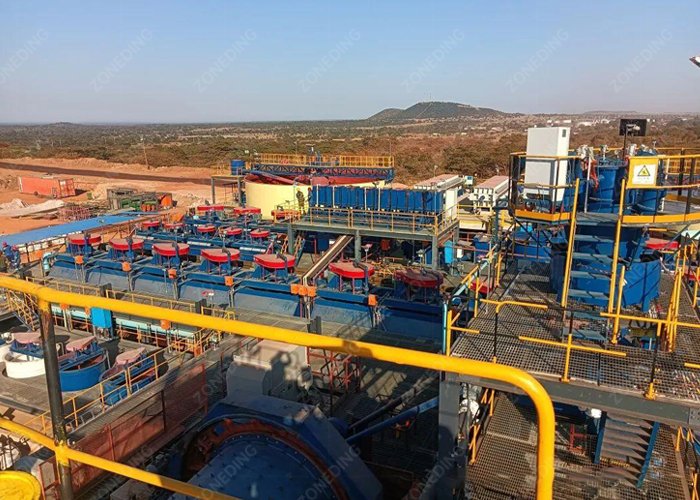
You’ve seen the TV shows—digging dirt and washing out gold nuggets looks deceptively simple. This romantic image is the number one reason why so many alluvial gold projects fail. The reality is a battle against clay, fine gold, and inefficiency.
To successfully recover alluvial gold, you must use a complete placer gold mining system that first uses a scrubber or trommel to wash and separate clay, then uses high-efficiency gravity concentrators to capture the fine gold that traditional sluices lose. Proper testing before you start is essential.
Forget the treasure hunt fantasy. A profitable gold mine is a manufacturing business. Your biggest enemies are not big rocks; they are the sticky clay that steals your gold and the microscopic “flour gold” that washes away unseen. This guide is your blueprint for building a plant that beats those enemies and actually makes money.
Before You Mine: How to Simply and Effectively Assess Your Gold Deposit?
So many investors buy expensive equipment based on a hunch, only to discover their land holds very little gold. This is the fastest way to go bankrupt.
To estimate your gold reserve, you must perform systematic sampling. This involves digging multiple test pits across your claim, carefully measuring the volume of material from each pit, processing it through a small test plant, and weighing the recovered gold to calculate an average grade (e.g., grams per ton).
Guessing is gambling. Sampling is business. This is a simplified professional process:
Create a Grid: Divide your claim into a grid pattern. The more variable the ground, the tighter the grid should be.
Dig Test Pits: At each grid intersection, dig a test pit down to the bedrock or the bottom of the gold-bearing layer.
Measure and Process: For each pit, accurately measure the volume of gravel you excavate. Process this measured volume through a small, high-recovery test system. A small shaking table or a lab-scale centrifugal concentrator is ideal.
Calculate the Grade: Weigh the fine gold recovered from each sample. If you processed one cubic meter of gravel and recovered 0.5 grams of gold, your grade for that spot is 0.5 g/m³.
Map Your Deposit: By averaging the grades from all your test pits, you can build a reliable estimate of the total gold content and identify the high-grade “pay streaks” to mine first.
Why Do Traditional Sluice Boxes Make You Lose Half Your Gold, Especially Fine Gold?
You think a simple sluice box is the cheapest way to get started, but it’s often the most expensive mistake you can make. It’s not about what it costs to buy, but how much gold it costs you every day.
Traditional sluice boxes lose a massive amount of fine gold because the water velocity required to wash away sand and gravel is too strong for tiny, lightweight gold particles to settle and be captured. For many deposits, this can mean losing over 50% of the total gold value.
The “flour gold” you can barely see is where the real, consistent profit is.
The Physics of Failure
A sluice box relies on simple gravity. Heavy particles drop behind riffles. But this only works when the particles are big enough to resist the force of the water.
Coarse Gold: A small nugget or picker is heavy enough to sink quickly and stay put.
Fine Gold: A tiny flake of gold has a large surface area for its weight. The force of the water easily keeps it suspended, and it flows right out with the tailings. It has no chance to settle. This is a catastrophic financial loss that happens silently, hour after hour.
Does Your Ore Contain a Lot of “Clay”? How to Choose the Best Washing Equipment?
Your biggest operational nightmare is clay. Sticky, plastic clay will rob you blind by balling up and carrying your gold straight to the waste pile.
If your material contains significant clay, you must use an aggressive washing machine. A Trommel Screen is good for low-clay gravel, but for sticky clay, a Rotary Scrubber or Log Washer is essential to break down the clay balls and liberate the trapped gold.
You must declare war on clay at the very first stage of your plant.
Loose sand and gravel with low clay content (<15%).
A rotating cylinder with internal lifter bars and spray bars tumbles and washes the material, screening it by size.
Rotary Scrubber
Moderate to heavy clay content.
A heavy-duty rotating drum with aggressive internal lifters. It uses rock-on-rock attrition to scrub and break down clay.
Log Washer
Extremely sticky, plastic clay.
Two counter-rotating shafts with paddles violently churn and disintegrate the toughest clay lumps. This is the most powerful washing solution.
Gravity Separation Equipment PK: Jig, Shaking Table, or Centrifugal Concentrator—Which Is Your Best Choice?
After washing, you need to separate the gold. This is where your profit is made or lost. Choosing the right machine for your specific gold size is critical.
No single machine is perfect for all gold. A professional plant uses a combination.
Machine
Primary Target
How It Works
Best Place in a Flowsheet
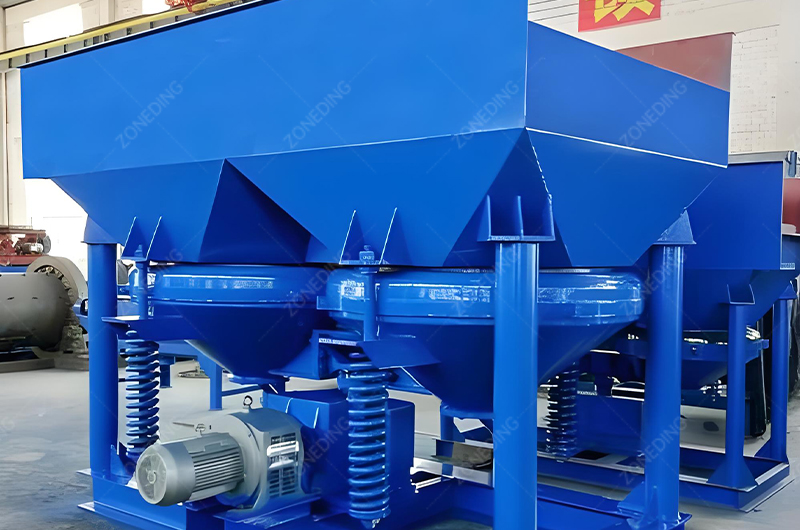
Jigging Separator
Coarse Gold (Nuggets, pickers)
A pulsating water column stratifies material by density, with heavy gold sinking through a screen bed.
As a primary concentrator to capture coarse gold immediately after the washing screen.
Centrifugal Concentrator
Fine Gold
Spins at high speed, creating immense G-force that pins microscopic gold particles against the bowl wall.
As the main concentrator to process the finer material coming from the washing screen. This is essential for high recovery.
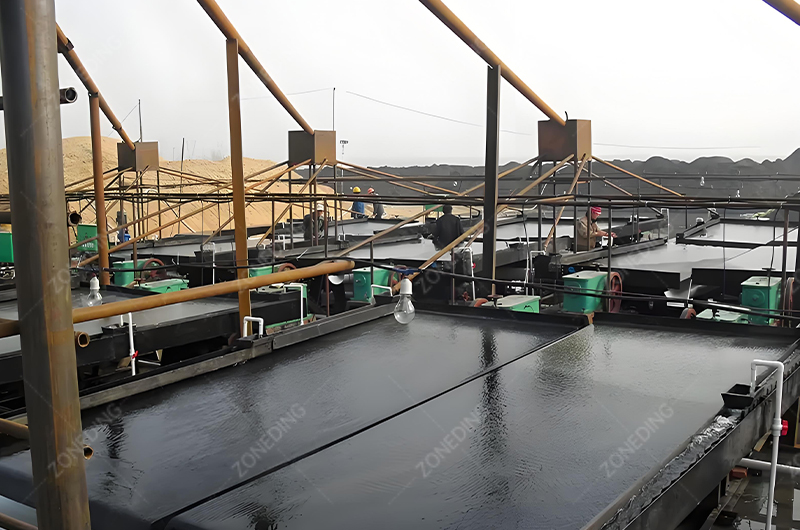
Shaking Table
Final Cleanup
A vibrating, tilted table uses a film of water to separate gold from other heavy minerals (black sand).
In the gold room, used to clean the concentrates produced by the jigs and centrifugal concentrators into a final, pure product.
How to Design a Complete Alluvial Gold Production Line That “Eats Up” All the Gold?
A profitable plant is a system where each machine performs a specific job in the right order. This ensures no gold, coarse or fine, can escape.
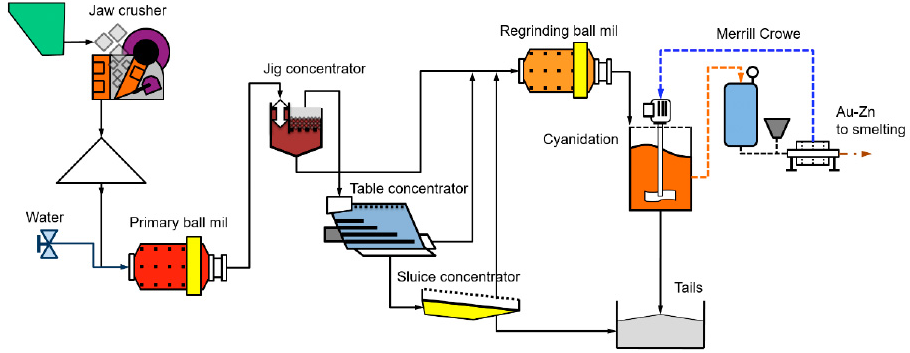
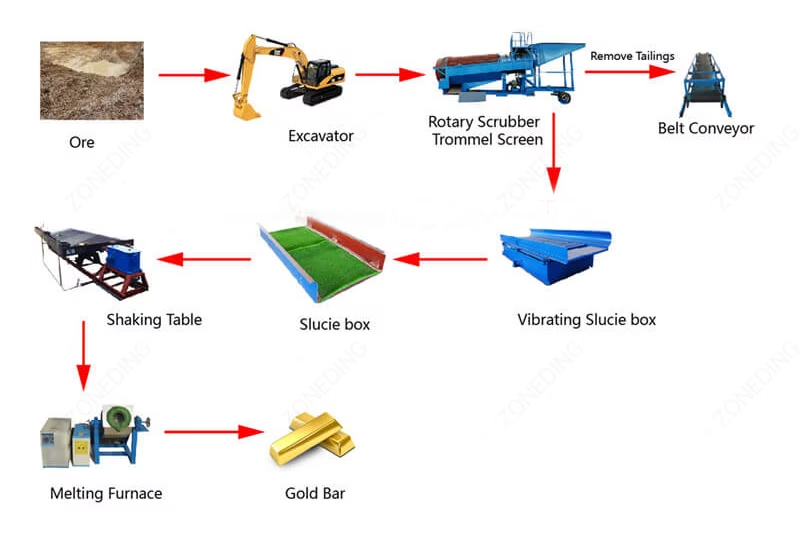
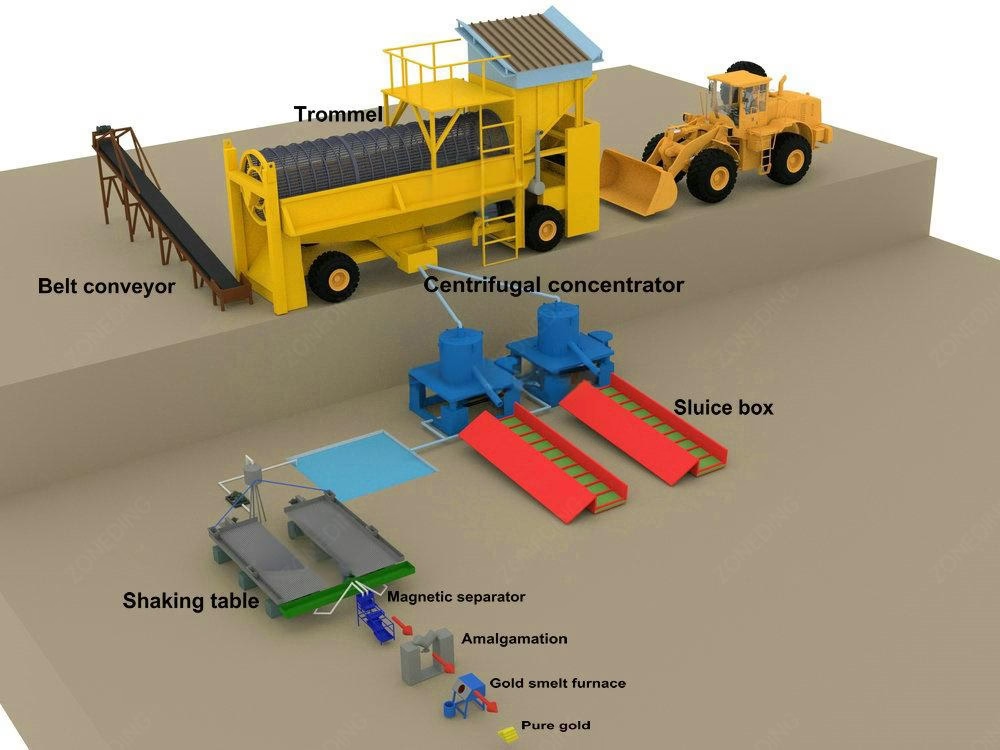
A complete, high-recovery gold processing plant follows a sequence: 1. Feeding. 2. Washing and Screening (Trommel/Scrubber). 3. Coarse Gold Recovery (Jig). 4. Fine Gold Recovery (Centrifugal Concentrator). 5. Final Concentrate Upgrading (Shaking Table).
Alluvial gold process
This multi-stage approach maximizes your gold recovery.
Feeding: A hopper and feeder provide a steady, controlled feed rate to the plant.
Washing & Screening: A trommel or scrubber washes the material and separates it into two streams: a coarse, washed rock pile (waste) and a fine slurry containing the gold.
Coarse Gold Recovery: The slurry first passes through a jig to immediately capture any nuggets or large gold particles.
Fine Gold Recovery: The slurry then flows to a bank of centrifugal concentrators to capture the valuable fine gold that the jig cannot.
Final Cleanup: The small amounts of high-grade concentrate from the jig and concentrators are then periodically processed on a shaking table in a secure area to produce the final, clean gold product.
What’s the Budget to Invest in a 500-Ton-Per-Day Mobile Gold Processing Plant?
Understanding the true investment cost is crucial for your business plan. It’s more than just the price of the main machine.
The budget for a complete, mobile gold processing plant with a capacity of 500 tons per day (approx. 50 tons/hour) typically ranges from $80,000 to $250,000 USD. The final cost depends on the complexity, especially the type of washing and recovery units included.
mobile gold processing plant
The price varies based on the specific challenges of your deposit.
Basic Plant (Lower End of Budget): This would include a hopper, a trommel screen for washing, and sluice boxes for recovery. This is only suitable for loose, sandy gravel with no clay and mostly coarse gold.
Professional High-Recovery Plant (Higher End of Budget): This plant will feature a heavy-duty rotary scrubber instead of a simple trommel, and it will use high-efficiency centrifugal concentrators instead of sluices. This is the setup required for deposits with clay and valuable fine gold. While the initial investment is higher, the vastly increased gold recovery provides a much faster return on investment.
Conclusion
Stop chasing the “easy gold” dream. Success in alluvial mining comes from a professional approach: test your ground, declare war on clay with the right washing equipment, and capture the fine gold with modern concentrators.
Stone crushing is the first step in producing aggregates for roads, buildings, bridges, railways, and concrete plants. Every successful quarry or aggregate operation depends on choosing the right crushing method and equipment. However, many invest...
Experience in global quarries reveals common, costly mistakes in equipment selection. Mine owners often consider a crusher just a big hammer that breaks rocks. This mindset destroys profitability. Crushing is a delicate balance of rock mechanics a...
As an expert with decades in the mineral processing industry, I have seen "best-sellers" change many times. In the past, it was all about raw power. In the 2000s, it was about high throughput. But in 2026, the "best-selling" machines are different...
High-yield tin ore recovery depends on a design that respects the brittle nature of cassiterite. Traditional plants often lose over 40% of metal because they grind the ore into useless dust. A scientific tin processing flow design i...
We use cookies to ensure that we give you the best experience on our website. If you continue to use this site we will assume that you are happy with it.
Privacy Policy
Send us a message
We would love to hear from you
Submit your question and our team will respond to the email provided as soon as possible.
 Zoneding Machine