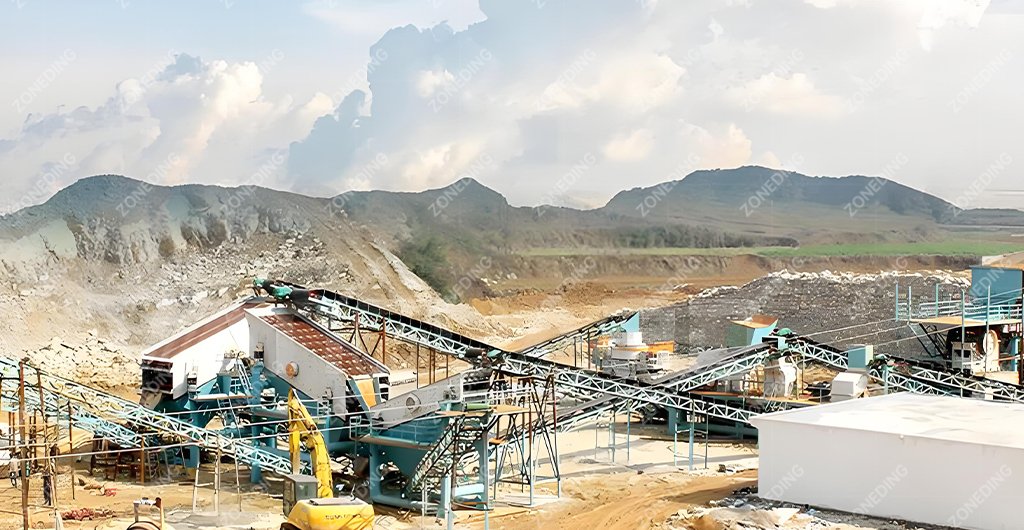
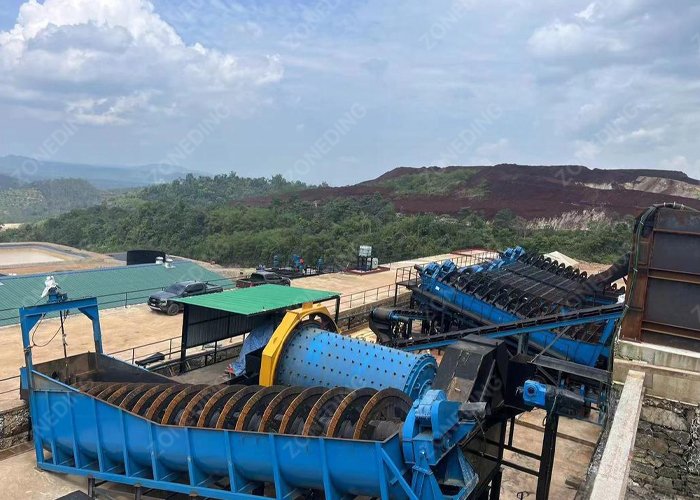
Anti-clogging screening equipment provides the most reliable way to handle sticky materials in 2026. Traditional vibrating screens often fail when clay moisture exceeds 10%. This leads to frequent downtime and high cleaning costs. Our technical guide explains how advanced clay ore screening solutions maintain high productivity in difficult conditions. We focus on the core technologies like roller separators and flip-flow mats that prevent holes from blinding. Selecting the right equipment ensures a consistent flow of material and protects the profit of the mine.
Why does your production line need anti-clogging screening equipment?
Sticky clay remains a top challenge for modern mining operations. We often see standard screens become completely blocked within minutes of starting. This problem happens because clay has high molecular adhesion. When moisture levels rise, the clay acts like a powerful glue. It fills the apertures of the mesh and creates a solid layer. This layer prevents any fine material from passing through. The whole Stone Crushing Plant must stop so workers can manually clean the deck.
Manual cleaning is expensive and dangerous. It takes several hours each day to poke clay out of thousands of small holes. This results in a massive loss of production time. In 2026, labor costs continue to rise. Using anti-clogging screening equipment removes the need for manual intervention. These machines use high-energy vibration or mechanical rotation to break the bond of the clay. This keeps the production line moving 24 hours a day. It is a critical step to ensure high-grade output in Iron Ore Beneficiation projects.
The Real Cost of Screen Blinding
Factor
Standard Vibrating Screen
Anti-Clogging Equipment
Operational Impact
Uptime
60% – 70% in wet weather
95% – 98% in all weather
Gain 5 hours of work daily
Labor
Requires 2-3 cleaners
Almost zero cleaning labor
Reduce monthly payroll costs
Ore Quality
High waste in oversize
Clean separation
Better price for final ore
Maintenance
High mesh replacement
Long-life polymer parts
Lower annual parts budget
Practical Maintenance Tips
Morning Inspection: Check the tension of self-cleaning mats every day to ensure maximum “snap.”
Feed Regulation: Use a Vibrating Feeder to provide a thin, even layer of ore. This prevents deep beds that cause clogging.
Water Management: If the ore is too sticky, add high-pressure spray bars to turn the process into wet screening.
What mature anti-clogging equipment types are available?
The market offers several proven clay ore screening solutions today. The mud and stone separator roller screen is the most common for primary separation. It uses rotating shafts instead of a vibrating frame. This design is very robust. The second type is the heavy-duty trommel screen. This is a rotating drum that tumbles the ore. The third type is the high-frequency flip-flow screen. This machine uses flexible polyurethane mats. These mats stretch and relax at high speeds.
Each machine excels in a specific environment. Roller screens handle large rocks and heavy mud. Trommel screens are best for “washing” ore and breaking mud balls. Flip-flow screens are the best choice for fine screening under 10mm. We recommend combining different types for the best results. For example, a roller screen can do the first cut at 50mm. Then, a flip-flow screen handles the fine separation at 5mm. This multi-stage approach ensures a clean final product and high Beneficiation Equipment efficiency.
Mud and stone separator roller screen design
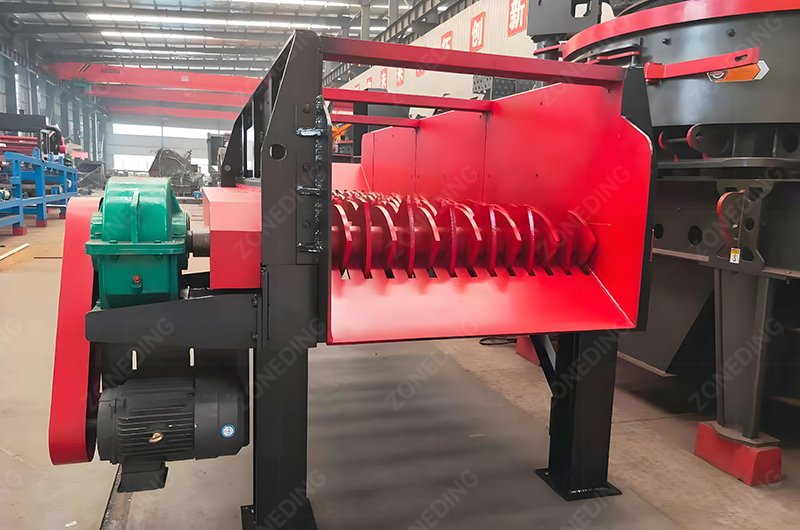
A mud and stone separator roller screen uses a series of rotating shafts with irregular discs. These discs are often triangular or oval. As the shafts turn, the discs lift the material and throw it forward. This creates a constant “churning” action. The mud falls through the gaps between the discs. The clean stone moves to the end of the machine. The rotating discs constantly scrape against each other. This mechanical action prevents any clay from building up on the shafts.
This equipment is very effective for Iron Ore Beneficiation. It can process hundreds of tons per hour without clogging. The discs are made from high-manganese steel or specialized alloys. In 2026, we provide discs with replaceable wear edges. This makes maintenance much faster. The roller screen does not produce the high-frequency noise of a vibrating screen. It is a stable and quiet solution for the toughest mine sites.
Mud and stone separator
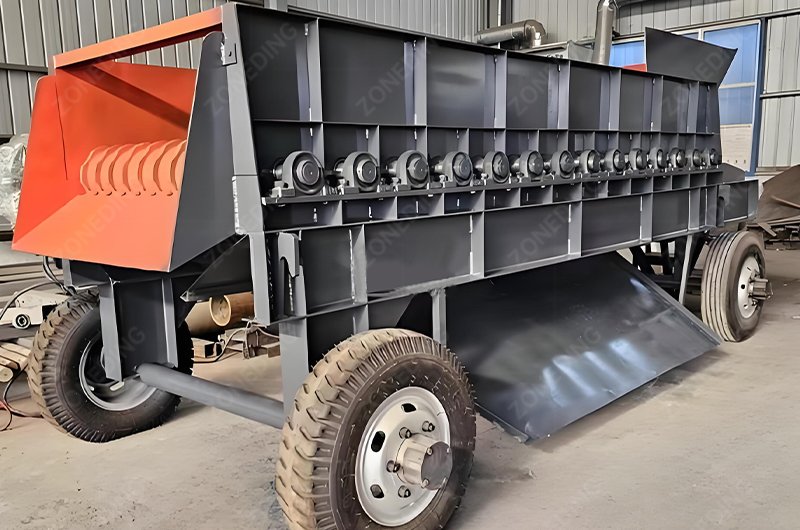
Mobile mud and stone separator
Technical Specs of Roller Screens
Specification
Typical Value
Practical Meaning
Disc Material
Manganese Alloy
Lasts for 2000+ hours of operation
Gap Size
20mm – 100mm
Adjustable for different ore grades
Shaft Speed
20 – 60 RPM
Slow speed reduces energy consumption
Capacity
50 – 1500 TPH
Scaleable for small or large mines
How does the trommel screen handle high mud content?
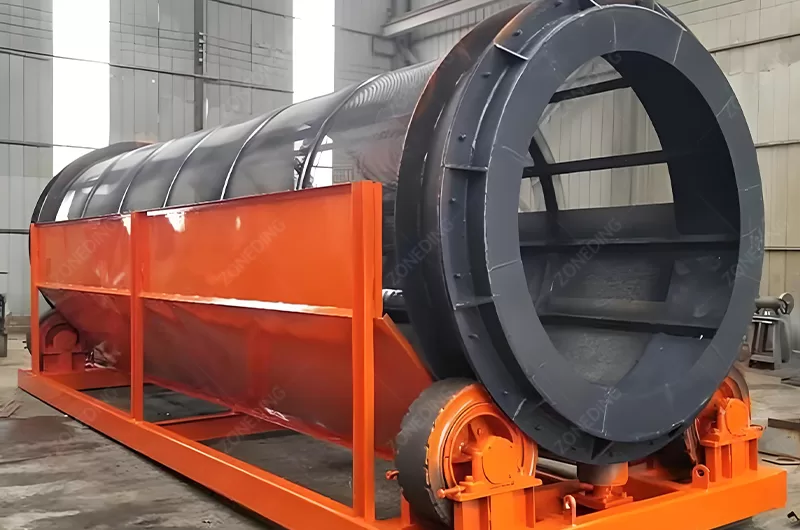
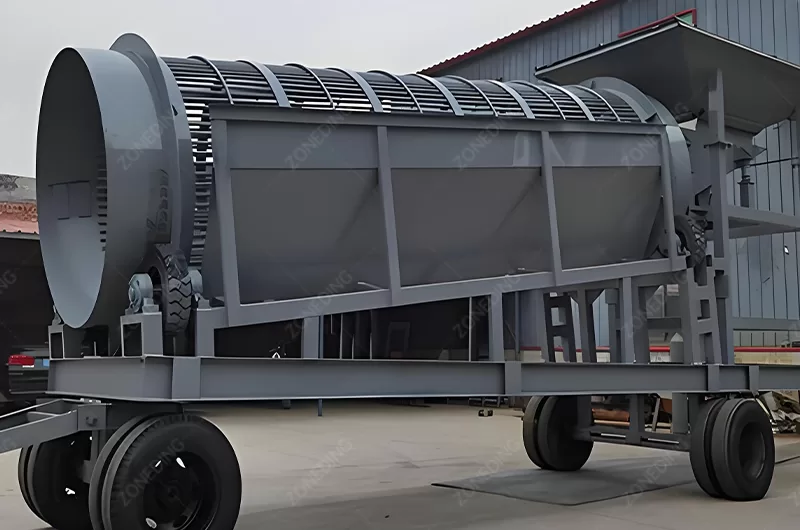
A heavy duty trommel screen for sticky ore uses a rotating drum to separate material. Inside the drum, we install heavy lifting plates. These plates pick up the ore and drop it repeatedly. This impact breaks the “mud envelope” around the stones. It is very effective for placer gold or high-clay iron ore. The tumbling action acts like a giant washing machine. If the ore is extremely sticky, the trommel provides enough time for the clay to break apart.
We often add an external cleaning brush to the trommel. This brush rotates against the outer surface of the screen mesh. It pushes any trapped clay back into the drum. This prevents the holes from “blinding” over time. Many Gold Processing Plant operators prefer trommels for their simplicity. They are very reliable and have few moving parts. A trommel can handle a wide range of feed sizes at the same time. This makes it a versatile tool for many different mining scenarios.
Trommel Screen
Mobile Trommel screen
Technical Advantages of Trommels
Long Retention Time: The material stays in the drum longer than on a flat screen. This ensures better cleaning.
Scrubbing Action: Dropping the rocks from a height is the best way to break hard mud.
Water Integration: It is easy to add internal spray pipes for high-pressure washing.
Customizable Mesh: We can use different hole sizes along the length of the drum for multiple products.
Advice for Trommel Users
Check Lift Plates: Worn lift plates reduce the cleaning action. Inspect them every month.
Balance the Load: Do not overfill the drum. The material needs room to fall and splash.
Optimize RPM: Finding the “sweet spot” speed ensures the best impact force.
How do self-cleaning designs solve the blinding problem?
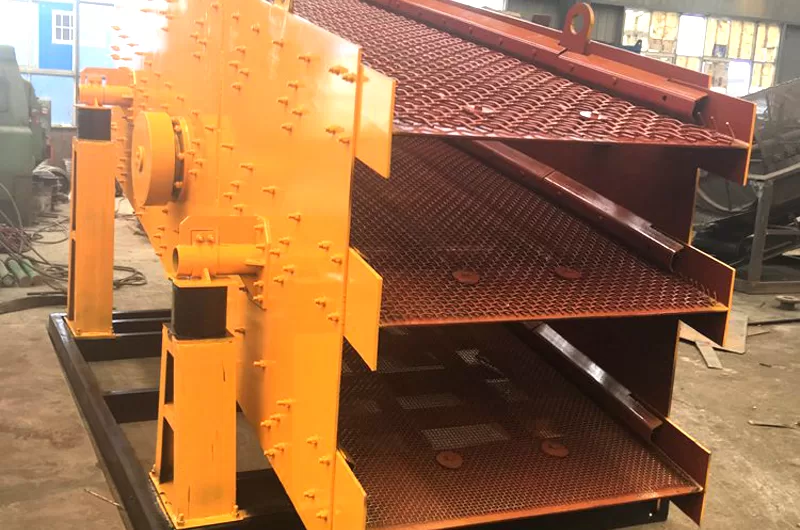
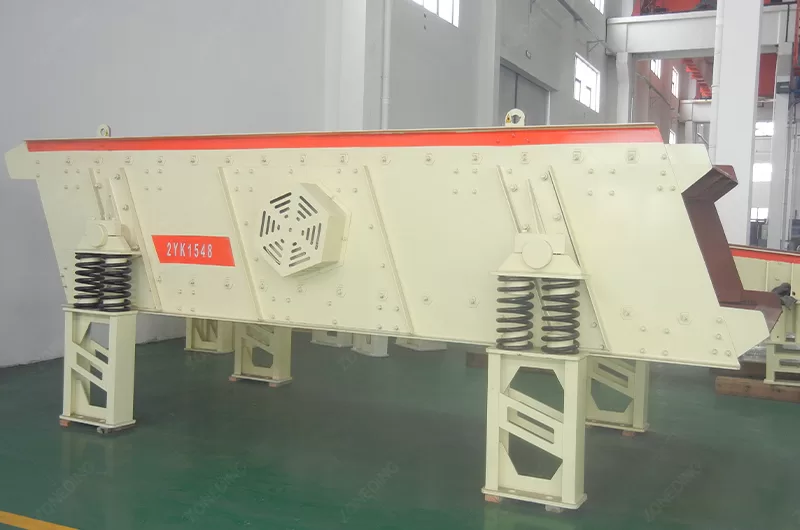
The most advanced vibrating screen blinding prevention is found in flip-flow screens. These machines use a “dual-mass” vibration system. The inner frame and the outer frame move at different times. This causes the polyurethane screen mat to stretch and then snap back. This “snap” produces a force of up to 50G. No sticky material can stay on the surface at that speed. The clay is literally launched into the air. This keeps the holes clear even with 15% moisture.
Another self-cleaning method uses “bouncing balls.” We place small rubber balls in a cage under the screen mesh. The vibration causes the balls to hit the bottom of the mesh constantly. This knocks out any stuck particles. This is a cheaper solution for moderately sticky materials. We also offer “piano wire” screens. These use individual wires that vibrate independently. This creates a “shivering” effect that prevents clay from sticking. These technologies are essential for maintaining a high yield in a Ball Mill circuit.
Vibrating Screen
Vibrating Screen
Comparing Self-Cleaning Technologies
Technology
Principle
Best Particle Size
Benefit
Flip-Flow
Stretching Mat
0.5mm – 20mm
Best for very wet, fine ore
Bouncing Balls
Bottom Impact
5mm – 50mm
Low cost and easy to install
Piano Wire
Independent Vibration
1mm – 10mm
High precision for dryish ore
Ultrasonic
High-Freq Sound
Under 0.5mm
Prevents static and fine sticking
Which polymer materials reduce clay adhesion?
Modern anti-clogging screening equipment relies on specialized materials. We rarely use steel mesh for sticky clay anymore. Steel has high surface energy. This makes it easy for clay to bond to the metal. Instead, we use high-grade polyurethane (PU) or specialized rubber. These materials have a “low-energy” surface. This is similar to a non-stick frying pan. The clay cannot find a grip on the smooth, oily surface of the PU.
In 2026, we offer PU panels with “active” hole designs. These holes are slightly tapered. The bottom of the hole is wider than the top. This prevents a “plug” from forming. As the panel vibrates, the PU flexes. This flexing action breaks any small bridges of clay. PU also lasts much longer than steel. It resists both abrasion and chemical corrosion. This makes it the perfect material for long-term use in a Beneficiation Equipment line.
Material Performance Table
Material Type
Adhesion Risk
Wear Life
Noise Reduction
Best Application
Manganese Steel
Very High
Low
Low
Dry, large boulders
Stainless Steel
Medium
Medium
Low
Fine, abrasive wet sand
Standard PU
Low
High
High
General sticky ore
Special Rubber
Very Low
Very High
Very High
Heavy, wet feed rocks
How to select screening equipment based on ore conditions?
Selecting the right clay ore screening solutions requires looking at three factors. These are moisture, clay percentage, and feed size. If the moisture is under 5%, a standard Vibrating Screen is fine. If moisture is 8% to 15%, you must move to a flip-flow or roller screen. For ore with more than 20% clay, a trommel or roller screen is the only safe choice. The thickness of the clay is also important. Very thick “plastic” clay needs the scrubbing power of a trommel.
Feed size also dictates the machine type. If you have 500mm boulders, a flip-flow mat will break. You must use a heavy-duty roller screen first. If you are separating fine sand for a Gold Processing Plant, a flip-flow is perfect. We always recommend testing the material in a laboratory first. This ensures the chosen machine can handle the specific “stickiness” of the local ore. A scientific selection saves thousands of dollars in future modifications.
Selection Matrix for 2026
Scenario A (Dry & Sandy): Standard vibrating screen with PU panels.
Scenario B (Wet & Fine): Flip-flow screen with high acceleration.
Scenario C (Heavy Mud & Rocks): Mud and stone separator roller screen.
Scenario D (Very Sticky “Gum” Clay): Heavy-duty trommel with water spray.
What KPIs decide your equipment investment return?
When buying anti-clogging screening equipment, the purchase price is only one factor. We look at the “Total Cost of Ownership” (TCO) over five years. High-performance machines are more expensive at the start. However, they provide much higher uptime. Uptime is the most important KPI. If a machine runs 20% longer each day, it produces 20% more profit. This extra profit usually covers the equipment cost in less than a year.
Another KPI is the “Screening Efficiency.” If a screen is 95% efficient, it means 95% of the fine ore is recovered. A clogged screen might drop to 50% efficiency. This means half of your good ore goes to the waste pile. This is a huge financial loss. High-quality clay ore screening solutions ensure you recover every gram of valuable mineral. We also track energy consumption. Modern motors and efficient designs in 2026 use 15% less power than older models.
Key Performance Indicators (KPIs)
Available Hours per Month: Target should be over 650 hours for 24/7 mines.
Maintenance Cost per Ton: Look for machines with long-life polymer parts.
Yield Accuracy: Ensure the oversize product contains less than 5% of “undersize” fines.
Power Usage Effectiveness: Measure the kW used per ton of processed ore.
2026 Latest Developments in Screening Technology
The year 2026 brings new “Smart Screening” features. We now include vibration sensors on all high-end models. These sensors detect if a screen is starting to blind before it becomes a problem. The machine can automatically adjust its frequency to clear the holes. We are also seeing a shift toward “Green Screening.” This involves using 100% electric drives and recyclable polymer mats. These innovations reduce the carbon footprint of the mine.
Latest Progress at a Glance
AI Monitoring: Cameras watch the screen surface and alert operators to any buildup.
Variable Frequency Drives (VFD): Machines adjust their speed in real-time based on the moisture of the feed.
Ultrasonic Integration: For ultra-fine separation, sound waves are used to keep the mesh clear.
Modular Decks: Change only the worn part of the screen rather than the whole mat.
Common Questions and Answers
1. Can a roller screen handle highly abrasive rocks?
Yes. We use thick alloy discs that are specifically treated for abrasion. In a mud and stone separator roller screen, the rocks tumble over each other. This reduces the direct impact on the shafts and extends the life of the parts.
2. Is a flip-flow screen louder than a standard screen?
Actually, it is often quieter. Because the mats are made of polyurethane, there is no “metal-on-metal” noise. The high-energy vibration is contained within the mats, not the whole building.
3. What is the best moisture limit for dry screening?
Most machines struggle above 12% moisture. However, our 2026 flip-flow models can handle up to 18% moisture without adding water. Above 20%, we usually recommend wet screening.
4. How often should I replace polyurethane panels?
In a typical iron ore mine, PU panels last 6 to 12 months. This is much better than steel mesh, which might break every 4 weeks under the weight of heavy clay and rocks.
5. Does ZONEDING provide custom screen hole designs?
Yes. We can manufacture panels with square, round, or “long slot” holes. For sticky clay, we often recommend “long slot” holes. These are much harder to block than square holes.
About ZONEDING
ZONEDING is a professional manufacturer of Beneficiation Equipment and crushing machines. Since 2004, we have provided high-performance solutions for over 120 countries. Our 8,000 square meter factory produces more than 500 sets of equipment annually. We specialize in designing Vibrating Screens and roller separators for the most difficult mining environments. We offer full-service support, from initial design to final installation and training.
Contact us today for a free technical consultation and a customized anti-clogging plan for your mine. We help you stay productive in any weather.
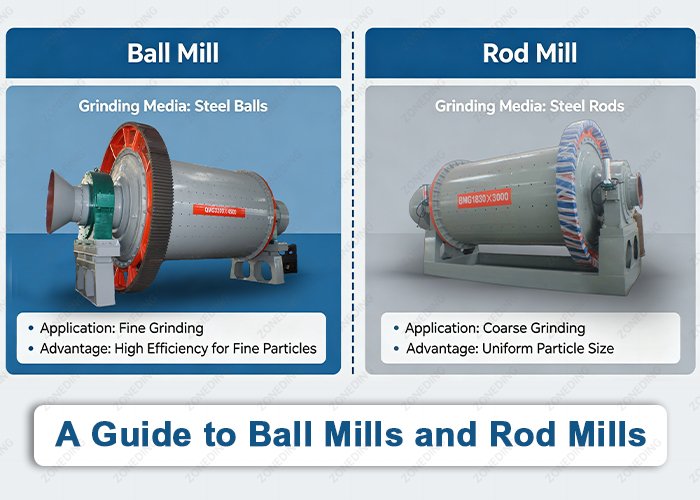
Choosing the right grinding equipment is the most critical decision for any mineral processing plant. Ball mills and rod mills serve different roles in size reduction. This guide provides a deep comparison of their advantages and applications. In ...
Building a nickel ore processing plant cost typically ranges from $20 million for small sulfide units to over $1.5 billion for massive laterite projects. Most investors fail because they only look at the price of machines and ignore infrastructure...
We use cookies to ensure that we give you the best experience on our website. If you continue to use this site we will assume that you are happy with it.
Privacy Policy
Send us a message
We would love to hear from you
Submit your question and our team will respond to the email provided as soon as possible.
 Zoneding Machine