Limestone is one of the easiest and most profitable materials to crush. It is widely used for road construction, concrete production, asphalt plants, cement manufacturing, and infrastructure projects.
However, many buyers ask the same question before investing:
Should I choose a jaw crusher or a cone crusher for limestone?
The answer depends on your production goals.
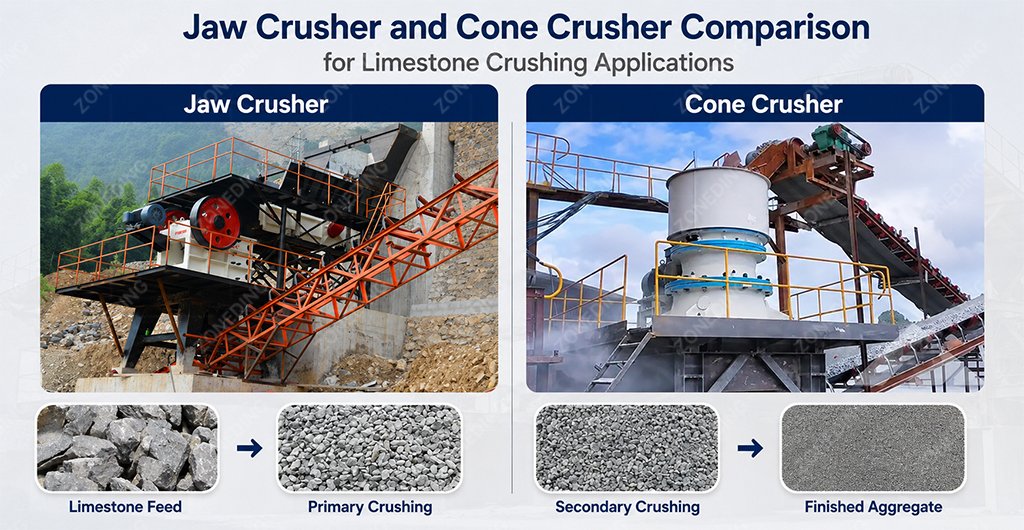
A jaw crusher and a cone crusher are not direct competitors. In most cases, they perform different jobs within the same crushing plant.
Choosing the wrong machine can lead to:
Higher operating costs
Poor aggregate quality
Reduced production efficiency
Lower profit margins
This guide explains where each crusher performs best and how to choose the most profitable solution for your limestone project.
Each machine performs best in different situations.
Project Requirement
Recommended Solution
Primary Crushing
Jaw Crusher
Secondary Crushing
Cone Crusher
Small Budget Project
Jaw Crusher
Commercial Aggregate Production
Jaw + Cone Crusher
Large Quarry
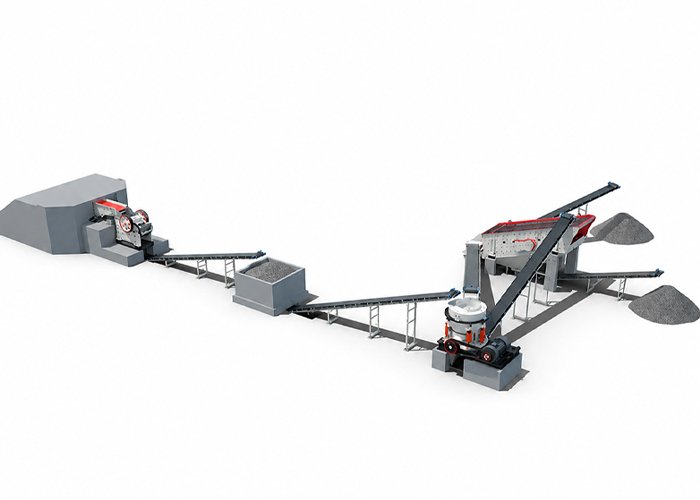
Jaw + Cone + Screening System
Premium Aggregate Products
Jaw + Cone Crusher
For most limestone operations, the highest profits come from using each crusher where it performs best rather than trying to replace one with the other.
Need Help Choosing a Limestone Crusher?
Send us:
✓ Limestone Type
✓ Feed Size
✓ Capacity Requirement
✓ Final Product Size
Our engineers can recommend the most suitable crushing solution for your project.
Why Is a Jaw Crusher Usually the First Crusher?
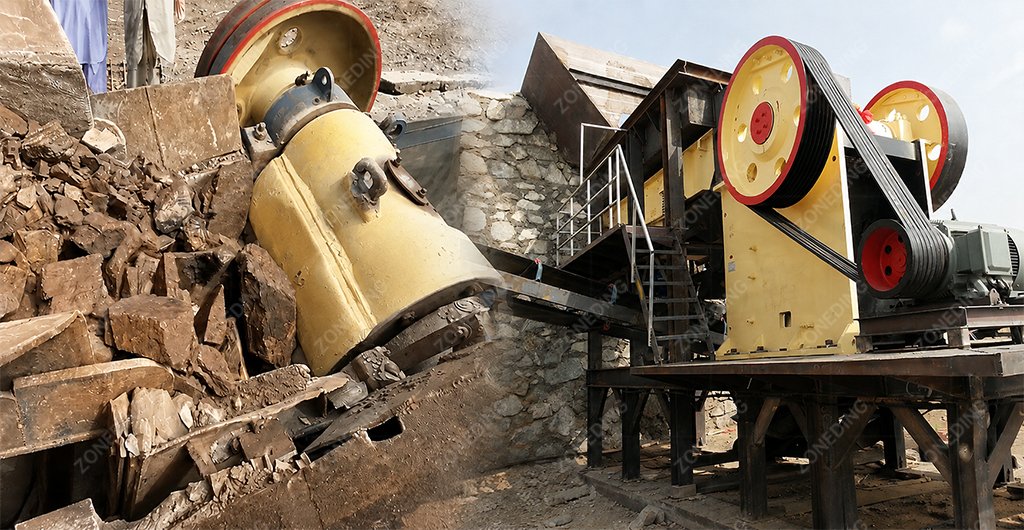
A Jaw Crusher is designed to handle large limestone rocks directly from the quarry.
Its main advantage is its ability to accept large feed material while maintaining a relatively simple structure.
Typical limestone feed sizes range from 500 mm to 1200 mm, which is often too large for a cone crusher.
Jaw crusher processing large limestone rocks in primary crushing stage
Why Quarry Owners Like Jaw Crushers
Advantage
Benefit
Large Feed Opening
Accepts large rock directly
Lower Purchase Cost
Reduces initial investment
Simple Design
Easier maintenance
Long Wear Life
Limestone is relatively soft
Stable Performance
Suitable for continuous production
For many road base projects, a jaw crusher may be the only crusher required.
Where Does a Cone Crusher Add Value?
A Cone Crusher becomes valuable when product quality matters.
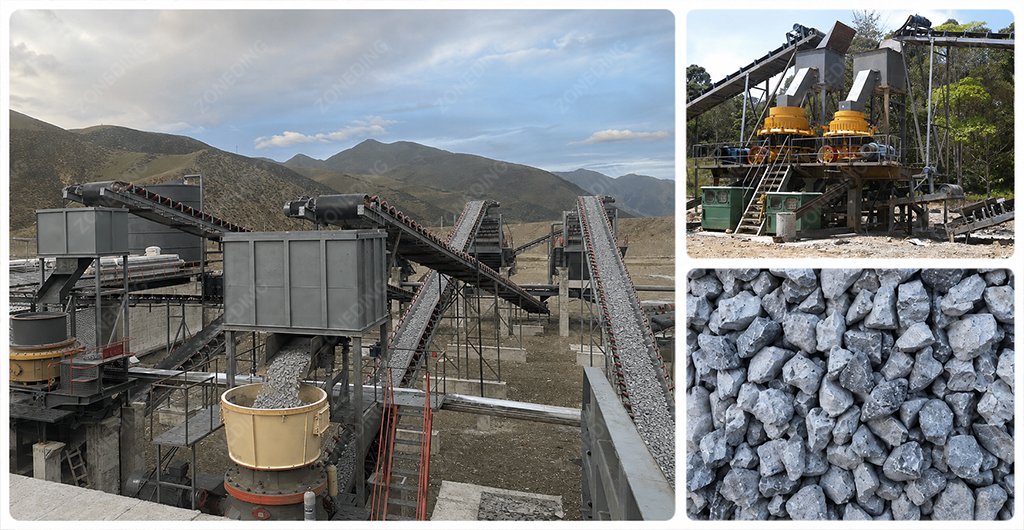
Instead of handling large rock, it focuses on refining material after primary crushing.
Cone crusher producing graded limestone aggregate
This creates:
More consistent aggregate sizes
Better grading
Improved production efficiency
Higher-value products
For companies selling aggregate to concrete plants or asphalt producers, these benefits often justify the additional investment.
Typical Applications for Cone Crushers
Application
Why Use a Cone Crusher
Concrete Aggregate
Better size consistency
Asphalt Aggregate
Improved grading
Railway Ballast
Controlled particle size
Commercial Aggregate Sales
More product options
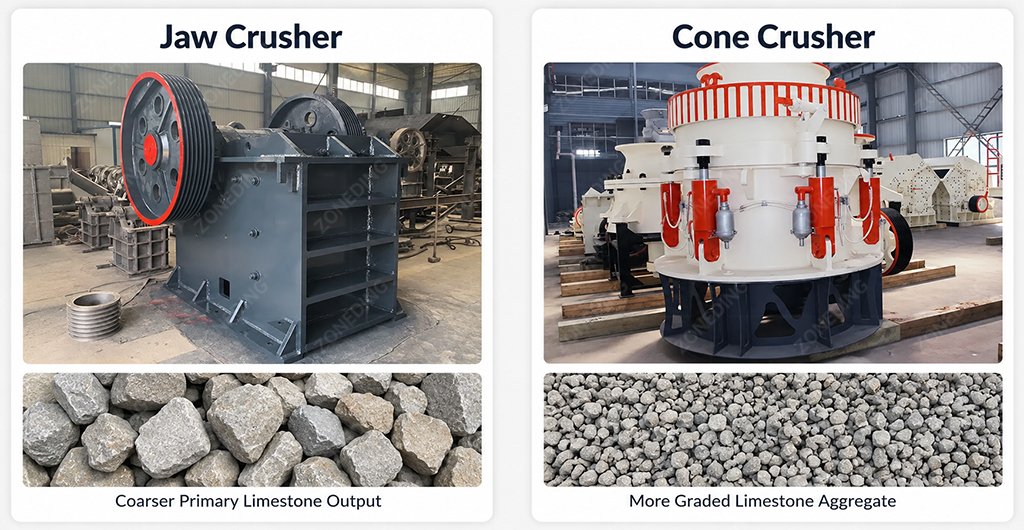
Which Crusher Produces Better Aggregate?
This is where many buyers make the wrong decision.
Limestone aggregate product comparison
The answer depends on what you plan to sell.
If Your Goal Is Road Base
A jaw crusher may be enough.
Benefits include:
Lower investment
Simpler operation
Lower maintenance requirements
If Your Goal Is Commercial Aggregate
A cone crusher becomes much more attractive.
Benefits include:
Better grading
More consistent sizes
Higher selling prices
More market opportunities
The difference is not the machine itself.
The difference is the value of the final product.
Real Example
Two limestone quarries process similar material.
Quarry A
Quarry B
Jaw Crusher Only
Jaw + Cone Crusher
Road Base Products
Concrete Aggregate
Lower Investment
Higher Investment
Lower Product Value
Higher Product Value
After three years, Quarry B generated significantly higher profit despite spending more initially.
The additional investment created access to premium aggregate markets.
Which Crusher Has Lower Operating Costs?
Many buyers immediately look at equipment price.
Experienced quarry operators look at:
Cost Per Ton
The cheapest machine to buy is not always the cheapest machine to operate.
Cost Factor
Jaw Crusher
Cone Crusher
Purchase Cost
Lower
Higher
Wear Parts
Lower
Medium
Maintenance Complexity
Lower
Medium
Power Consumption
Lower
Medium
Product Value
Medium
Higher
For small projects, a jaw crusher often delivers the lowest operating cost.
For commercial aggregate production, cone crushers frequently generate greater profit because they produce higher-value products.
Can a Jaw Crusher Replace a Cone Crusher?
Sometimes.
However, this depends on the final product requirements.
A jaw crusher may be sufficient when:
Capacity is small
Product quality requirements are basic
Budget is limited
However, replacing a cone crusher in a commercial aggregate plant often creates:
More oversized material
Less consistent grading
Lower aggregate value
As a result, many successful limestone plants combine both crushers.
Need a Crushing Plant Recommendation?
Our engineers can help you choose:
✓ Crusher Models
✓ Screening Equipment
✓ Plant Layout
✓ Conveyor Systems
✓ Dust Control Solutions
Simply provide your project requirements.
What Is the Most Profitable Limestone Crushing Setup?
The answer depends on plant size.
Small Limestone Plants
Usually focus on:
Road construction
Local projects
Lower investment
A jaw crusher and screening system are often sufficient.
Medium Limestone Plants
Usually focus on:
Aggregate sales
Concrete production
Multiple product sizes
A jaw crusher combined with a cone crusher is often the best solution.
Large Limestone Quarries
Usually focus on:
High production capacity
Multiple aggregate products
Premium market segments
These operations often include multiple crushing and screening stages.
A properly designed Stone Crushing Plant generally produces greater profit than simply installing larger crushers.
Case Study: How a Cone Crusher Increased Revenue by 28%
A customer in the Middle East operated a 500 TPH limestone quarry.
Original Plant
Configuration
Result
Jaw Crusher Only
Limited product range
Basic Screening
Higher percentage of oversized material
The quarry mainly sold road base products.
Upgrade
The customer added:
Cone crusher
Additional screening stage
Results After Upgrade
Metric
Before
After
Product Sizes
2
5
Aggregate Value
Standard
Premium
Sales Revenue
100%
+28%
Customer Base
Local
Regional
The biggest improvement was not production capacity.
It was product value.
Mobile Plant or Fixed Plant?
Many new investors also ask whether they should choose a mobile crusher or a fixed plant.
Mobile crusher
Stationary Crusher Plant
Feature
Fixed Plant
Mobile Plant
Capacity
Higher
Mobility
None
Excellent
Operating Cost
Lower
Higher
Installation Time
Longer
Shorter
Long-Term ROI
Better
Moderate
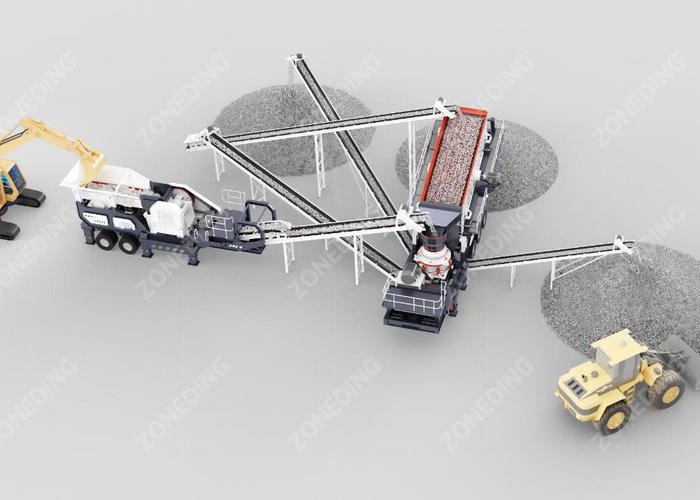
A Mobile Crusher Plant is often ideal for short-term projects and changing job sites.
Meanwhile, fixed plants generally provide better long-term economics for large limestone quarries.
Frequently Asked Questions
Is a jaw crusher enough for limestone?
Yes. For road base production, small quarries, and low-capacity projects, a jaw crusher may be sufficient. However, commercial aggregate production often requires additional crushing stages.
Why use a cone crusher after a jaw crusher?
A cone crusher helps produce finer and more consistent aggregate. It also increases the number of saleable products and improves overall plant efficiency.
Which crusher has lower wear costs for limestone?
Because limestone is relatively soft, both machines generally offer good wear life. In most cases, jaw crushers have slightly lower wear-part costs.
Which crusher is better for concrete aggregate?
For most concrete aggregate applications, a jaw crusher combined with a cone crusher provides the best balance between product quality and operating cost.
Can a cone crusher handle large limestone rocks?
Not efficiently. Large limestone should first be reduced by a jaw crusher before entering a cone crusher.
What is the most profitable limestone crushing setup?
For most commercial quarries, a jaw crusher, cone crusher, and screening system provide the best long-term return on investment.
Final Thoughts
The choice between a jaw crusher and a cone crusher is not about which machine is better.
It is about choosing the right machine for the right stage of the process.
A jaw crusher is ideal for primary crushing and handling large limestone rocks. A cone crusher improves product quality, increases flexibility, and creates higher-value aggregate products.
For most medium and large limestone operations, combining both machines delivers the best balance between investment cost, production efficiency, and long-term profitability.
Instead of focusing only on equipment price, evaluate the complete process, including wear costs, product value, plant capacity, and future expansion plans. The right crusher configuration can continue generating savings and profit for many years.
Need Help Choosing the Right Limestone Crusher?
Send us:
✓ Material Type
✓ Feed Size
✓ Capacity Requirement
✓ Final Product Size
Our engineers can recommend the most cost-effective crushing solution for your project.
About ZONEDING
ZONEDING provides jaw crushers, cone crushers, mobile crushers, vibrating screens, feeders, and complete limestone crushing plants for customers worldwide.
Whether you are building a new quarry, expanding production, or upgrading an existing crushing plant, our engineering team can help you select the right equipment and process flow for your specific application.
Contact us today to discuss your limestone crushing project and receive a customized solution.
Building a highly profitable mineral processing facility requires a strictly logical equipment sequence. A complete copper-gold ore processing line must follow a precise physical and chemical path. The rock must be crushed, ground, classified, and...
Building a nickel ore processing plant cost typically ranges from $20 million for small sulfide units to over $1.5 billion for massive laterite projects. Most investors fail because they only look at the price of machines and ignore infrastructure...
Designing a profitable high-purity quartz sand production line requires strict adherence to physical and chemical principles. Quartz ore processing follows a strict sequence. Operators must crush, grind, classify, and purify the raw rock in order....
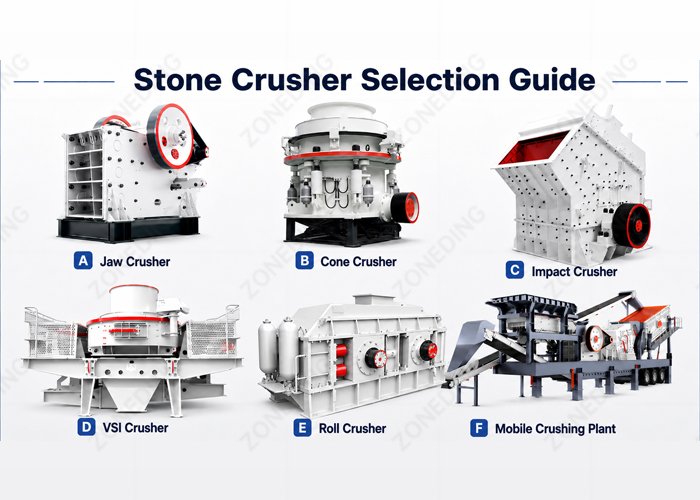
Choosing the right stone crusher is one of the most important decisions in aggregate production and quarry operations. The wrong machine can increase wear cost, reduce production efficiency, and create long-term maintenance problems. Meanwhile, th...
We use cookies to ensure that we give you the best experience on our website. If you continue to use this site we will assume that you are happy with it.
Privacy Policy
Send us a message
We would love to hear from you
Submit your question and our team will respond to the email provided as soon as possible.
 Zoneding Machine