Jaw crushers are fundamental machines in mineral processing. Their continuous operation is key to productivity. Effective maintenance practices are not merely about repairs. They are about preventing issues and optimizing performance. This guide outlines essential maintenance strategies. These strategies help operations eliminate downtime. They also aim to double crushing efficiency. ZONEDING designs jaw crushers for durability. Implementing these rules ensures they deliver maximum value.
Why is a jaw crusher’s efficient operation so crucial? What hidden losses result from neglecting maintenance?
Jaw crushers are vital primary stage equipment in mineral processing and aggregate production; inefficient operation impacts the entire plant. Neglecting maintenance causes hidden losses, affecting productivity, profitability, and safety, not just repair costs.
While ZONEDING Jaw Crushers are designed for high performance, consistent care is essential. Operators often miss subtle inefficiency signs—minor power draw changes, product shape variations, or throughput drops. These compound, causing significant energy waste and premature component wear.
For example, inconsistent “choke feeding” reduces energy transfer, leading to inefficient crushing, increased jaw plate wear, and higher energy consumption per ton. A proper feed system, like a Vibrating Feeder, ensures steady flow, maximizing efficiency and reducing operational costs. Ignoring these details means paying more for less output and risking costly breakdowns.
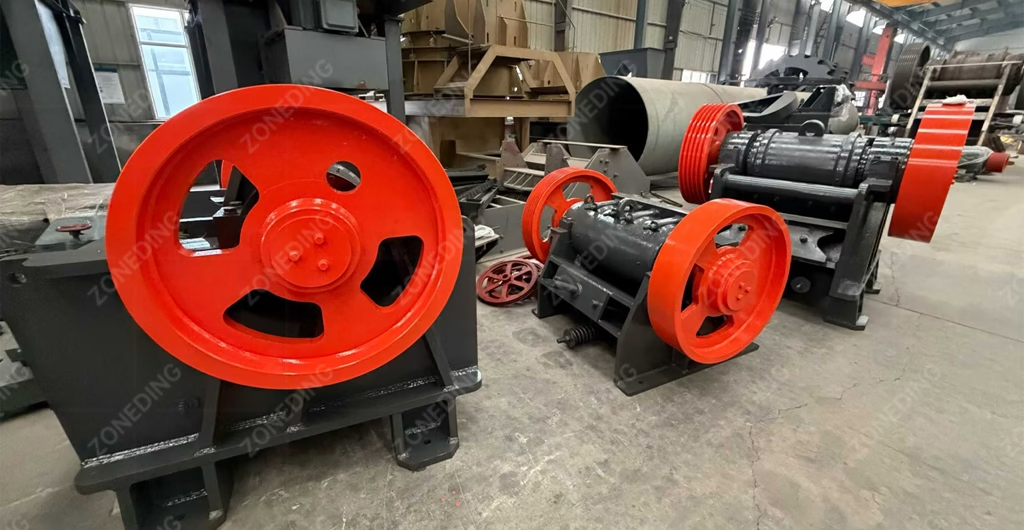
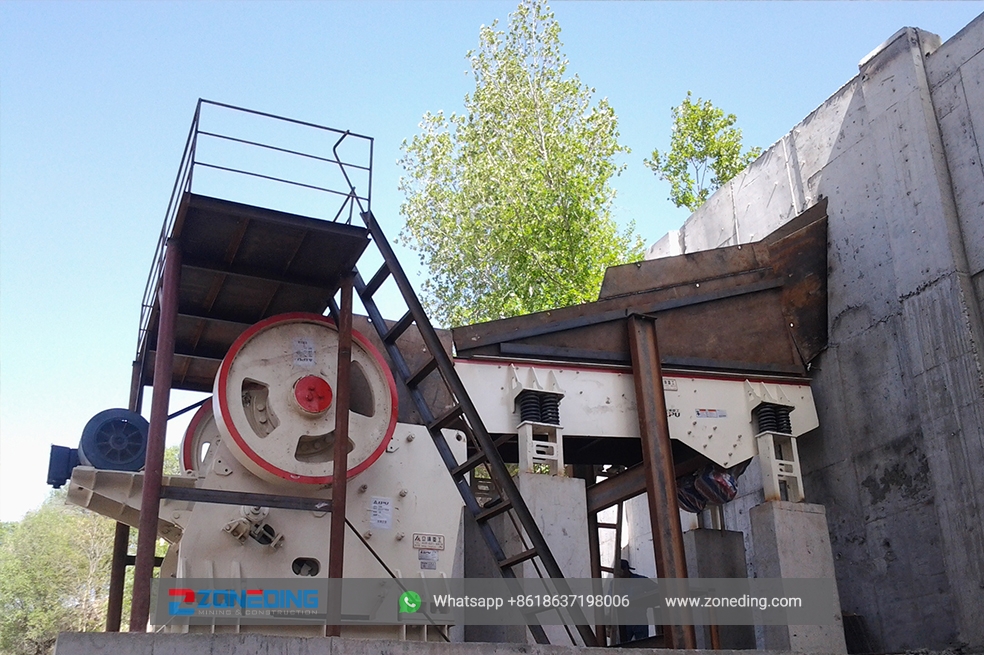
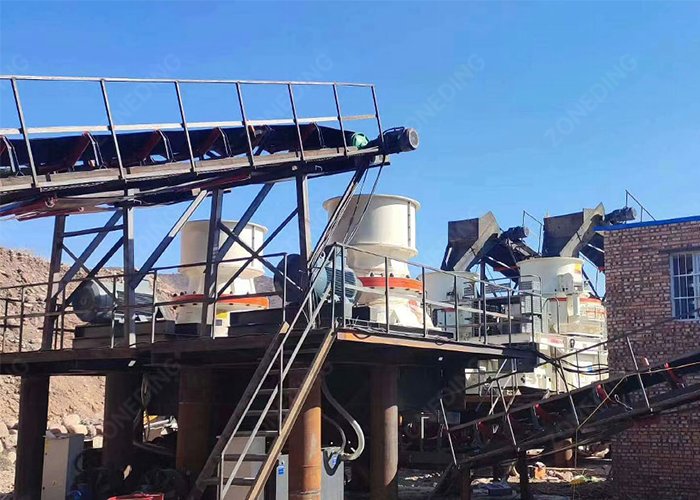
Jaw crusher crushing site
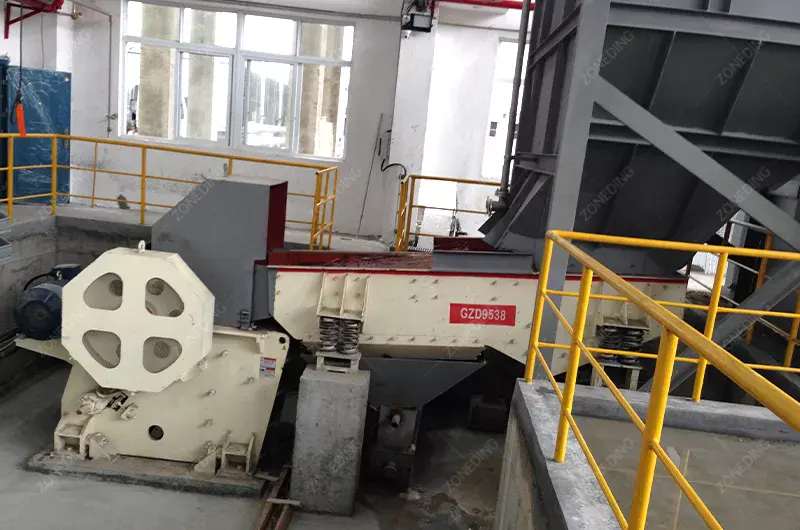
Jaw crusher crushing site
Consequences of Neglected Jaw Crusher Maintenance
Increased Operating Costs: Unplanned downtime means lost production. Emergency repairs cost more than scheduled maintenance. Higher energy consumption per ton adds to expenses.
Reduced Throughput and Output: Inefficient crushing means less material processed per hour. This directly impacts sales and project timelines.
Premature Component Failure: Neglecting lubrication or proper adjustment leads to faster wear of bearings, jaw plates, and other parts. This shortens the lifespan of critical components.
Inconsistent Product Quality: Worn parts or improper settings result in varied product sizes. This can lead to rejection of material. It requires reprocessing.
Safety Hazards: Malfunctioning equipment poses risks to personnel. Loose parts or overheating can lead to accidents.
Environmental Impact: Inefficient crushers use more energy. They may also generate more dust or noise. This increases the environmental footprint.Neglected AreaDirect ImpactHidden LossInconsistent FeedingReduced rock-on-rock crushing action.Higher energy consumption, uneven wear, lower cubicity.Loose Bolts/Worn PartsIncreased vibration, misalignment.Structural damage, increased component stress.Poor LubricationFriction, heat buildup in bearings.Catastrophic bearing failure, extended repairs.
What daily checks and preventive maintenance “secrets” can effectively prevent sudden jaw crusher failures and production interruptions?
Preventing sudden jaw crusher failures is crucial for continuous production and avoiding costly interruptions. Diligent daily checks and strategic preventive maintenance (PM) are essential to catch problems early, enabling planned repairs and smooth operations. ZONEDING advocates a proactive approach for maximum equipment uptime.
Many operators overlook subtle signs of impending failure, focusing only on major components, though small details often hint at bigger issues. For example, the critical toggle plate and its seats absorb immense forces, defining swing jaw movement. Wear or misadjustment causes subtle inefficiencies, leading to uneven jaw plate wear, stressed bearings, and unexpected breakdowns. Regularly inspecting toggle plate seating and tension mechanisms is vital for comprehensive PM. This goes beyond simple visual checks, including listening for unusual noises and analyzing power draw and vibration data. Such attention ensures continuous operation and prevents costly surprises.
Essential Daily Checks
Visual Inspection: Conduct a thorough walk-around at the start of each shift. Look for loose bolts, cracks, oil leaks, unusual material buildup, or any visible damage. Pay attention to the condition of the jaw plates and side liners.
Sound Monitoring: Listen for any new or abnormal noises. Grinding, squealing, clunking, or knocking sounds indicate mechanical issues. Investigate these immediately.
Temperature Check: Use an infrared thermometer to check the temperature of bearings and motor. A sudden increase can signal lubrication problems, excessive friction, or overload.
Feed Observation: Observe the incoming feed material. Look for oversized rocks, excessive fines, or tramp metal that could damage the crusher. Ensure consistent feed.
Product Quality Check: Periodically check the crushed product for consistency in size and shape. Variations can indicate wear or misadjustment of the crusher.
Preventive Maintenance “Secrets”
Scheduled Lubrication: Follow a strict lubrication schedule. Use the recommended type and amount of lubricant for all grease points and bearings.
Toggle Plate and Block Inspection: Regularly inspect the toggle plate and its seats. Ensure proper tension and seating. Replace worn components promptly. This maintains proper jaw movement. It prevents stress on other parts.
Belt Tension Check: Verify the tension of drive belts. Loose belts cause slippage and power loss. Overtight belts can damage bearings.
Bolt Tightness Verification: Periodically re-torque all critical bolts. These include frame bolts, jaw plate bolts, and flywheel bolts. Vibration can cause them to loosen.
Foundation Inspection: Inspect the concrete foundation and anchor bolts for cracks or loosening. A stable foundation is crucial for efficient operation.
How to select and replace wear parts like jaw plates, side liners, to maximize crushing efficiency and extend lifespan?
Jaw plates and side liners are critical wear parts affecting jaw crusher efficiency and machine lifespan. Proper selection, driven by material and application, is key to maximizing productivity and longevity, not just price.
Operators often miss optimization by using identical replacements. Different jaw plate profiles, like “deep tooth” for hard, slabby material or “quarry style” for cubical aggregate, can significantly improve performance. Analyzing specific wear patterns and consulting wear parts suppliers can optimize the crushing zone, reducing plate changes, downtime, and material costs. Side liners are equally important for frame protection and chamber integrity.
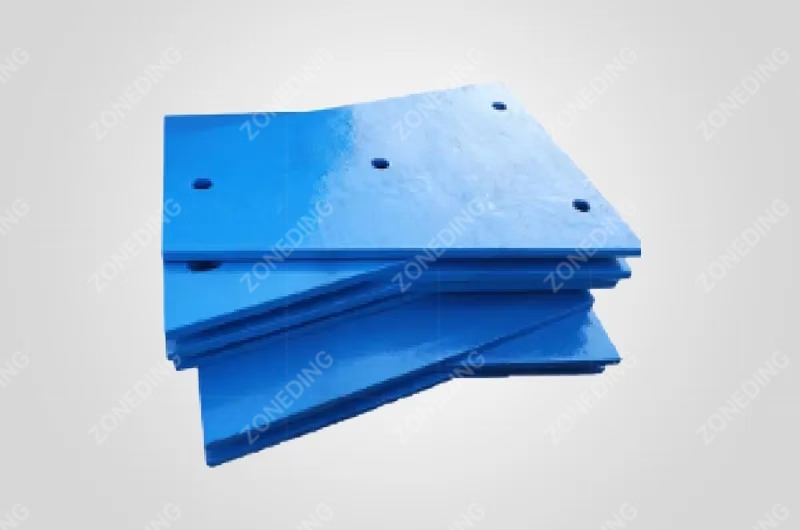
Jaw Plates
Cheek Plates
Strategic Selection of Wear Parts
Material Characteristics: Consider the abrasiveness and hardness of the feed material. High manganese steel is common for jaw plates. Specific alloys offer enhanced wear resistance for very tough applications. ZONEDING provides high-quality, durable wear parts.
Jaw Plate Profile: Select profiles that match the feed material and desired product.
Standard Corrugated: General purpose.
Deep Tooth: Better grip for large, slabby material. Increases reduction ratio.
Quarry Style: Promotes cubical product.
Symmetry and Reversibility: Some jaw plates are reversible. They can be flipped or swapped. This allows maximum utilization. It extends their useful life.
Side Liners: Ensure side liners (cheek plates) are made from wear-resistant material. They protect the main frame. They maintain the crushing chamber shape.
Optimal Replacement Practices
Timely Replacement: Replace jaw plates and side liners before they wear excessively thin. Overly worn plates reduce crushing efficiency. They can damage the main frame. Monitor wear patterns. Measure remaining thickness regularly.
Proper Installation: Ensure all bolts are tightened to the manufacturer’s specified torque. This prevents loosening during operation. Loose parts cause uneven wear and potential damage.
Balanced Wear: If one jaw plate (e.g., fixed jaw) wears faster, consider swapping it with the movable jaw plate. This applies if the design allows. Or try reversing it to maximize wear life.
Matching Components: Always use compatible wear parts. Mixing incompatible profiles or materials can lead to uneven wear. It reduces overall efficiency.
The lubrication system is the jaw crusher’s “lifeline,” how to ensure precise maintenance and completely eliminate bearing overheating and wear problems?
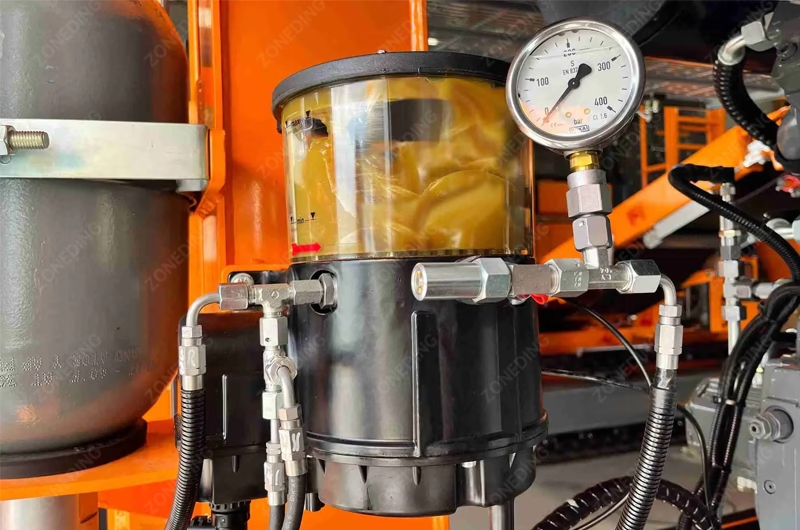
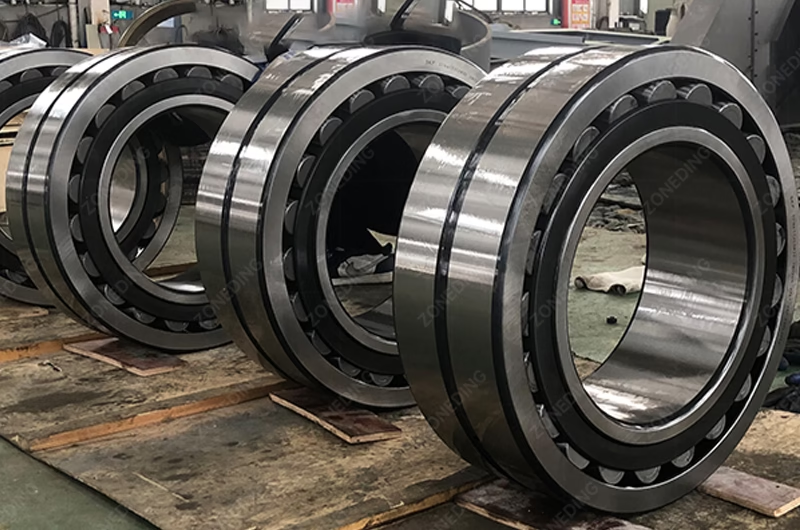
A jaw crusher’s lubrication system is its vital ‘lifeline,’ preventing premature wear and ensuring smooth operation. Bearings are especially vulnerable; their failure often stems from inadequate lubrication or contamination. Precise system maintenance eliminates overheating and wear problems, extending crusher life. Beyond just adding lubricant, its quality, cleanliness, and temperature are paramount. Overheating bearings are a silent killer, indicating severe friction or system issues.
A robust lubrication program, essential for early warning, includes scheduled lubricant sampling (for metal particles) and main bearing temperature sensors (detecting spikes from insufficient lubrication or excessive load). Ignoring even slightly elevated temperatures risks catastrophic failure. Clean sump breather filters prevent airborne contamination. Proactive, comprehensive lubrication system maintenance is key to ensuring decades of crusher life.
jaw crusher’s lubrication system
Jaw crusher bearings
Key Aspects of Lubrication System Maintenance
Use Correct Lubricant: Always use the type and grade of lubricant recommended by ZONEDING. Using the wrong lubricant can lead to friction and damage.
Strict Lubrication Schedule: Follow a manufacturer-specified schedule for greasing and oil changes. Consistency prevents lubricant degradation and contamination.
Lubricant Quality and Cleanliness: Store lubricants properly. Keep them free from dirt and moisture. Contaminated lubricant causes rapid bearing wear.
Temperature Monitoring: Regularly check bearing temperatures. Use infrared thermometers or installed sensors. Elevated temperatures mean trouble. Investigate immediately.
Oil Analysis: Conduct periodic sampling and laboratory analysis of bearing oil. This detects metallic particles. It reveals contamination levels. This provides an early warning system for internal wear.
Breather Filters: Inspect and clean or replace breather filters on sumps or reservoirs. This prevents dust and debris from entering the oil system.
Cooling System Check (if applicable): For crushers with forced lubrication and cooling, inspect the oil cooler, pumps, and filters. A clean and functional cooling system prevents oil overheating.
Preventing Bearing Overheating and Wear
Proper Grease Quantity: Avoid over-greasing or under-greasing. Both can be detrimental. Follow specific guidelines for each lubrication point.
Seal Integrity: Check seals regularly. Damaged seals allow lubricant to escape. They let contaminants enter the bearings.
Shaft Alignment: Ensure proper alignment of shafts and components. Misalignment creates undue stress on bearings. It leads to premature wear.
Prevent Overload: Operating the crusher within its specified capacity prevents excessive load on bearings.
What are the key maintenance points for the drive system (e.g., motor, belts, flywheel)? How to ensure stable power output for the jaw crusher?
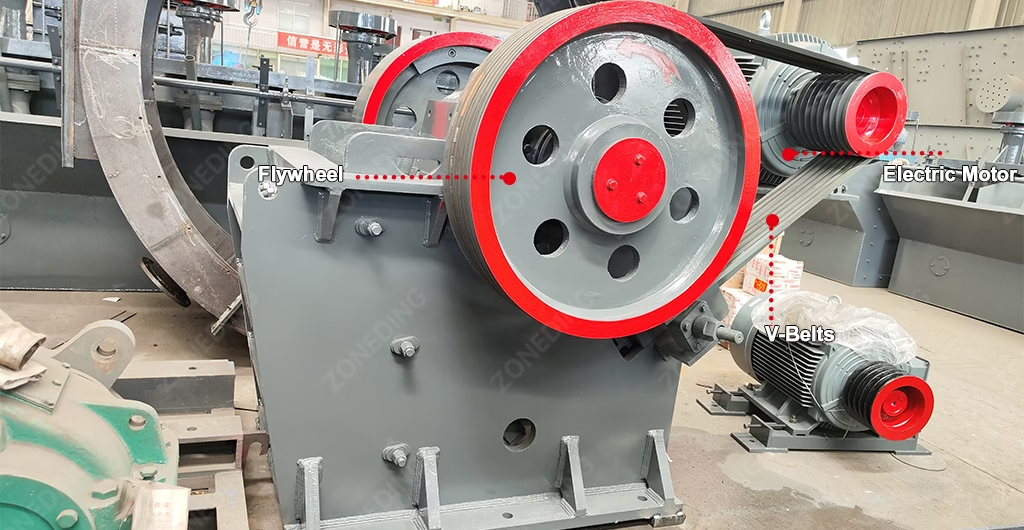
The jaw crusher’s drive system (motor, belts, flywheel) is its heart, transmitting power for efficient crushing. Neglecting it causes power loss, breakdowns, and reduced productivity.
A stable foundation and intact anchor bolts are critical for performance, efficiency, and safety, given the enormous dynamic forces generated. Often overlooked, continuous vibration can loosen bolts, crack grout, or degrade concrete, leading to excessive machine vibration, misalignment, increased wear, reduced efficiency, and structural damage. Regularly inspect and re-tension anchor bolts, repair concrete/grout cracks promptly, and ensure shim packs are intact. A stable foundation ensures optimal operation, minimizes energy waste, and extends component life.
jaw crusher’s drive system
Key Maintenance Points for the Drive System
Electric Motor:
Cleanliness: Keep the motor free from dust and debris. This ensures proper cooling. Overheating shortens motor life.
Bearings: Check motor bearing lubrication as per manufacturer guidelines. Listen for unusual noises.
Wiring: Inspect electrical connections for tightness and signs of wear or overheating.
Vibration: Monitor motor vibration levels. Excessive vibration can indicate misalignment or internal motor issues.
V-Belts:
Tension: Regularly check and adjust belt tension. Loose belts slip, wasting power. Overtight belts stress motor and crusher bearings.
Wear: Inspect belts for cracks, fraying, or excessive wear. Replace worn belts promptly. Replace all belts in a set simultaneously. This ensures even load distribution.
Alignment: Ensure pulleys are correctly aligned. Misalignment causes uneven belt wear and premature failure.
Flywheel:
Mounting Bolts: Check the tightness of flywheel mounting bolts regularly. Vibration can cause them to loosen.
Cracks: Inspect the flywheel for any signs of cracks or damage. This is especially important after heavy impacts or overloads. A damaged flywheel can be extremely dangerous.
Balance: If unusual vibration occurs, check for flywheel balance. Imbalance can cause severe mechanical stress.
Clutch (if applicable):
Engagement/Disengagement: Check the clutch for smooth operation. Ensure it engages and disengages properly.
Wear: Inspect clutch plates for wear. Adjust or replace as needed.
Ensuring Stable Power Output
Proper Sizing: Ensure the motor is correctly sized for the crusher’s intended application and material.
Consistent Power Supply: Provide a stable and clean electrical power supply to the motor. Voltage fluctuations can damage the motor.
Regular Inspections: Implement a routine inspection schedule for all drive system components.
Prompt Repairs: Address any identified issues immediately. This prevents minor problems from escalating into major failures.
How to precisely adjust the discharge opening, achieve optimal product size, and optimize crushing chamber wear and energy consumption?
Precise Closed Side Setting (CSS) adjustment is critical; it dictates final product size and profoundly impacts chamber wear and energy consumption. The CSS defines the smallest gap between jaw plates, controlling maximum product size. As plates wear, the effective CSS shifts, drastically reducing efficiency, increasing power draw, and yielding inconsistent product. For optimal efficiency, especially in secondary crushing, monitor and adjust CSS daily to compensate for wear. Modern hydraulic systems (e.g., ZONEDING) enable quick, safe adjustments. The aim is to maintain designed crushing chamber volume and reduction ratio for consistent product and optimized power. Ignoring CSS drift leads to lower throughput, higher recirculation, and reduced overall plant efficiency.
Precise Discharge Opening Adjustment
Understanding CSS: The CSS is the gap at the bottom of the crushing chamber when the movable jaw is closest to the fixed jaw. It directly controls the largest particle size in the final product.
Regular Monitoring: Periodically measure the CSS. Do this with the crusher empty and stopped. Ensure safety protocols are followed.
Dynamic Adjustment: As jaw plates wear, the effective CSS widens. Regular adjustments are necessary. This maintains the desired product size. It ensures consistent output.
Adjustment Mechanisms: Jaw crushers use different adjustment mechanisms. These include shims, hydraulic systems, or mechanical wedges. Understand and correctly use the specific mechanism on your machine.
Test Crushing: After adjustment, run a short test. Check the product size distribution. Fine-tune the CSS as needed to meet specifications.
Optimizing Crushing Chamber Wear and Energy Consumption
Optimal Product Size: Adjusting the CSS to produce the required product size reduces over-crushing. Over-crushing wastes energy. It increases wear.
Balanced Throughput: A wider CSS allows higher throughput. It produces coarser material. A narrower CSS produces finer material. It might reduce throughput and increase power draw. Find the balance point for your operation.
Even Wear: Correct CSS adjustment promotes even wear across the jaw plates. This maximizes their lifespan. It ensures efficient crushing.
Reduced Recirculation: In closed-circuit crushing, precise CSS minimizes oversized material returning to the crusher. This reduces the load on the crusher. It saves energy.
“Choke Feeding” Principle: Always operate the crusher in a choke-fed condition. This means keeping the crushing chamber full. This promotes rock-on-rock crushing. It reduces wear on jaw plates. It distributes forces evenly.Adjustment ImpactBenefit for OperationsOutcomeConsistent Product SizeMeets market specifications reliably.Reduces waste, avoids re-processing.Optimized Energy UseCrushes only to the required size.Lower electricity bills per ton.Extended Wear Parts LifeEven wear distribution on jaw plates.Fewer replacements, less downtime, lower costs.Maximized ThroughputEfficient use of crushing chamber volume.Higher daily production, increased profitability.
How to use vibration, noise, and temperature monitoring data to achieve early fault warning and predictive maintenance for jaw crushers?
Monitoring vibration, noise, and temperature data is crucial for jaw crushers, enabling Predictive Maintenance (PdM). PdM anticipates failures, allows scheduled interventions, prevents costly breakdowns, and maximizes uptime, shifting maintenance from reactive to predictive. For instance, increased “no-load” power signals tight bearings/misalignment, and subtle vibration changes indicate bearing damage or loose components. Ignoring such signs or elevated temperatures risks catastrophic failure. Regular data collection establishes baselines, identifies deviations, and facilitates early diagnosis, drastically reducing unplanned downtime and extending equipment life.
Using Monitoring Data for Early Warning
Vibration Analysis:
Sensors: Install accelerometers on bearings and the frame.
Data Trending: Track vibration levels over time. Changes in amplitude or frequency indicate issues. These issues could be bearing wear, imbalance, or loose components.
Baseline: Establish a baseline vibration signature for normal operation. Deviations from this baseline trigger an alert.
Noise Monitoring:
Operator Awareness: Train operators to recognize unusual sounds. This includes grinding, squealing, or clunking.
Acoustic Sensors: In some advanced setups, acoustic sensors can detect abnormal noise patterns.
Temperature Monitoring:
Infrared Thermometers: Use handheld devices for routine checks of bearing housings, motors, and gearboxes.
Fixed Sensors: Install RTD (Resistance Temperature Detector) or thermocouple sensors on critical bearings. Connect them to a control system. This provides continuous monitoring.
Alerts: Set up alerts for temperature thresholds. Immediate investigation is needed if thresholds are exceeded.
Implementing Predictive Maintenance (PdM)
Data Integration: Collect data from various sensors. Integrate it into a centralized monitoring system.
Anomaly Detection: Use data analytics to identify abnormal patterns. These patterns suggest impending failures.
Scheduled Interventions: Based on PdM insights, schedule maintenance before a component fails. This minimizes downtime. It allows for efficient resource allocation.
Oil Analysis: Regularly sample and analyze bearing lubricant. Detect metallic wear particles or contamination. This predicts bearing or gear wear.
Power Draw Analysis: Monitor the crusher’s power consumption. An increase can indicate overload. It could also point to internal friction or mechanical issues. A baseline “no-load” power audit can also reveal subtle inefficiencies.
Beyond routine maintenance, what operating habits and “professional techniques” can significantly extend the equipment lifespan of jaw crushers?
Extending a jaw crusher’s lifespan demands specific operating habits and techniques beyond routine maintenance to reduce stress, maximize durability, and ensure consistent long-term performance. The often-overlooked foundation is crucial. Jaw crushers generate enormous dynamic forces, so foundation stability and anchor bolt integrity are critical for long-term performance, efficiency, and safety, yet frequently forgotten post-installation. Continuous vibration and shock loads loosen anchor bolts, crack grout, and degrade concrete, leading to excessive machine vibration, misalignment, increased component wear, reduced crushing efficiency, and potential structural damage. Regular inspection of anchor bolt torque and the foundation is vital to ensure operation within design parameters, minimize energy waste from vibration, extend component life, and maintain consistent crushing geometry.
Professional Techniques for Extended Lifespan
“Choke Feeding” Mastery: Consistently operate the crusher in a choke-fed condition. This means keeping the crushing chamber full. This promotes rock-on-rock crushing. It reduces direct wear on jaw plates. It distributes impact forces evenly. This extends jaw plate life. It also improves product quality.
Tramp Metal Protection: Use a metal detector or magnet. Remove tramp metal from the feed. Metal entering the crusher can cause severe damage. It can break jaw plates or the frame.
Proper Startup and Shutdown Procedures: Follow manufacturer guidelines for starting and stopping the crusher. Avoid sudden stops while under load. Ensure the crushing chamber is empty before shutdown.
Foundation and Anchor Bolt Integrity: Regularly inspect the crusher’s foundation. Check for cracks or subsidence. Verify the tightness of anchor bolts. Re-tension them to specification periodically. A stable foundation prevents excessive vibration and stress.
Toggle Plate and Block Adjustment: Ensure the toggle plate and its seats are correctly adjusted and free of excessive wear. This maintains proper kinematics. It reduces stress on the frame and bearings.
Consistent Feed Size: Try to maintain a consistent feed size to the crusher. Avoid sudden surges of very large or very small material. This optimizes crushing action. It reduces shock loads.
Regular Cleaning: Keep the area around the crusher clean. Remove spilled material. This prevents buildup that can impede access or cause contamination.
Operating Habits for Longevity
Operator Training: Ensure all operators are thoroughly trained. They should understand the crusher’s operation. They must recognize warning signs. This includes ZONEDING’s Mineral Processing Machine operation.
Never Overload: Do not exceed the crusher’s rated capacity. Overloading puts excessive stress on all components. It leads to premature failure.
Monitor Power Draw: Pay attention to the crusher’s power consumption. Sudden spikes indicate issues that need immediate investigation.
Record Keeping: Maintain detailed logs of operation hours, maintenance activities, and any incidents. This data helps identify trends. It refines maintenance strategies.
Facing common jaw crusher malfunctions (e.g., blockage, abnormal noise, decreased output), how to quickly diagnose and efficiently troubleshoot?
Common jaw crusher malfunctions can disrupt operations significantly. These include blockage, abnormal noise, or decreased output. Quick diagnosis and efficient troubleshooting are essential. They minimize downtime. They restore productivity. Knowing how to react calmly and systematically is key. Blockages usually stem from oversized material or excessive fines. Abnormal noise points to mechanical issues. Decreased output suggests wear or incorrect settings. For blockages, stop the crusher immediately. Clear the material safely. For abnormal noise, identify its source. Check bearings, toggle plate, or loose components. For decreased output, inspect jaw plates, CSS, and feed consistency. ZONEDING provides troubleshooting guides with its Crushing Equipment. These guides help in rapid problem resolution.
Quick Diagnosis of Common Malfunctions
Blockage (Choking):
Symptoms: Crusher stops or slows down significantly. Material fills the crushing chamber completely.
Diagnosis: Often caused by too much fine material, sticky material, or a piece of oversized material getting stuck. Check feed rate and material characteristics.
Action: Stop the crusher immediately. Clear the chamber safely following lockout/tagout procedures. Adjust feed control or screen out fines if possible.
Abnormal Noise:
Symptoms: Grinding, clunking, squealing, or knocking sounds.
Diagnosis:
Grinding: Often indicates bearing issues or internal rubbing.
Clunking: Could be loose jaw plates, a worn toggle plate, or tramp metal.
Squealing: May point to slipping belts or dry bearings.
Knocking: Could be internal component contact or extreme wear.
Action: Stop the crusher. Pinpoint the source of the noise. Inspect bearings, jaw plates, toggle assembly, and drive system.
Decreased Output (Throughput):
Symptoms: Processing less material per hour despite consistent feed.
Diagnosis: Common causes include worn jaw plates, incorrect Closed Side Setting (CSS), improper feed distribution, or reduced motor power.
Action: Check jaw plate wear. Verify CSS. Optimize feed. Inspect the drive system (belts, motor).
Efficient Troubleshooting Steps
Stop and Secure: Always stop the crusher and follow lockout/tagout procedures before any inspection or repair. Safety is paramount.
Gather Information: Ask the operator for details. What were the exact symptoms? When did it start? Was there any unusual event?
Visual Inspection: Conduct a thorough visual check. Look for obvious signs of damage, wear, or loose parts.
Check Simple Things First: Start with the easiest and most common potential causes. For example, check belt tension before dismantling a bearing.
Consult Manuals: Refer to the ZONEDING operation and maintenance manual. It contains specific troubleshooting charts for your crusher model.
Use Diagnostic Tools: Employ tools like infrared thermometers, vibration meters, or power meters to gather data. This aids in diagnosis.
Systematic Elimination: Work methodically through potential causes. Eliminate them one by one until the root cause is found.
Test and Verify: After repair, conduct a test run. Ensure the problem is resolved. Monitor performance closely.
How to tailor a comprehensive jaw crusher maintenance plan to ensure long-term stable and efficient operation, maximizing return on investment?
A tailored, comprehensive jaw crusher maintenance plan is essential for long-term stable, efficient operation, maximizing ROI and integrating strategic practices for continuous improvement. It combines preventive and predictive maintenance strategies, ensuring regular inspection and service of all critical mechanical, electrical, and hydraulic components. The plan adapts to specific operating conditions (material type, daily hours, environmental factors); for instance, abrasive conditions demand frequent wear part checks, and dusty environments require more air/oil filter attention. ZONEDING offers customizable maintenance solutions, leveraging expertise to develop effective, sustainable plans that ensure maximum uptime and optimal Jaw Crusher Efficiency.
Annually/Bi-annually: Major overhaul, full component inspection, frame integrity check, foundation assessment.
Wear Parts Management:
Inventory: Maintain an inventory of critical wear parts (jaw plates, cheek plates, toggle plates). Order based on predicted wear rates.
Strategic Selection: Continuously evaluate and optimize wear part material and profile. This improves efficiency and extends lifespan.
Predictive Maintenance (PdM) Integration:
Technology: Implement sensors for vibration, temperature, and oil condition monitoring.
Data Analysis: Use software to trend data. Identify anomalies. Predict potential failures. This allows for planned, proactive interventions.
Training and Empowerment:
Operator Training: Train operators on proper operation, daily checks, and basic troubleshooting.
Technician Training: Provide advanced training for maintenance technicians on specialized repairs and PdM techniques.
Documentation and Review:
Record Keeping: Maintain meticulous records of all maintenance activities, parts replacements, and operational data.
Regular Review: Periodically review the maintenance plan’s effectiveness. Adjust schedules and strategies based on performance data and lessons learned.
Safety Protocols: Integrate strict safety procedures (e.g., lockout/tagout) into every maintenance task.
Maximizing Return on Investment (ROI)
Reduced Unplanned Downtime: A well-executed plan minimizes sudden breakdowns. This maximizes operational hours. It leads to consistent production.
Extended Equipment Lifespan: Proactive care protects major components. This significantly extends the overall life of the Crushing Equipment. This defers capital expenditure for new machinery.
Optimized Performance: The crusher operates at peak efficiency. It produces consistent product quality. It achieves maximum throughput.
Lower Operating Costs: Preventing major failures is cheaper than emergency repairs. Optimized operation reduces energy consumption per ton. It extends wear parts life. This directly impacts the bottom line.
Maximizes material utilization, reduces change-outs.
15% increase in wear part lifespan.
Operator/Technician Training
Faster diagnostics, higher first-time fix rate.
10% reduction in average repair time.
Foundation Integrity Checks
Prevents structural damage, reduces vibration.
5% increase in crushing stability and efficiency.
Common Questions and Answers
Question 1: How often should jaw plates be inspected for wear? Jaw plates require daily visual inspection and weekly/bi-weekly detailed measurement, adjusted for material abrasiveness, to ensure efficiency and prevent frame damage.
Question 2: What are the primary indicators of a potential bearing failure in a jaw crusher? Potential bearing failure indicators are unusual noise (grinding, squealing), excessive heat, increased vibration, and metallic particles in oil analysis for early detection.
Question 3: Can I use different brands of lubricants interchangeably in my jaw crusher? No, strongly recommended to use only manufacturer-specified lubricants (e.g., ZONEDING). Incompatible types or mixing can cause degraded performance, reduced lubrication, and premature bearing failure. Always consult your manual.
Question 4: What is the most common cause of decreased throughput in a jaw crusher? Decreased throughput primarily results from worn jaw plates, incorrect Closed Side Setting (CSS), or inconsistent/under-feeding, preventing optimal “choke-fed” capacity and crushing efficiency.
Summary and Recommendations
Critical for operational success, uptime, and crushing efficiency, jaw crusher maintenance demands a proactive approach, moving beyond reactive repairs. This involves strategic wear parts management, precise discharge adjustments, and systematic preventive/predictive maintenance, ensuring consistent product quality, maximized throughput, and minimized operating costs. ZONEDING recommends a comprehensive plan combining daily inspections, data-driven predictive maintenance, proper lubrication, and ensuring foundation/drive system integrity. These practices extend equipment lifespan and significantly increase ROI. Partnering with ZONEDING offers high-quality Crushing Equipment and expert maintenance support.
About ZONEDING
ZONEDING MACHINE is a leading Chinese mineral processing equipment manufacturer. It specializes in B2B solutions. ZONEDING has provided reliable equipment since 2004. Our factory covers 8,000 square meters. It produces over 500 units annually. Our product range is comprehensive. It covers crushing, grinding, beneficiation, screening, and drying. ZONEDING offers full-service support. This includes design, manufacturing, installation, training, and after-sales service. Our products export to over 120 countries. ZONEDING commits to delivering high-quality, customized, and efficient solutions. These help operations achieve their goals. Contact ZONEDING today to discuss jaw crusher maintenance or equipment needs.
One of the first questions buyers ask before purchasing a cone crusher is: How many tons per hour can a cone crusher produce? The answer is not as simple as reading a specification sheet. Many operators discover that actual production differs sign...
Managing scattered construction sites requires highly adaptable equipment. The mobile crushing plant solves the massive challenge of tight schedules and frequent project relocations. Multi-project contractors deploy these machines to eli...
We use cookies to ensure that we give you the best experience on our website. If you continue to use this site we will assume that you are happy with it.
Privacy Policy
Send us a message
We would love to hear from you
Submit your question and our team will respond to the email provided as soon as possible.
 Zoneding Machine