A spodumene grinding circuit must do more than process the required tonnes of ore per hour. It must produce a particle size distribution suitable for lithium mineral separation while limiting unnecessary fines, controlling energy consumption, and maintaining stable operation.
For a lithium processing project, grinding requirements depend on the ore’s mineralogy and the beneficiation route. A plant using dense medium separation (DMS) before flotation may send a different feed to the ball mill than a plant that processes crushed ore directly through grinding and flotation.
These differences affect mill sizing, classification equipment, slurry handling, and the information suppliers need before preparing a quotation.
This guide focuses on the decisions that matter when selecting a wet ball mill circuit for spodumene: liberation requirements, grinding duty, hydrocyclone or fine-screen classification, operating control, and equipment procurement.
Why Grinding Circuit Design Matters for Spodumene Processing
A spodumene grinding circuit must do more than process the required tonnes of ore per hour. It must produce a particle size distribution suitable for lithium mineral separation while limiting unnecessary fines, controlling energy consumption, and maintaining stable operation.
For a lithium processing project, grinding requirements depend on the ore’s mineralogy and the beneficiation route. A plant using dense medium separation (DMS) before flotation may send a different feed to the ball mill than a plant that processes crushed ore directly through grinding and flotation.
These differences affect mill sizing, classification equipment, slurry handling, and the information suppliers need before preparing a quotation.
This guide focuses on the decisions that matter when selecting a wet ball mill circuit for spodumene: liberation requirements, grinding duty, hydrocyclone or fine-screen classification, operating control, and equipment procurement.
Spodumene commonly occurs in hard-rock pegmatites alongside minerals such as quartz, feldspar, and mica. The size and distribution of these minerals determine how much grinding is needed before effective separation.
The objective is not to produce the finest possible powder. It is to expose enough valuable spodumene for the selected separation process without generating excessive fine particles.
Insufficient grinding may leave spodumene locked with gangue minerals. Excessive grinding can create fine material that complicates flotation, desliming, and dewatering.
Consequently, the target product size should be established through mineralogical examination and metallurgical testing rather than selected from a generic equipment specification.
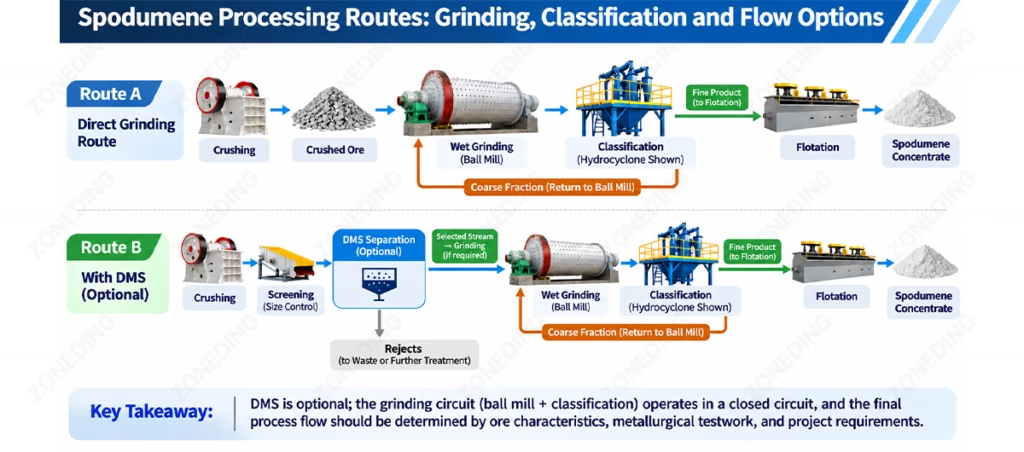
Conceptual spodumene processing routes showing how upstream separation can change the grinding circuit feed
DMS and Flotation Require Different Feed Preparation
DMS is considered when spodumene and associated gangue minerals can be separated at a relatively coarse particle size using differences in density.
Where suitable, coarse pre-concentration can reduce the quantity of material requiring subsequent fine grinding.
However, DMS is not effective for every deposit. Fine mineral intergrowth, unsuitable particle size distribution, or insufficient density contrast may limit its performance.
A DMS-plus-flotation project may therefore grind selected DMS streams rather than the entire crushed ore feed. A flotation-focused flowsheet may require a different grinding duty.
This distinction should be established before choosing the ball mill.
What Testwork Is Needed Before Sizing a Spodumene Ball Mill?
A ball mill cannot be reliably selected from throughput alone.
Two spodumene deposits with similar planned production rates may require different grinding power because their feed sizes, mineral textures, and grindability differ.
The initial design basis should include representative ore samples from the material expected to enter the grinding circuit.
Important measurements include:
Required data
Why it matters
Mineralogical composition
Identifies spodumene and associated gangue minerals
Liberation characteristics
Helps establish the appropriate grinding target
Feed particle size distribution
Defines the incoming grinding duty
Bond ball mill work index
Supports preliminary grinding energy estimates
Target product P80
Defines the intended grinding result
Flotation test results
Shows how product size affects downstream separation
Ore variability
Identifies possible changes in power demand and operating performance
Water characteristics
Helps assess slurry handling and separation conditions
A target P80 describes the size at which 80% of the material passes a specified screen opening. It is useful for circuit design, but it does not describe the complete particle size distribution.
Two products with similar P80 values can contain different quantities of very fine particles. For spodumene flotation preparation, this difference may be important.
Engineers should therefore review both the target P80 and the proportion of material within the size fractions relevant to liberation and flotation.
Where testing is incomplete, equipment selection should remain preliminary. Suppliers can discuss possible configurations, but the assumptions must be clearly identified.
How to Match Mill Capacity, Power, and Classification
The selected ball mill must provide sufficient grinding capacity at the required product size.
Mill diameter, length, installed power, grinding media loading, and discharge arrangement all influence performance. However, these parameters cannot be evaluated independently of classification.
A mill may have adequate installed power yet fail to deliver the required circuit throughput if the classifier returns too much material or if the feed is significantly coarser than the design basis.
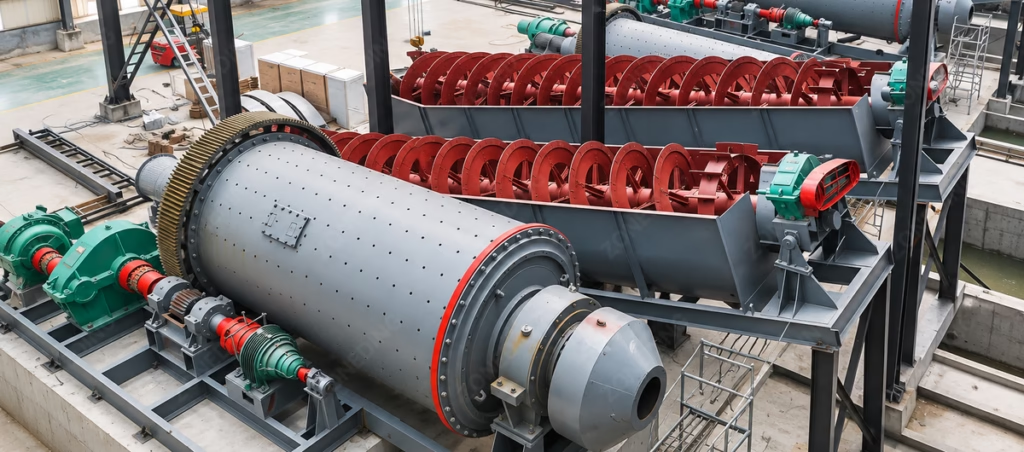
Industrial ball mill equipment used in mineral grinding applications
Fresh Feed and Circulating Load Are Different
Fresh feed is the new material entering the grinding circuit.
Circulating load refers to material returned by the classifier for additional grinding.
When requesting equipment quotations, buyers should state throughput as dry fresh feed capacity. The supplier can then evaluate the internal circulating load required for the proposed circuit.
Confusing fresh feed with total mill throughput can produce misleading equipment comparisons.
For example, two proposals may specify similar mill dimensions while assuming different circulating loads, classifier efficiencies, or feed particle sizes.
They are not directly comparable unless the design assumptions are aligned.
A reliable proposal should identify the expected feed and product sizes, grinding power, classification arrangement, and major operating assumptions.
For general differences between mill discharge designs, refer to ZONEDING’s existing overflow-versus-grate ball mill guide rather than treating discharge type as a universal solution for spodumene.
Hydrocyclones vs Fine Screens for Spodumene Grinding
Classification is one of the most important decisions in a closed-circuit grinding system.
The classifier determines which particles leave the circuit and which return to the mill. Poor separation can increase unnecessary grinding or allow oversized particles to enter downstream processing.
Hydrocyclones and fine screens can both be considered, but their suitability depends on the ore and the required classification duty.
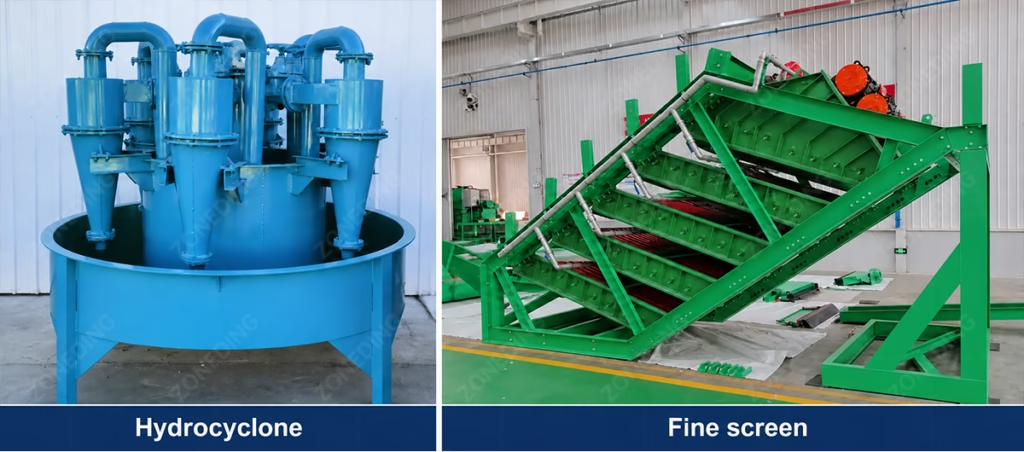
Hydrocyclones and fine screens provide different approaches to controlling grinding product size
Evaluation factor
Hydrocyclone
Fine screen
Separation method
Hydraulic classification
Aperture-based size separation
Main operating variables
Feed pressure, density, geometry
Aperture size, loading, feed distribution
Typical supporting equipment
Pump, sump, cyclone cluster
Screen assembly and feed distribution
Potential concern
Finished-size material returning in underflow
Screen blinding, wear, capacity limits
Maintenance considerations
Pump and cyclone wear parts
Screen panels and vibration components
Required evidence
Slurry and classification test results
Screening tests and particle size distribution
When Hydrocyclones May Be Appropriate
Hydrocyclones can provide continuous classification in a compact arrangement.
They are commonly used where the slurry characteristics and operating conditions allow the required separation performance.
However, a hydrocyclone does not separate particles purely by geometric size. Particle density and hydraulic behavior also affect the separation.
This is relevant for spodumene-bearing ores containing minerals with different densities.
Before selecting a cyclone circuit, engineers should assess the feed solids concentration, expected operating pressure, classification efficiency, and particle size distribution of both overflow and underflow.
The quantity of already-fine material returning to the mill deserves particular attention.
When Fine Screens May Be Appropriate
Fine screens may be considered where direct size separation is desirable and the required aperture can be operated reliably at the planned capacity.
They may help limit the return of correctly sized particles in certain circuits.
Nevertheless, their performance depends on feed distribution, near-size particles, screen opening, solids loading, and maintenance conditions.
Fine screening is not automatically superior to hydrocyclone classification for every spodumene deposit.
In addition, screening used for grinding classification should be distinguished from screening or desliming used elsewhere in the lithium beneficiation flowsheet.
Selection recommendation: Request a comparison based on representative ore testing, expected product size distribution, fine-particle recirculation, water balance, equipment wear, and maintenance requirements.
How to Reduce Overgrinding Without Losing Liberation
Overgrinding becomes a concern when material continues receiving grinding energy after reaching the size needed for downstream separation.
For spodumene, this can increase the quantity of fine particles and complicate flotation performance.
The first step is to establish whether the product is actually too fine for the ore’s liberation and flotation requirements.
A finer product is not necessarily evidence of poor operation if the process requires that particle size.
Once the correct target is known, operators can compare actual circuit measurements against the design basis.
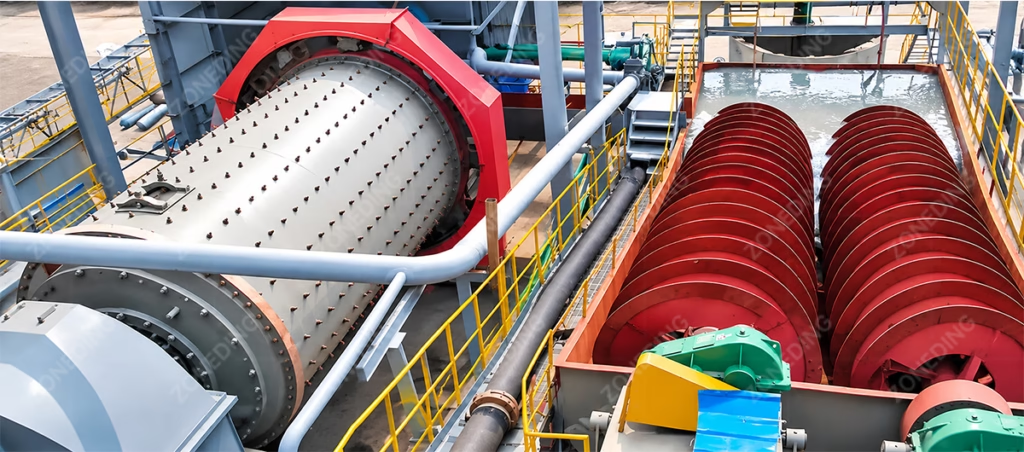
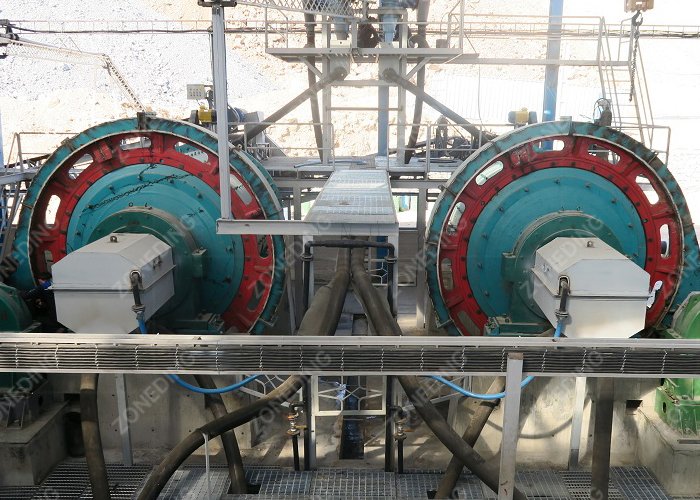
Wet mineral grinding installation showing the equipment arrangement around the mill
Observed problem
Possible explanation
Recommended investigation
Excessive fine particles
Unnecessary grinding or unsuitable classification
Product and return-stream size distributions
Coarse material in classifier product
Classification instability
Classifier operating conditions
High return flow
Coarse feed or classification inefficiency
Solids balance and circulating load
Unstable product size
Feed or slurry variation
Feed rate, density, pressure, ore hardness
Reduced fresh feed throughput
Increased grinding duty or circuit restriction
Feed size, power, return flow
Poor flotation response
Liberation, slimes, chemistry, or water conditions
Mineralogy and flotation test results
The investigation should identify whether the main problem originates in the mill, classifier, or upstream feed preparation.
For example, increasing grinding media loading will not necessarily solve excessive fine-particle recirculation caused by poor classification.
Similarly, changing cyclone pressure without examining the resulting separation may move the problem rather than eliminate it.
The most useful operating measurements include mill power, fresh feed rate, slurry density, classification pressure where applicable, circulating load, and particle size distributions.
Operators should also compare grinding performance with flotation results. The final objective is suitable mineral liberation and downstream separation, not simply a finer grinding product.
What Equipment Is Required Around the Ball Mill?
A spodumene grinding circuit needs supporting equipment to maintain stable feed, transport slurry, classify material, and support safe maintenance.
The exact arrangement depends on the selected classifier and the project scope.
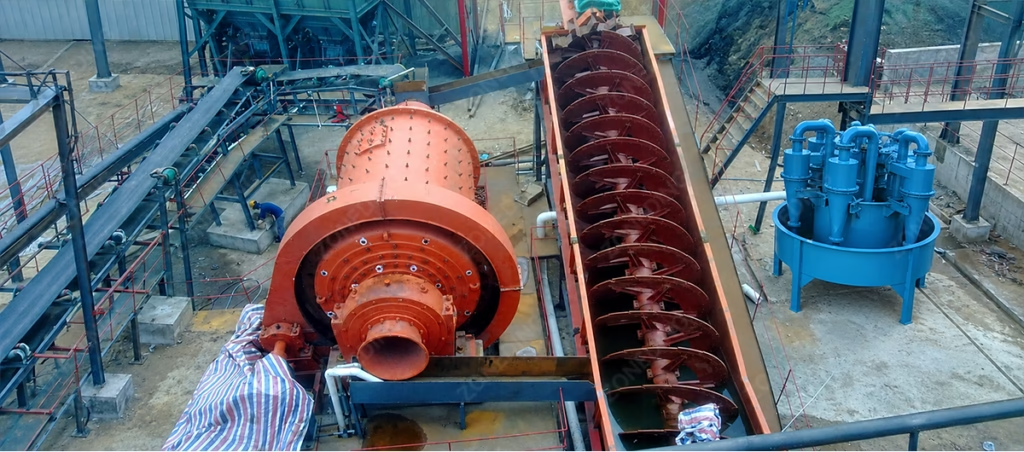
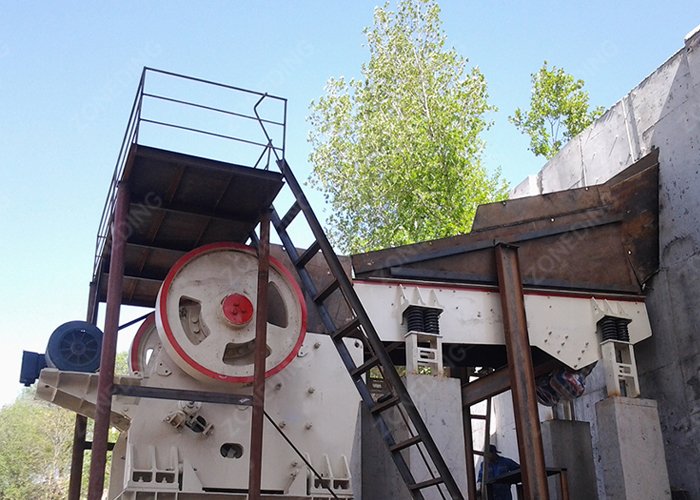
Industrial ball mill installation with associated equipment and supporting structures
Equipment
Main function
Buyer should verify
Feed bin and feeder
Supply material consistently
Feed capacity and control range
Wet ball mill
Reduce particle size
Mill size, power, discharge, liners
Discharge sump
Collect and buffer slurry
Capacity and abrasion protection
Slurry pump
Transfer material to classification
Flow, head, wear resistance
Classifier
Separate product and return material
Efficiency and operating capacity
Water addition system
Control slurry conditions
Flow and water quality
Piping and valves
Transport and regulate slurry
Pressure and wear protection
Instrumentation
Monitor operating conditions
Density, flow, pressure, power
Electrical controls
Coordinate equipment
Protection and interlocks
Equipment layout should also provide space for liner replacement, grinding media handling, pump maintenance, and lifting operations.
Where the grinding circuit feeds flotation, the interface between classification and downstream conditioning should be clearly defined.
The project team must also establish whether the supplier is quoting a standalone mill or a complete grinding circuit.
A mill-only quotation may exclude the classifier, pumps, piping, control equipment, and installation support.
For available grinding equipment, review the ZONEDING Ball Mill product page.
What Should Buyers Include in a Spodumene Grinding Circuit RFQ?
A detailed request for quotation allows equipment suppliers to evaluate the same operating requirements and makes technical proposals easier to compare.
For a spodumene project, the most important information is the actual material entering the mill, the required grinding result, and the downstream beneficiation method.
Essential Technical Information
RFQ item
Information to provide
Ore type
Spodumene-bearing pegmatite and associated minerals
Grinding feed
Direct crushed ore, DMS stream, or another defined material
Fresh feed capacity
Dry tonnes per hour
Feed particle size
Maximum size and feed distribution
Grindability
Bond work index or available grinding testwork
Target product
P80 and relevant size distribution
Downstream process
Flotation or other separation stage
Classification
Preferred option or request for evaluation
Water conditions
Available water and relevant quality information
Power supply
Voltage, frequency, and site limitations
Site location
Project location and installation conditions
Supply scope
Mill only or complete grinding and classification system
Buyers should request clear equipment boundaries and identify which components are included.
The quotation should distinguish the mill shell, drive, liners, lubrication system, grinding media, classifier, pumps, control equipment, and spare parts.
It should also identify the engineering documents available, including general arrangement drawings, utility requirements, and maintenance information.
For Brazil-based projects, applicable electrical, safety, import, and installation requirements should be checked against the specific site and contract.
These details should not be assumed from a standard international quotation.
Request a Spodumene Grinding Equipment Proposal
Send your ore characteristics, feed size, target P80, dry throughput, and available testwork through the ZONEDING contact page.
This information provides a practical basis for discussing equipment configuration. Final sizing and performance expectations should remain subject to engineering verification.
FAQ: Spodumene Wet Ball Mill Circuits
What type of ball mill is suitable for spodumene grinding?
A wet ball mill may be suitable for preparing spodumene ore for flotation. The appropriate size, power, and discharge design depend on the ore’s grindability, feed size, target product size, and classification arrangement.
Does every spodumene processing plant need a ball mill?
No. The required grinding equipment depends on the selected flowsheet. Some projects use coarse pre-concentration, while others require finer grinding before flotation. Testwork should determine the appropriate arrangement.
What is the ideal grinding fineness for spodumene flotation?
There is no universal grinding target. The appropriate product size depends on mineral liberation, gangue characteristics, and flotation response. Grinding finer than necessary can increase energy consumption and create additional fines.
Are fine screens better than hydrocyclones for spodumene classification?
Not universally. Fine screens and hydrocyclones use different separation mechanisms. Their suitability should be compared using the required product size, ore characteristics, operating conditions, and classification test results.
What information is required for a spodumene ball mill quotation?
The main inputs include fresh feed capacity, feed particle size, ore grindability, target P80, downstream separation method, site conditions, and the requested equipment scope. Representative ore testing helps improve sizing reliability.
Conclusion
An effective spodumene wet grinding circuit starts with understanding the ore and its downstream separation requirements.
Mineral liberation determines the grinding target, while mill sizing and classification determine how efficiently the circuit can deliver that product.
For mining operators and EPC contractors, the most important purchasing decision is not simply selecting a ball mill model. It is establishing a reliable design basis, evaluating classification options, and confirming the full equipment scope before placing an order.
A well-defined RFQ helps suppliers prepare comparable proposals and reduces uncertainty during subsequent engineering and installation.
Building a quarry plant is much more than selecting crushers and screens. The most successful quarry operations are designed around market demand, rock characteristics, logistics efficiency, and long-term operating costs. While many investors focu...
Many mobile screening plants fail to reach their real production potential because of poor feeding, screen blockage, unstable material flow, and incorrect equipment setup. In most quarry and recycling operations, improving screening efficiency doe...
The real ball mill cost is not the machine quote alone. In most plants, the 5-year total is around 2.5x to 4x of the purchase value after wear, power, downtime, and recovery impact are included. This guide shows how to calculate bal...
A jaw crusher is the heavy-duty gatekeeper of most mining and aggregate production lines. This primary rock crusher uses high pressure to break large boulders into smaller, manageable pieces. It is the first machine in a crushing plant. Most opera...
We use cookies to ensure that we give you the best experience on our website. If you continue to use this site we will assume that you are happy with it.
Privacy Policy
Send us a message
We would love to hear from you
Submit your question and our team will respond to the email provided as soon as possible.
 Zoneding Machine