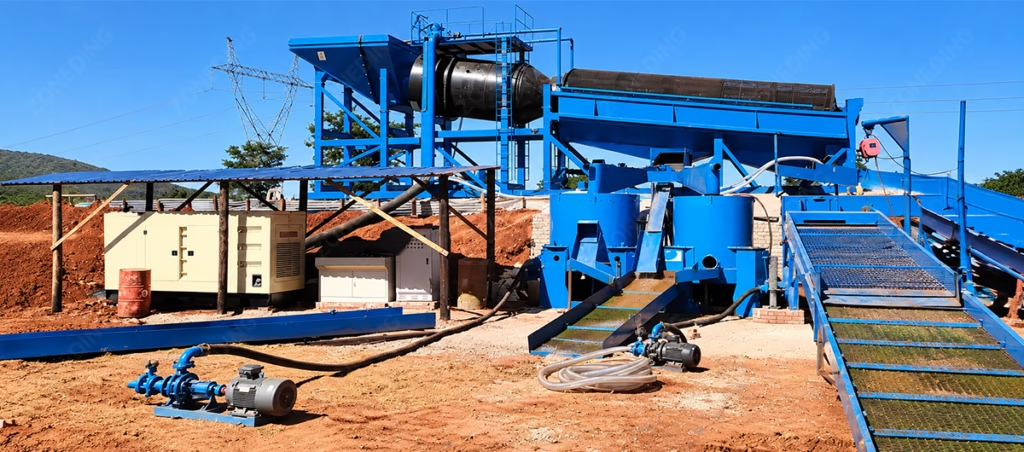
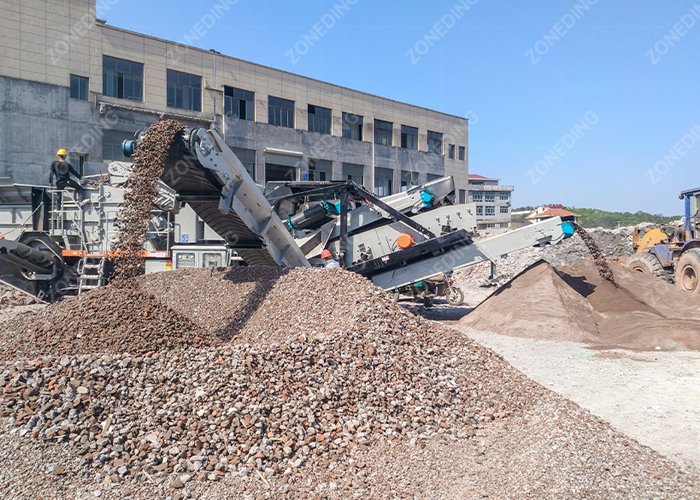
A 50 TPH alluvial gold wash plant can be a practical option for mining operators who need a defined processing capacity without investing in a much larger facility. However, choosing the right equipment involves more than selecting a trommel rated at 50 tons per hour.
The plant must handle the actual characteristics of the deposit, including gravel size, clay content, gold particle distribution, water availability, and the amount of material that needs to be rejected before gravity recovery.
A poorly matched washing and screening circuit can limit the entire operation, even when the main equipment has sufficient nominal capacity.
This guide focuses on the equipment configuration, layout requirements, and purchasing decisions involved in planning a 50 TPH alluvial gold operation. For a broader introduction to washing and recovery methods, see ZONEDING’s Gold Wash Plant equipment overview.
What Equipment Is Needed for a 50 TPH Gold Wash Plant?
A 50 TPH gold wash plant is designed around a nominal feed rate of 50 metric tons of raw material per hour. This figure does not guarantee continuous operating throughput or a particular gold recovery rate.
Actual performance depends on feed characteristics, washing efficiency, equipment availability, and the capacity of each downstream process.
A typical equipment list may include:
Equipment
Main Function
Selection Consideration
Feed hopper
Receives raw alluvial material
Maximum rock size and loading method
Feeding system
Regulates material entering the plant
Stable feed rate and material flow
Trommel screen
Washes and classifies material
Feed size, screen opening, and clay condition
Rotary scrubber
Breaks down sticky clay when required
Clay content and washing intensity
Sluice box
Recovers suitable free-gold particles
Feed distribution and hydraulic conditions
Centrifugal concentrator
Concentrates fine, high-density particles
Feed preparation and gold particle size
Shaking table
Upgrades gravity concentrates
Concentrate feed rate and size range
Water pumps and pipelines
Supply process water
Flow, pressure, and pumping distance
Settling and recycling system
Clarifies and returns process water
Fine solids and water availability
Discharge system
Handles oversize and tailings
Material volume and site arrangement
Not every project requires every machine.
For clean, free-washing gravel, a relatively simple trommel and gravity recovery circuit may be sufficient. Deposits containing sticky clay may require a dedicated scrubber before screening.
The key purchasing principle is to select a complete processing system rather than independently purchasing machines with matching nameplate capacities.
For buyers evaluating the wider range of alluvial mining methods, the Placer Gold Mining Guide explains how deposit characteristics influence equipment selection.
How Does a 50 TPH Alluvial Gold Wash Plant Work?
A typical alluvial gold processing circuit combines controlled feeding, washing, size classification, and gravity concentration.
The exact sequence depends on the deposit.
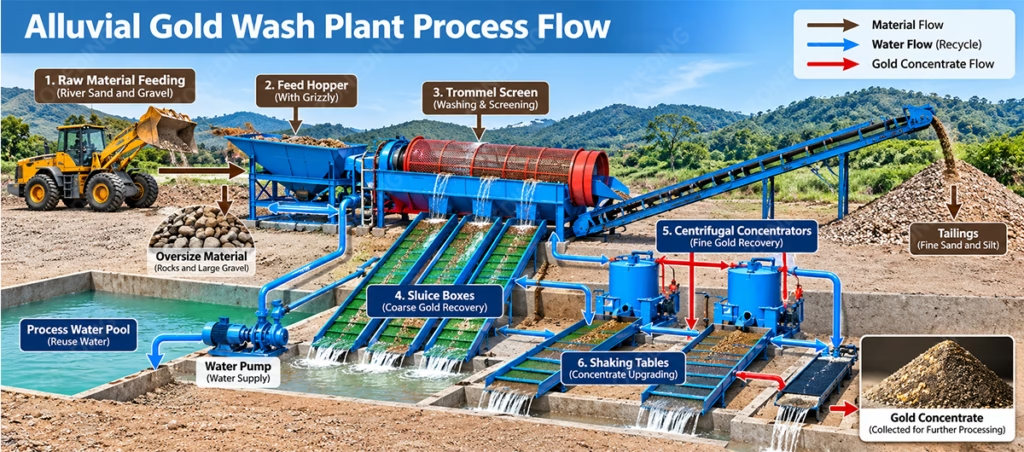
Conceptual alluvial gold washing process with screening, gravity recovery and water recycling
Feeding and Washing
Raw material is delivered to the feed hopper by a loader or excavator.
The feeding system should maintain a reasonably consistent material flow. Sudden surges can overload the washing equipment and disturb downstream recovery conditions.
For loose gravel and sand, water-assisted washing in a trommel may be sufficient.
Sticky or compacted clay requires more intensive washing. A rotary scrubber can help break down clay lumps and release gold-bearing particles before screening.
Washing is primarily intended to remove adhering material and separate particles in unconsolidated deposits. It cannot reliably liberate gold locked inside competent rock.
If gold remains enclosed within hard-rock minerals, the project may need a different processing route involving crushing and grinding. These requirements are addressed in ZONEDING’s Gold Processing Plant solutions.
Screening and Gravity Recovery
After washing, the material passes through screening equipment that separates coarse oversize from the smaller fraction intended for gravity concentration.
Screen aperture selection depends on the feed-size distribution, the gold particle sizes, and the operating requirements of the recovery equipment.
An unsuitable screen opening can increase unnecessary downstream loading or allow recoverable gold to leave with the oversize stream.
The classified material then enters the gravity recovery circuit.
Depending on the ore, this may involve sluice boxes, centrifugal concentrators, or other gravity separators. Shaking tables are commonly considered for concentrate upgrading rather than treating the entire raw plant feed.
The relationship between screening efficiency and gravity recovery is especially important when fine gold is present. ZONEDING’s article on Gold Wash Plant Screening and Gravity Recovery examines this interaction in greater detail.
Trommel Screen or Rotary Scrubber: Which Is Better for 50 TPH?
One of the most important decisions is whether the deposit requires ordinary washing and screening or intensive scrubbing.
A trommel screen primarily provides size classification. With suitable water arrangements, it can also clean loose gravel and remove adhering fines.
A rotary scrubber is designed for more aggressive washing and clay disintegration.
Selection Factor
Trommel Screen
Rotary Scrubber
Primary purpose
Washing and screening
Intensive washing and clay disintegration
Clean gravel
Often suitable
May be unnecessary
Sticky clay
Depends on clay behavior
Often more appropriate
Main process output
Classified material
Washed material requiring suitable classification
System complexity
Potentially simpler
May require additional screening and water management
Key selection input
Feed size and screening requirements
Clay behavior and washing requirements
A rotary scrubber should not automatically be selected for every 50 TPH plant.
Where clay content is low and the material breaks apart easily in water, additional scrubbing equipment may increase investment and operating complexity without a corresponding benefit.
However, a basic trommel may be inadequate for strongly compacted clay. Gold-bearing particles can remain trapped inside clay aggregates and leave the plant with rejected material.
Buyers should evaluate clay behavior using representative samples rather than selecting equipment solely from the nominal feed capacity.
How Should Gravity Recovery Equipment Be Sized?
A 50 TPH plant does not necessarily require every gravity separator to process 50 tons per hour.
After washing and screening, part of the raw feed may leave as oversize or other rejected fractions. The remaining material may be divided into separate size ranges.
Each recovery machine must therefore be sized for the stream it actually receives.
Sluice-boxes
Centrifugal Concentrators
Shaking machines
Sluice boxes
Sluice boxes can recover suitable free-gold particles when water flow, slurry density, feed distribution, and collection surfaces are properly matched.
They require stable hydraulic conditions. Excessive flow or inconsistent feed can disturb particle separation.
Centrifugal concentrators
Centrifugal concentrators may be useful where the deposit contains fine, gravity-recoverable gold.
However, they should receive appropriately prepared material within the selected machine’s feed-size and operating limits.
Adding a centrifugal concentrator does not automatically guarantee a specific increase in gold recovery.
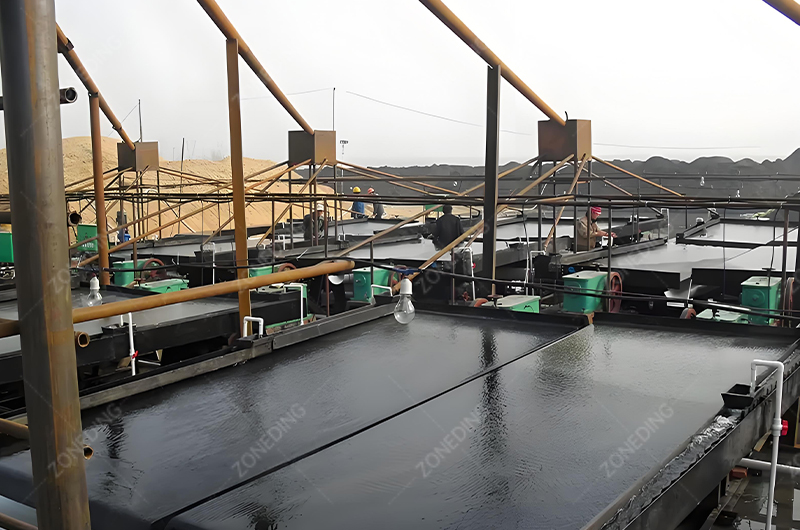
Shaking tables
Shaking tables are commonly used to upgrade concentrates from earlier recovery stages.
Their feed capacity should be based on the concentrate quantity and particle-size range rather than the entire plant throughput.
For example, a shaking table intended for concentrate cleaning should not be sized simply because the washing circuit has a nominal capacity of 50 TPH.
A suitable gravity circuit should be supported by gold particle-size information and, where practical, representative recovery tests.
How Much Water Does a 50 TPH Gold Wash Plant Need?
Water availability can determine whether a proposed wash plant is practical.
Alluvial gold processing requires water for washing, screening, slurry transport, and gravity separation.
The total water requirement depends on clay content, equipment selection, operating solids concentration, and the water recycling arrangement.
There is no universal water consumption figure that accurately applies to every 50 TPH plant.
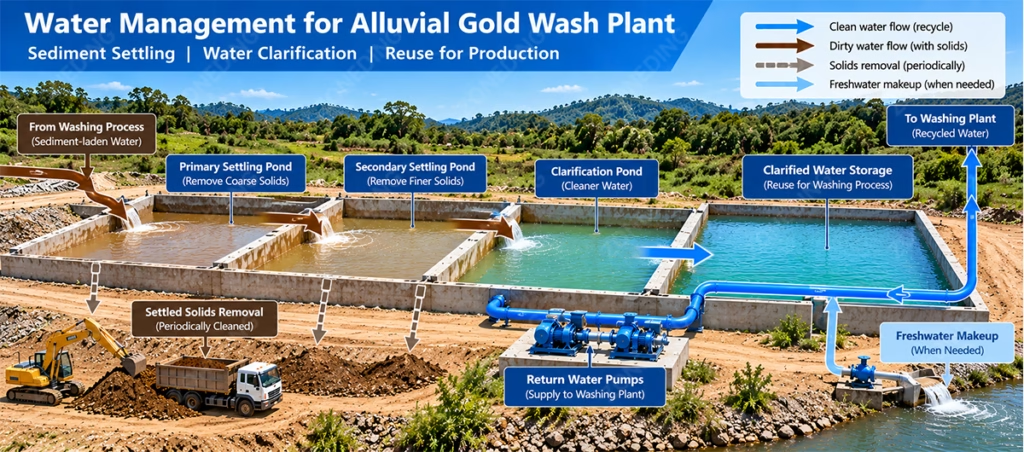
Conceptual water management layout showing sediment settling, water clarification and process water reuse in an alluvial gold wash plant
Buyers should distinguish between:
Total circulating process water.
Freshwater makeup demand.
Water lost with wet oversize and tailings.
Water retained in settled solids.
Water required for cleaning and maintenance.
A plant equipped with a suitable recycling system may reduce freshwater demand, but the achievable reduction depends on actual operating conditions.
Settling ponds can help remove suspended solids before process water is reused. Fine clay particles may remain suspended for long periods and require additional clarification measures.
Where water is limited, the process-water circuit should be designed before the equipment layout is finalized.
The plant also needs a defined tailings handling arrangement that meets applicable site and environmental requirements.
Mobile vs Stationary Layout for a 50 TPH Gold Wash Plant
Both mobile and stationary arrangements can be considered for a 50 TPH alluvial gold project.
The choice depends on how the deposit will be mined, how frequently the processing equipment must move, and the available infrastructure.
A mobile arrangement may be suitable when mining progresses across several working areas.
It can reduce the need for some permanent foundations and make relocation more convenient.
However, mobile equipment still requires suitable access roads, process water, tailings handling, electrical power, and safe maintenance access.
A stationary plant may be more appropriate when the feed source is stable and the mine has sufficient operating life to justify fixed infrastructure.
Stationary arrangements can offer greater flexibility for integrating separate washing, screening, gravity recovery, and water recycling equipment.
Project Condition
Mobile Plant
Stationary Plant
Frequent relocation
Often advantageous
Less convenient
Stable long-term feed source
Possible
Often suitable
Site preparation
May reduce some civil work
More fixed infrastructure may be required
Equipment expansion
Depends on modular design
Often more flexible
Water and tailings systems
Still required
Still required
Maintenance access
May be more compact
Can allow more working space
The correct decision should consider the total project cost and operating requirements, not just the initial machine quotation.
How to Plan the Equipment Layout
A practical 50 TPH plant layout should minimize unnecessary material handling while providing safe access for operation and maintenance.
Five functional areas need particular attention.
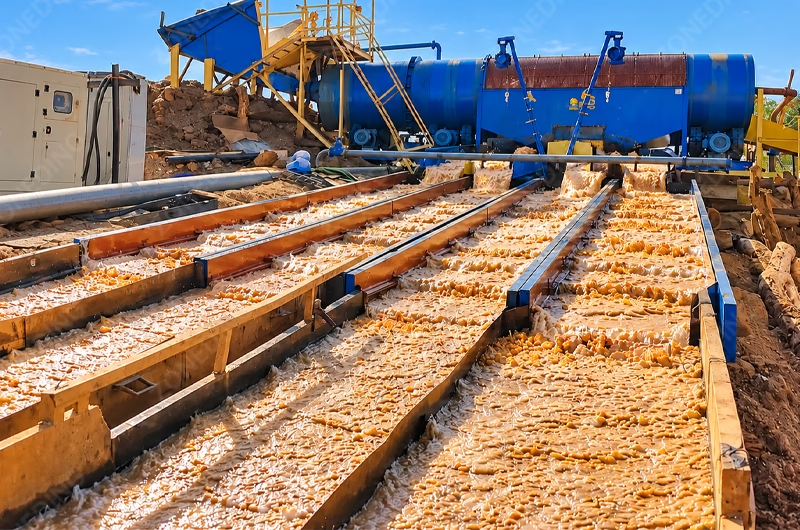
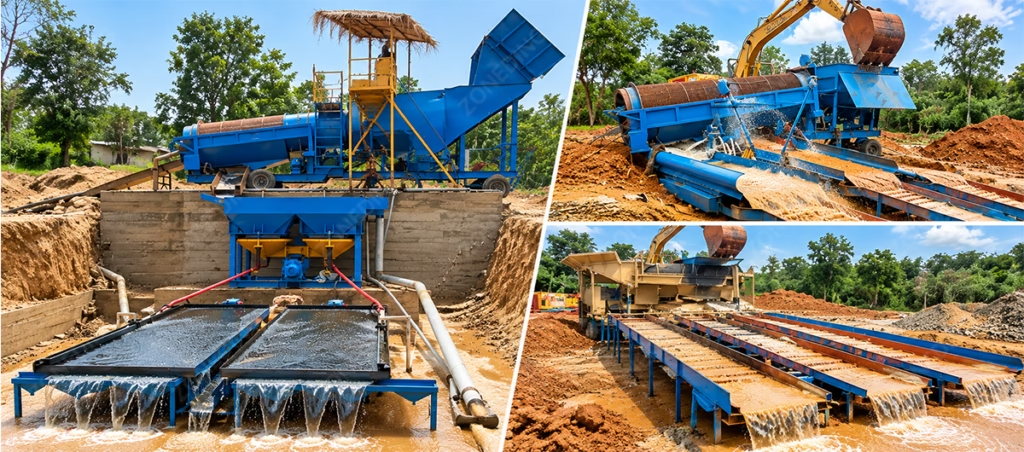
Illustrative views of alluvial gold washing equipment, with extended sluice box arrangements for gravity recovery
Raw material receiving area
The feed hopper should be accessible to the selected loader or excavator. The layout must accommodate the expected maximum rock size and provide a way to manage unsuitable oversized material.
Washing and screening area
The trommel or scrubber should be positioned to provide efficient transfer to downstream equipment.
Access is needed for screen inspection, maintenance, and oversize discharge.
Gravity recovery area
Recovery equipment should receive a controlled feed with suitable water conditions.
The layout should allow operators to inspect the equipment, collect concentrates securely, and maintain the machines without interrupting unrelated plant operations.
Water management area
Pumps, pipelines, settling facilities, and return-water systems should be planned around the site’s elevation, available space, and hydraulic requirements.
Tailings and oversize area
Oversize material and fine tailings need clearly defined discharge routes.
Poor discharge arrangements can cause material accumulation, obstruct access, and interrupt production.
A conceptual layout may position the feed hopper and washing equipment at the receiving end, followed by screening and gravity recovery. Water recycling and tailings facilities should be located according to site topography and operating constraints.
The final arrangement requires a site-specific engineering review.
What Determines the Cost of a 50 TPH Gold Wash Plant?
Two wash plants with the same nominal capacity can have very different equipment lists and prices.
A clean-gravel operation may need a simpler washing circuit, while clay-rich material can require more intensive scrubbing and additional water management.
Major cost factors include:
Trommel-only washing versus dedicated scrubbing.
Number and type of gravity recovery machines.
Mobile or stationary configuration.
Water pumping and recycling equipment.
Feeding and discharge systems.
Power supply and electrical controls.
Civil works and site preparation.
Freight, installation, and commissioning.
Spare parts and maintenance requirements.
Buyers should compare quotations based on the complete equipment scope.
A price for a standalone trommel is not directly comparable with a complete washing, screening, and gravity recovery plant.
The most useful quotation identifies the equipment included, technical assumptions, supporting systems, and items excluded from the supplier’s scope.
What Information Is Needed Before Requesting a Quote?
Equipment selection should begin with the deposit rather than the equipment catalog.
For a 50 TPH alluvial gold wash plant, the following information is especially useful.
Required Information
Why It Matters
Project country and location
Determines logistics and site requirements
Target throughput
Establishes the nominal design basis
Maximum feed size
Influences feeding and washing equipment
Clay characteristics
Determines washing intensity
Gold particle-size distribution
Influences screening and gravity recovery
Gold liberation characteristics
Determines the suitability of gravity treatment
Water availability
Affects process design and recycling
Electrical power
Influences equipment and utility selection
Mobile or stationary preference
Affects installation and layout
Site dimensions and elevation
Influences material handling and pumping
Tailings requirements
Affects water and environmental systems
Representative samples and recovery tests can improve the reliability of the proposed equipment configuration.
Where the deposit has not been adequately tested, the initial technical proposal should be treated as preliminary.
A final plant design should not be based solely on expected gold grade or desired hourly throughput.
For mining operators comparing broader project configurations, the Placer Gold Mining Guide provides additional context on deposit evaluation and processing methods.
Conclusion
A successful 50 TPH alluvial gold wash plant depends on the balance between washing, screening, gravity recovery, and water management.
Nominal capacity is only the starting point.
Clean gravel may require a relatively simple washing circuit, while clay-rich deposits can justify additional scrubbing equipment. Fine-gold recovery may also require a different gravity arrangement from a circuit designed primarily for coarser particles.
Before purchasing equipment, operators should establish feed characteristics, gold particle-size distribution, available utilities, and site constraints.
ZONEDING provides mineral processing equipment for washing, screening, and gravity separation applications. Buyers can discuss their material characteristics and project requirements to evaluate a suitable processing arrangement.
Request a Technical Proposal
Share your target capacity, material characteristics, gold particle-size information, project location, and water conditions to begin the equipment selection process.
Frequently Asked Questions
Can a 50 TPH gold wash plant process clay-rich material?
Yes, provided the washing circuit is designed for the clay characteristics. Sticky or strongly compacted clay may require a rotary scrubber rather than relying on a basic trommel alone. Representative material testing is recommended.
Does a 50 TPH gold wash plant need a centrifugal concentrator?
Not always. The decision depends on gold particle size, feed preparation, and the performance of the proposed gravity circuit. A centrifugal concentrator may be useful for fine-gold recovery, but it is not mandatory for every deposit.
Can a 50 TPH gold wash plant operate with recycled water?
Water recycling may be feasible with suitable settling and clarification equipment. The achievable recycling rate depends on suspended solids, water losses, and local operating requirements.
Is a mobile gold wash plant better than a stationary plant?
Neither is universally better. Mobile equipment may suit operations that relocate frequently, while stationary arrangements may offer greater flexibility for integrating equipment at a stable processing site.
What information is most important for a 50 TPH gold wash plant quotation?
The most important inputs include target throughput, maximum feed size, clay characteristics, gold particle-size distribution, water availability, project location, and preferred installation type. These details help determine the equipment configuration and quotation scope.
One of the first questions buyers ask before purchasing a cone crusher is: How many tons per hour can a cone crusher produce? The answer is not as simple as reading a specification sheet. Many operators discover that actual production differs sign...
A cone crusher working principle differs significantly from simple impact crushers. It is a high-precision machine designed for hard rock processing. Success in mining or aggregate production depends on the balance between eccentric spee...
Selecting between a and a Rod Mill is a critical decision in mineral processing. This choice impacts recovery rates, power use, and overall plant profit. A ball mill uses steel balls to grind ore into fine powder. A rod mill uses long st...
I have spent 50 years in the mining and recycling industry. I have seen people turn piles of trash into mountains of cash. But I have also seen many people lose everything because they bought the wrong machine. In 2026, urban recycling is a gold m...
We use cookies to ensure that we give you the best experience on our website. If you continue to use this site we will assume that you are happy with it.
Privacy Policy
Send us a message
We would love to hear from you
Submit your question and our team will respond to the email provided as soon as possible.
 Zoneding Machine