 Zoneding Machine



How to Reduce Water Consumption in a Mineral Processing Plant
602Learn how to reduce mineral processing water use with water balance, thickening, filtration, recycling, and process control.
View detailsSearch the whole station Crushing Equipment
A gold wash plant may have an efficient screening machine and reliable gravity recovery equipment yet still experience unstable throughput or unexpected gold losses. In many cases, the problem lies in how the equipment works together rather than in a single machine.
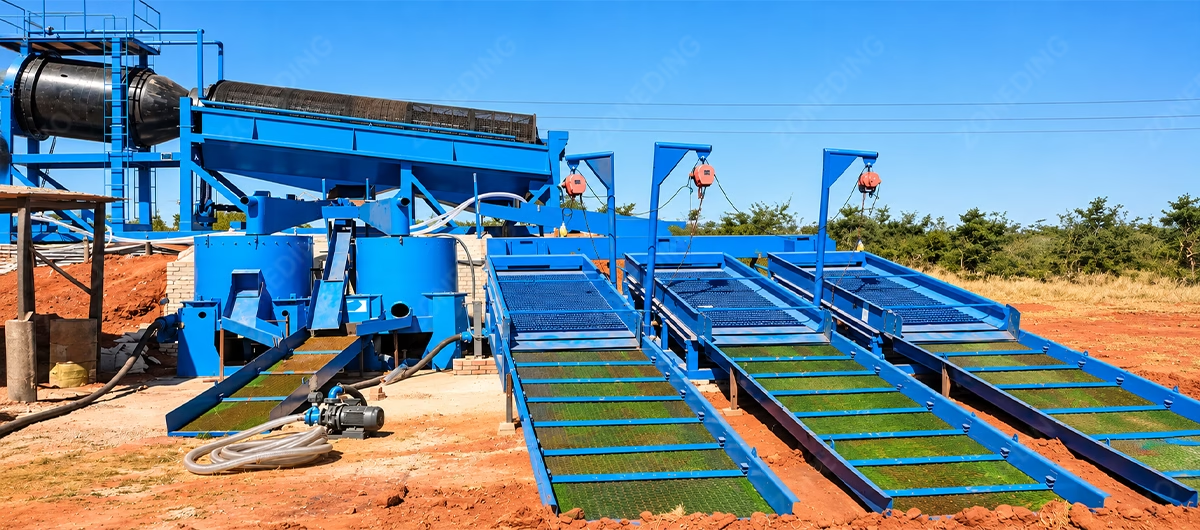
Screening controls the size and distribution of material entering the next stage. Meanwhile, water flow, solids concentration, and feed consistency influence gravity separation. A balanced circuit must therefore deliver properly prepared material at a manageable rate instead of maximizing each machine’s individual capacity.
Screening and gravity recovery perform different functions, but their operating conditions are closely connected. A screening machine separates material by particle size and, in washing applications, may help remove clay and fine particles from larger rocks.
Gravity equipment then separates particles according to density differences and their behavior in water. Common recovery devices include sluice boxes, centrifugal concentrators, jigs, and shaking tables. Each has operating limits for feed size, solids loading, and slurry flow.
Problems develop when the screening stage supplies more material than the recovery equipment can handle. For example, a trommel may process gravel continuously while delivering uneven quantities of screened material to a smaller gravity recovery system. Although the screen appears productive, downstream separation conditions may become unstable.
The opposite situation is also possible. Recovery equipment may have sufficient capacity, but poor washing or screening prevents it from receiving suitable feed. In placer gold mining, this relationship deserves particular attention because material characteristics can vary across a deposit.
The objective is to maintain a stable flow throughout the circuit, with each machine operating within its appropriate range.
Screen aperture size determines which particles pass through the screening surface and which remain in the oversize stream. Smaller openings improve control over the maximum size of the screened product, but they may reduce throughput and increase blinding. Larger openings allow coarser material to pass, potentially increasing the load on downstream recovery equipment.
Neither option automatically improves gold recovery. The appropriate aperture depends on the feed material, particle-size distribution, washing conditions, and operating requirements of the selected recovery equipment.
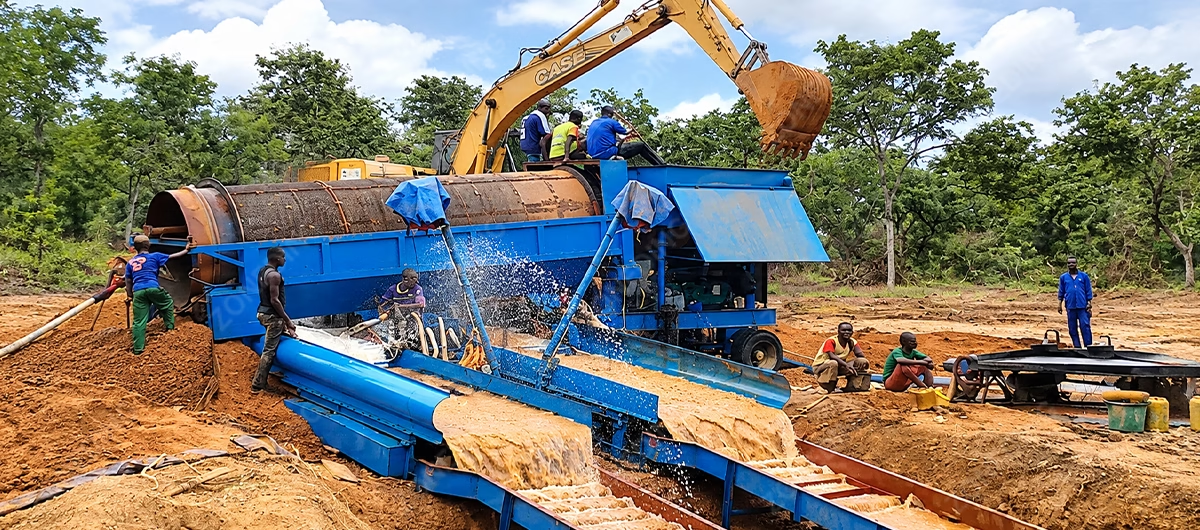
Gold may occur as liberated particles, attached to larger rock fragments, or locked within material requiring further size reduction. A screen separates particles by size; it does not determine whether gold has been liberated. Therefore, screen selection should consider both the gold occurrence and the material surrounding it.
For alluvial deposits containing liberated gold, washing and classification may prepare suitable material for gravity recovery. Hard-rock deposits require a different approach when gold remains locked inside larger particles, often involving crushing and grinding before separation.
Screen oversize also needs attention. It should not automatically be treated as barren waste, especially when gold-bearing rocks or clay-bound material may enter that stream. Representative sampling is necessary before deciding whether oversize can be discharged or requires further processing.
Sticky clay can bind smaller particles into larger lumps, causing fine gold-bearing material to report to the oversize stream. Even when the screening machine operates normally, insufficient washing may allow valuable particles to leave before reaching gravity recovery equipment.
Fine suspended solids create another challenge because high fines loading can affect slurry behavior and separation conditions. Depending on the material, operators may need to adjust washing action, water distribution, residence time, or upstream scrubbing.
These problems are explored further in the guide to gold loss from sticky clay. In practice, both screen undersize and oversize should be examined before drawing conclusions about screening performance.
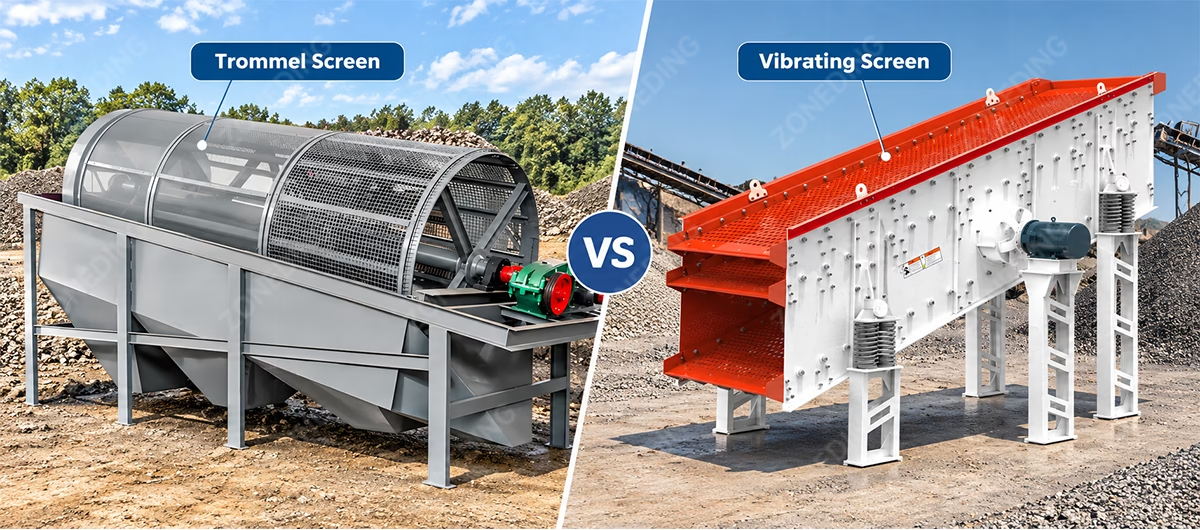
Selecting a screen for a gold wash plant requires more than comparing trommel and vibrating screen performance. The main consideration is whether the screening stage can deliver material within the feed-size, solids-loading, and hydraulic limits of the downstream gravity equipment.
A trommel screen can combine washing and screening for suitable alluvial feed. Its rotating drum and spray-water arrangement help separate finer material from gravel, while screen openings control the size of particles passing to the next stage. However, the actual undersize flow depends on feed composition, washing conditions, and screen configuration.
Vibrating screens may provide an alternative when the material is reasonably free-flowing and controlled size classification is required. In either case, screen selection should follow the recovery circuit’s operating requirements rather than the screening machine’s maximum rated capacity.
| Selection Factor | What to Check | Why It Matters |
|---|---|---|
| Screen aperture | Maximum particle size entering the next stage | Prevents unsuitable oversize from reaching recovery equipment |
| Undersize solids load | Actual dry solids passing through the screen | Helps prevent downstream overloading |
| Water addition | Slurry volume leaving the screening stage | Determines hydraulic loading |
| Clay content | Washing and dispersion requirements | Reduces the risk of valuable material remaining in lumps |
| Feed variability | Changes in size, moisture, and throughput | Supports more stable recovery conditions |
For example, a screen may produce correctly sized material but still deliver too much slurry for a particular gravity recovery unit. Another screen may handle the expected throughput but fail to wash clay-bearing feed sufficiently. Both situations can affect downstream separation even when the screening equipment operates normally.
The appropriate choice should therefore consider the complete flow of solids and water. For further details on screening principles, see the guide to gold trommel screening and classification.
Matching equipment capacity requires more than comparing the throughput figures listed in product catalogs. A screen may be rated by total feed capacity, while a gravity concentrator may have separate limits for dry solids, slurry volume, and maximum particle size.
These values are not interchangeable. Adding wash water increases slurry volume without increasing dry solids throughput, while a screen may send only part of its total feed to the gravity recovery stage. Equipment matching must therefore use the actual material and water streams entering each machine.
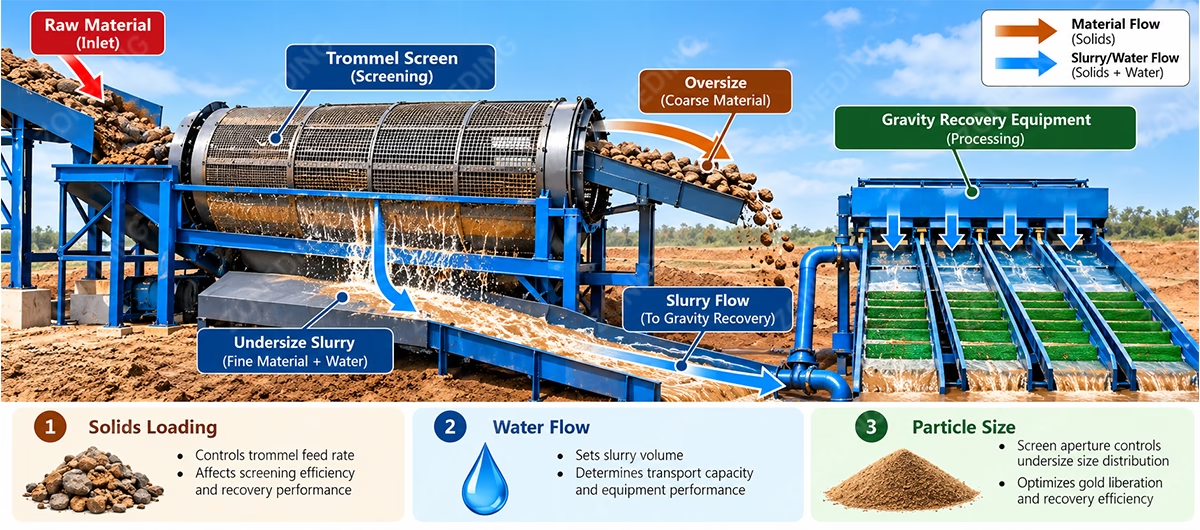
A useful circuit review separates solids loading from hydraulic loading. The following measurements help establish whether downstream equipment receives material within its intended operating range.
| Operating Variable | What to Check | Why It Matters |
|---|---|---|
| Dry solids feed rate | Solids entering the circuit | Establishes processing load |
| Feed size distribution | Maximum size and size fractions | Determines screening requirements |
| Screen undersize | Quantity and particle sizes | Defines downstream solids loading |
| Screen oversize | Quantity and composition | Identifies potentially misplaced material |
| Wash water addition | Flow entering the screening stage | Affects washing and slurry volume |
| Slurry flow rate | Volume entering recovery equipment | Indicates hydraulic loading |
| Slurry solids concentration | Solids content of the slurry | Influences separation conditions |
| Equipment operating limits | Manufacturer specifications | Defines acceptable loading conditions |
These values should be compared with the operating requirements of the selected recovery equipment. For example, a shaking table may be used for suitably classified feed or concentrate cleaning, depending on the circuit design. It should not be assumed to process the entire trommel undersize stream.
In practice, shaking tables often require controlled feed preparation to achieve suitable separation conditions. Their operating requirements should therefore be evaluated independently of the screening machine’s total rated capacity.
Rated capacity describes equipment under specified conditions, not every material it may encounter. Clay-rich feed, uneven loading, oversized rocks, and changing moisture content can alter screening performance, while gravity equipment responds to changes in particle size and slurry conditions.
A practical design should therefore account for expected feed variation. Adjustable feeding, water control, and suitable classification can help maintain more consistent downstream loading when operating conditions change.
Water supports washing, material transport, and gravity separation, but adding more does not necessarily improve recovery. Excessive flow may increase hydraulic loading or disturb separation conditions, while insufficient water can leave clay incompletely dispersed and restrict material movement.
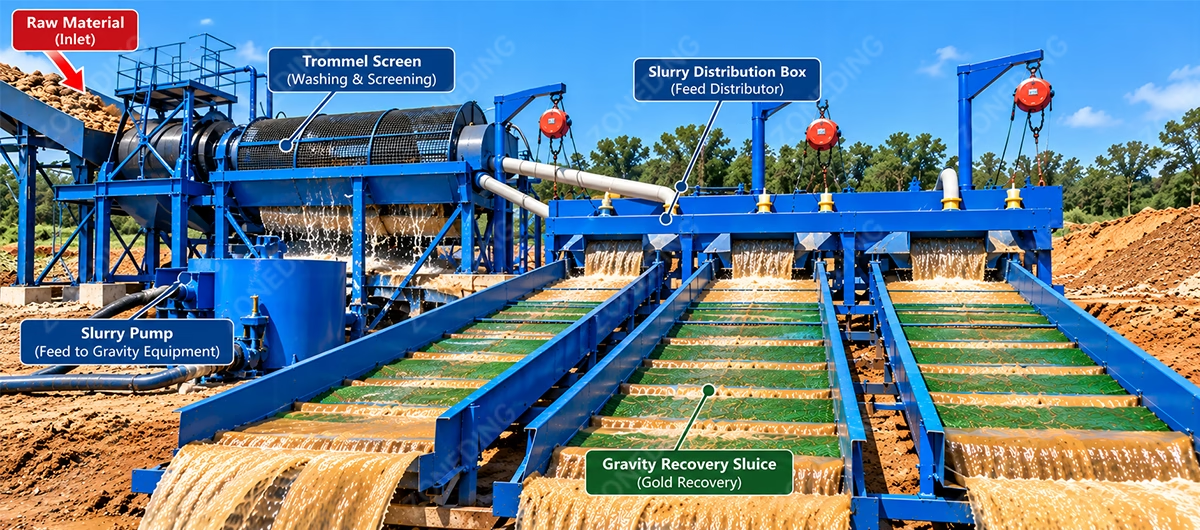
The appropriate balance depends on feed characteristics and equipment design. Fine gold requires particular attention because small particles may be carried with flowing water when separation conditions are unfavorable.
In sluice boxes, feed rate, water flow, particle size, and recovery surface design work together. Centrifugal concentrators have different operating requirements, including equipment-specific feed and hydraulic conditions. Therefore, settings suitable for one recovery device should not automatically be applied to another.
The guide to gold gravity separation provides additional context on choosing recovery methods for different gold-bearing materials.
When fine gold losses are suspected, representative tailings samples are more reliable than visual observations. Changes to water flow should also be evaluated through comparable sampling and operating measurements rather than assumed to improve recovery.
Gold washing circuits can become unbalanced for several reasons. Some problems originate during screening, while others develop through slurry transport, feed distribution, or gravity separation. Identifying the first point of instability helps narrow the investigation.
| Observed Problem | Possible Cause | First Inspection |
|---|---|---|
| Reduced screen undersize | Blinded or blocked openings | Screen media and buildup |
| Excessive material in oversize | Poor washing or unsuitable apertures | Oversize composition |
| Unstable gravity feed | Feed surges or uneven distribution | Feed rate and slurry flow |
| High hydraulic loading | Excessive water addition | Water supply and equipment limits |
| Coarse particles entering recovery equipment | Inadequate classification | Screened product size |
| Uneven loads across parallel units | Poor slurry distribution | Feed splitters and channels |
| Suspected gold losses | Unsuitable feed or separation conditions | Sampling and analysis |
These observations indicate possible causes rather than confirmed diagnoses. For instance, low recovery may result from incomplete liberation, unsuitable particle size, excessive hydraulic loading, or other process limitations.
Operators should avoid changing several settings simultaneously. A controlled investigation makes it easier to identify which adjustment affects circuit performance.
Optimization begins with a documented operating baseline. Before changing screen openings, water flow, or recovery settings, record the current feed conditions and equipment performance so that later results can be compared.
A practical troubleshooting process includes five stages:
Gold losses should also be investigated according to where they occur in the circuit. Gold detected in screen oversize may indicate incomplete washing, unsuitable classification, or gold-bearing rock that requires further processing. In contrast, gold found in gravity tailings may point to unsuitable feed preparation, hydraulic conditions, or separation settings.
These streams should be sampled and evaluated separately before corrective action is taken. This distinction helps operators avoid adjusting gravity equipment when the actual problem originates in washing or screening.
| Inspection Point | Information to Record | Diagnostic Purpose |
|---|---|---|
| Feed material | Size, clay content, moisture | Identify feed changes |
| Screen operation | Feed rate, blockage, discharge | Evaluate screening |
| Oversize stream | Mass flow and composition | Check misplaced material |
| Undersize stream | Size distribution and solids load | Confirm feed preparation |
| Water addition | Flow rate and distribution | Identify hydraulic changes |
| Gravity equipment | Feed load and settings | Check operating conditions |
| Concentrate and tailings | Samples and assay results | Evaluate separation |
Sampling procedures must suit the material and required accuracy. Gold distribution can be uneven, particularly when coarse particles are present, so isolated grab samples may not represent the complete stream.
Where practical, use consistent sampling methods, appropriate laboratory analysis, and mass-balance calculations. The alluvial gold processing plant guide provides further context for evaluating the overall processing arrangement.
The purpose of troubleshooting is to identify the actual constraint before investing in additional equipment or changing the circuit layout.
A balanced gold wash plant begins with reliable information about the deposit and project requirements. For alluvial operations, important factors include feed size, gravel composition, clay content, gold particle-size distribution, and expected throughput.
Water availability, site layout, power supply, mobility requirements, and tailings handling also influence the equipment arrangement. Depending on the material, a circuit may include feeding, washing, screening, classification, gravity recovery, and dewatering.
Not every project needs the same equipment. Clean gravel may require less intensive washing than clay-rich material, while fine-gold recovery may call for a different separation strategy from a deposit dominated by coarse liberated gold.
Before requesting a quotation, buyers should prepare:
For complete processing configurations, the gold processing plant page provides a starting point for reviewing equipment options.
A successful design does not depend on selecting the largest individual machines. It depends on maintaining compatible feed preparation, hydraulic loading, and recovery conditions throughout the circuit.
Does a smaller screen opening always improve gold recovery?
No. Smaller openings can improve particle-size control, but they may also reduce throughput and increase screen blinding. The appropriate size depends on the feed material and downstream recovery equipment.
Can a gold trommel screen recover fine gold by itself?
A conventional trommel primarily washes and classifies material. Fine gold recovery generally requires suitable downstream separation equipment, depending on the plant design.
Why can gravity recovery become unstable when screening throughput increases?
Higher throughput may increase solids loading, slurry volume, or feed variability beyond the preferred operating range of downstream equipment. The cause should be confirmed through operating measurements.
How can operators determine where gold is being lost?
Representative sampling of relevant discharge streams, combined with suitable assays and mass-balance analysis, can help identify where losses occur.
What information is needed to design a gold wash plant?
Important inputs include feed characteristics, required throughput, gold particle-size information, clay content, available water and power, and relevant test results.
Planning an alluvial gold washing project or reviewing an existing screening and gravity recovery circuit?
ZONEDING can review your material information and equipment requirements to discuss a suitable washing, screening, and gravity recovery arrangement. Provide your feed characteristics, target capacity, available water supply, and relevant test results to support a more useful technical discussion.
Contact ZONEDING to discuss your project requirements and request an equipment configuration and quotation.
Technical note: Final equipment selection and recovery expectations should be evaluated against representative material testing and the operating limits of the selected equipment.
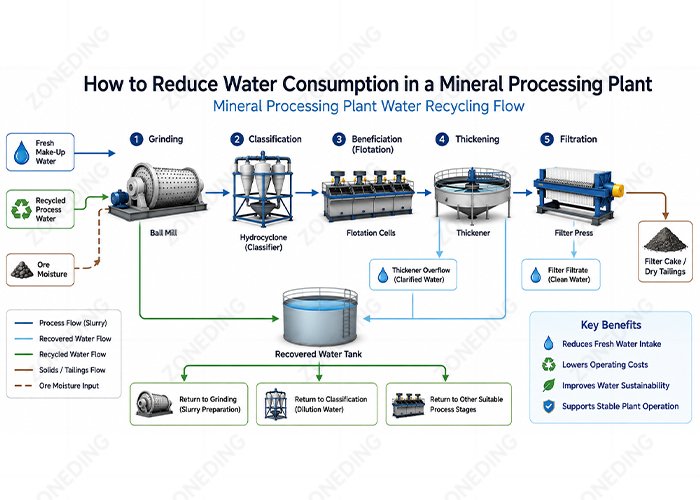
Learn how to reduce mineral processing water use with water balance, thickening, filtration, recycling, and process control.
View details
Building a high-recovery gold ore processing plant development project requires a very clear plan. The process starts with the rock and ends with pure gold. Most projects fail because the machinery does not match the mineral type. High recovery ra...
View details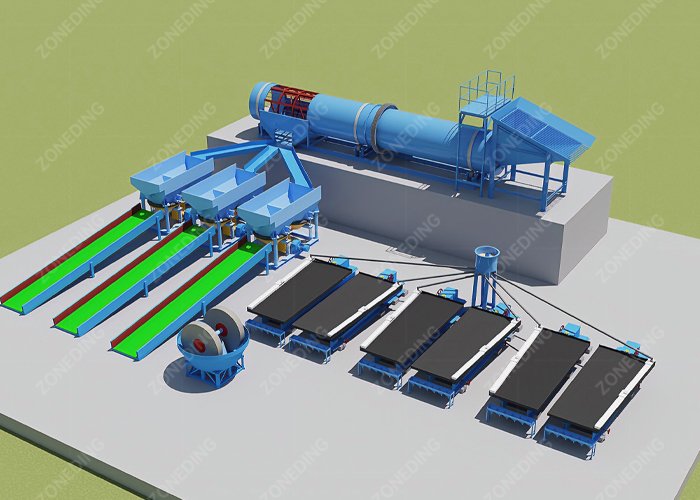
Stop fine gold loss by using a combination of high-energy washing and centrifugal separation. Most mines lose 30% of their gold because they only use simple sluice boxes. Successful alluvial gold processing technology requires a multi-st...
View details
Concrete recycling is a fast-growing industry. It turns old building waste into high-value products. Choosing the right machine is the most important part of the business. Different machines handle different materials and budgets. This guide compa...
View details