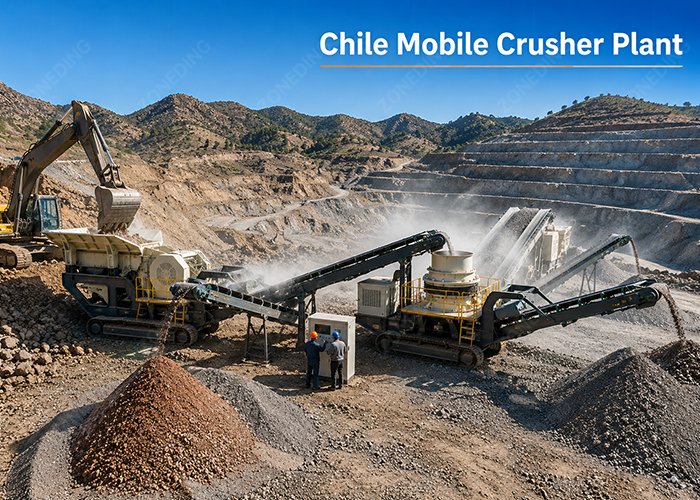
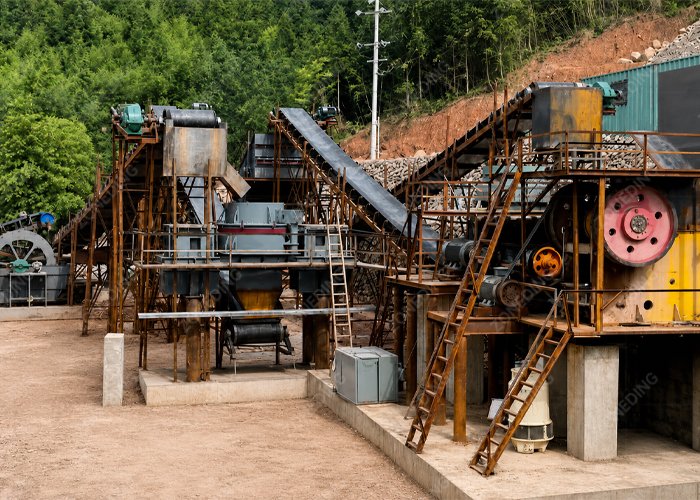
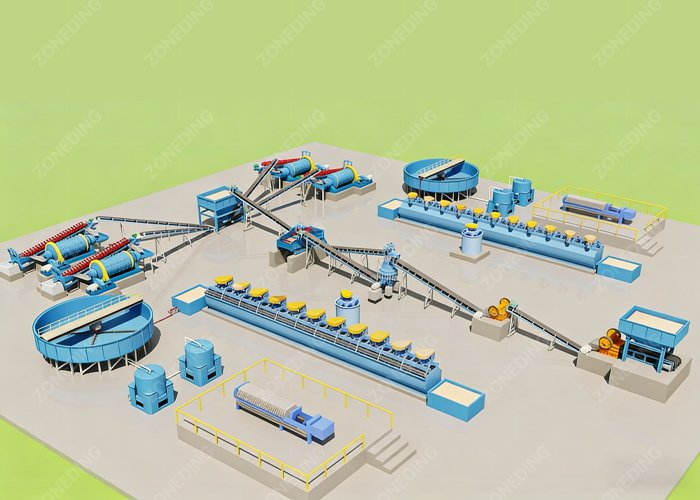
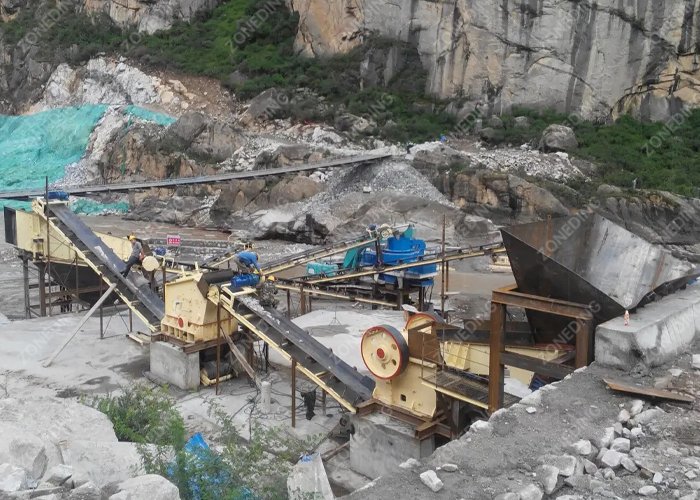
A rock crusher’s price is not a single number. It is a range determined by six factors: the material you crush, your target output, the final product size, plant type (fixed or mobile), hidden project costs, and the quality of your inquiry. Prices for a single machine can range from $30,000 to over $2,000,000.
Let me break down the real factors that determine the rock crusher cost, based on a lifetime of seeing people get it right and, more often, get it horribly wrong.
What material are you crushing? How does its hardness determine the crusher type?
Many people think rock is just rock. This is the first and most expensive mistake. Trying to crush hard granite with a machine designed for soft limestone will destroy the machine and your budget.
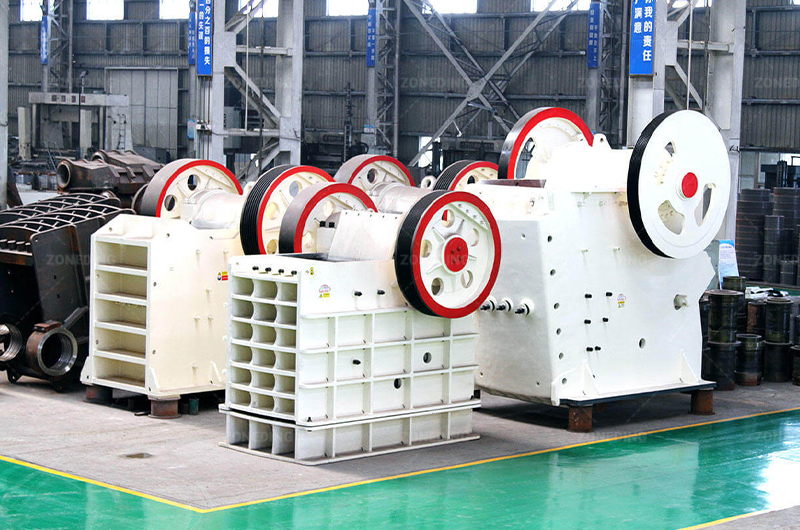
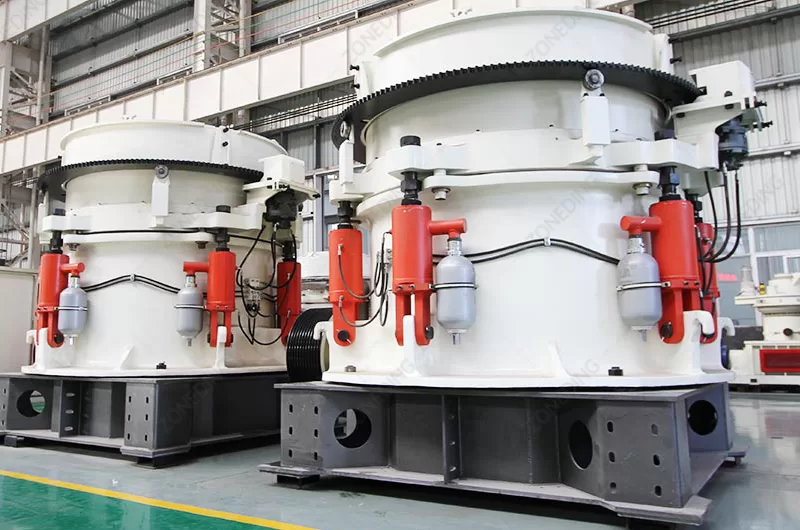
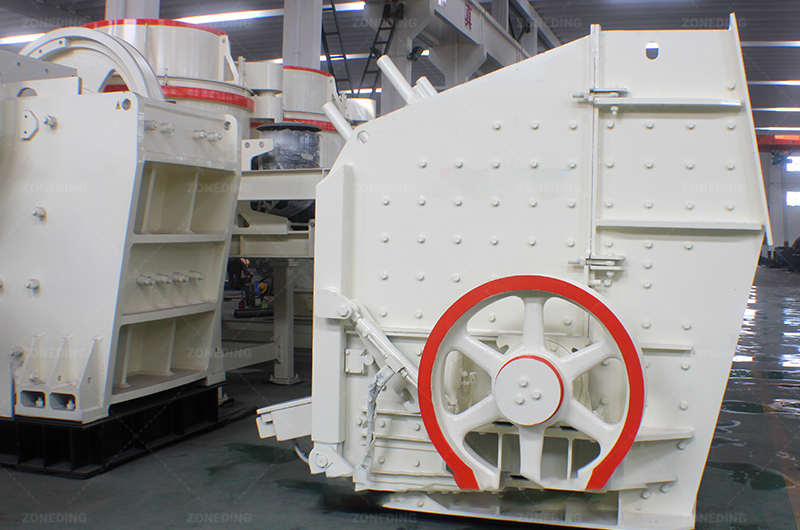
For hard, abrasive materials like granite, basalt, or river stone, you must use a Jaw Crusher and Cone Crusher. For softer, less abrasive materials like limestone or gypsum, an Impact Crusher is often a more cost-effective choice.
The wrong choice leads to extremely high wear part consumption and catastrophic failures. The material’s hardness is the first step in proper crusher selection.
Compression vs. Impact Crushing
The fundamental difference is how the machines break rock.
Hard Rock:Jaw Crushers and Cone Crushers use compression. They squeeze the rock until it breaks. This method is ideal for hard, abrasive materials because it results in lower wear costs.
Soft Rock:Impact Crushers use high-speed impact. A rotor throws the rock against steel blow bars. This produces a superior, more cubical product shape, which is great for concrete aggregate. However, if you feed it hard granite, the blow bars will wear out incredibly fast, making your operating cost skyrocket.
Material Type
Hardness (Mohs Scale)
Primary Crusher Choice
Secondary Crusher Choice
Granite, Basalt, River Stone
Hard (> 5)
Jaw Crusher
Cone Crusher
Limestone, Dolomite, Gypsum
Soft (< 4)
Jaw Crusher or Impact Crusher
Impact Crusher
Construction Waste
Variable
Jaw Crusher
Impact Crusher
What is your project’s desired output? How big is the price difference between 50 TPH and 500 TPH?
You must have a clear production target. Guessing your tonnage is like building a house without a blueprint. You will either overspend on a machine that is too big or buy a machine that cannot meet your production goals.
The price of a crusher increases significantly with its capacity. A small 50 TPH jaw crusher might cost $30,000-$80,000. A large 500 TPH machine can easily exceed $500,000. The entire production line scales in the same way.
The price does not scale linearly. A crusher that is ten times bigger is often much more than ten times the price due to the massive increase in engineering, materials, and power requirements.
The Tonnage-Price Relationship
A crusher’s capacity is directly related to its physical size. A bigger feed opening and a wider chamber mean more tons per hour (TPH). This relationship is a key factor in your equipment budget.
Throughput (TPH)
Typical Primary Crusher Model
Estimated Bare Machine Price Range
Estimated Full Line Cost
50-100 TPH
Small Jaw Crusher (e.g., PE-400×600)
$30,000 – $80,000
$150,000 – $300,000
200-300 TPH
Medium Jaw Crusher (e.g., PE-750×1060)
$150,000 – $400,000
$500,000 – $1,000,000
500+ TPH
Large Jaw or Gyratory Crusher
$500,000 – $2,000,000+
$2,000,000 – $5,000,000+
As you can see, a small change in your required output can have a huge impact on the final project investment.
What is your required final product size? How does this determine the number of crushing stages?
You must know what product you are selling. Is it coarse road base? Is it specific sizes of concrete aggregate? Or is it fine manufactured sand? Not knowing this leads to buying the wrong number of crushers.
To produce coarse products, a single primary crushing stage may be sufficient. To produce fine aggregates or sand, you will need a multi-stage line with primary, secondary, and tertiary crushers. Each additional stage adds significant cost.
A single crusher can only reduce material by a certain ratio, typically around 6:1. To turn a 600mm boulder into 10mm aggregate, you need more than one step.
The Reduction Ratio Rule
The journey from a large rock to a small finished product requires several steps.
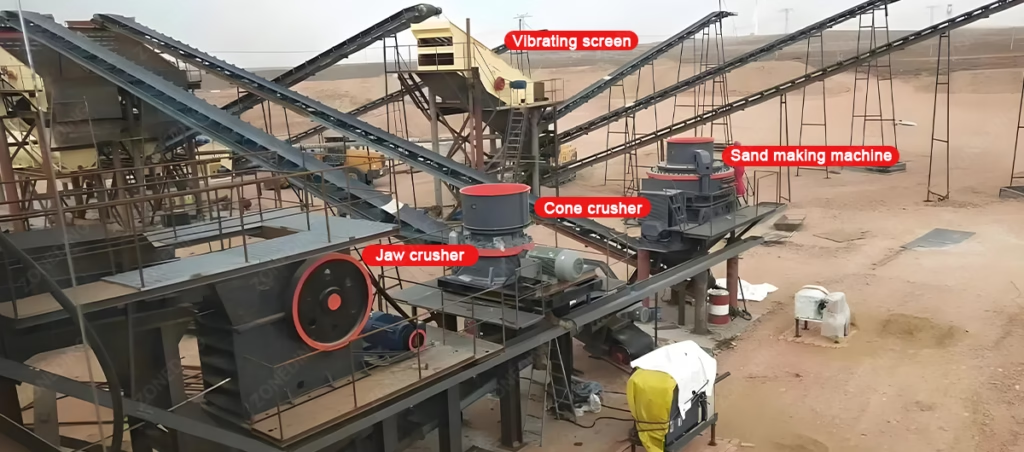
Primary Crushing: A Jaw Crusher takes the large Run-of-Mine rock and breaks it down to a manageable size, like 150mm.
Secondary Crushing: A Cone Crusher takes the 150mm rock and reduces it further, perhaps to 40mm.
Tertiary Crushing: A Sand Making Machine (VSI) or a fine cone crusher takes the 40mm material and turns it into fine aggregate and sand (0-5mm).
Each stage adds not just a crusher, but also screens and conveyors, which increases the total production line cost.
Fixed production line or mobile crushing station? What are the investment differences?
Are you setting up a quarry for the next 20 years, or are you a contractor moving between jobs every six months? This is the most fundamental question for your investment strategy.
A Mobile Crusher has a higher initial machine price but saves massively on installation and civil works. A fixed plant has a lower bare machine cost but requires a huge investment in concrete foundations and site infrastructure.
You are paying a premium for flexibility. For some businesses, this premium is a bargain. For others, it’s an unnecessary expense.
The Flexibility Premium
The choice between fixed and mobile depends entirely on your business model. The mobile crusher price is higher, but it can be a better investment.
A Tracked Jaw Crusher can start earning you money in a week. A fixed plant might take six months to build before it produces its first ton. That lost production is a major cost.
Besides the bare machine price, what “hidden costs” must be included in the total project budget?
The price on the quotation is just the beginning. I have seen too many new buyers get a shock when the final bill is double what they expected. You must budget for the entire system, not just one machine.
Hidden costs include shipping, installation, commissioning, civil works (concrete), electrical systems, and initial wear parts. These can easily add 50-100% or more to the bare machine price. This is the Total Cost of Ownership.
A responsible manufacturer will help you identify these costs upfront. Be wary of any supplier who only wants to talk about the crusher cost.
Budgeting for the Full System
Here is a list of costs you must account for in a fixed plant.
When buying a crusher, you are buying a complete system. You must budget for the entire iceberg.
How do you prepare a clear request list to get an accurate and competitive equipment quote?
If you ask vague questions, you will get vague and useless answers. “I need a crusher” will get you a generic price list. A detailed inquiry will get you a professional solution.
To get an accurate rock crusher quote, you must provide six key pieces of information: material type, maximum feed size, required capacity (TPH), desired final product sizes, plant type (fixed/mobile), and site voltage.
Providing this information shows a supplier that you are a serious buyer. It helps us design the right solution for you quickly.
The Perfect Inquiry Checklist
Use this checklist when you contact a manufacturer.
Question for Supplier
Provide Your Answer
Why It Matters
1. What is the raw material?
e.g., “Hard river granite, very abrasive.”
Determines the correct crusher types.
2. What is the max feed size?
e.g., “Up to 600mm.”
Sizes the opening of the primary crusher.
3. What capacity do you need?
e.g., “250 tons per hour.”
Sizes every machine in the line.
4. What are the final product sizes?
e.g., “0-5mm, 5-10mm, 10-20mm.”
Determines the number of stages and screens.
5. Fixed or mobile plant?
e.g., “Fixed, for a 15-year quarry life.”
Determines the entire plant configuration.
6. What is your site voltage?
e.g., “415V, 50Hz, 3-Phase.”
Ensures the correct motors are quoted.
With these six answers, a professional company like ZONEDING can provide you with a detailed, accurate, and competitive quotation for your sand and gravel production line investment.
Conclusion
The price of a crusher is a moving target. It is determined by your specific needs. Understanding the six key questions of material, capacity, product size, plant type, hidden costs, and inquiry details is the first step toward making a smart, profitable investment. Don’t focus on the price tag; focus on the solution.
Chile is the world's largest copper producer and one of South America's most important mining markets. Besides copper, the country also produces iron ore, gold, limestone, granite, and aggregates for large infrastructure projects. Many mining oper...
For decades, natural river sand was considered the standard material for concrete, mortar, and infrastructure projects. Today, that situation is changing rapidly. Many contractors, concrete producers, and aggregate companies are asking: Is machine...
Building a high-recovery gold ore processing plant development project requires a very clear plan. The process starts with the rock and ends with pure gold. Most projects fail because the machinery does not match the mineral type. High recovery ra...
The performance of a crusher plant acts as the heart of every modern infrastructure project. High-quality aggregate production for construction determines if a bridge stands for a century or fails in a decade. Choosing the right machinery helps co...
We use cookies to ensure that we give you the best experience on our website. If you continue to use this site we will assume that you are happy with it.
Privacy Policy
Send us a message
We would love to hear from you
Submit your question and our team will respond to the email provided as soon as possible.
 Zoneding Machine