In any mineral processing plant, the grinding circuit is the heart. It is the single largest consumer of power and the primary bottleneck for production. Get it right, and your entire operation runs smoothly. Get it wrong, and you are just making expensive mud. This guide will explore the key factors affecting grinding effect and provide actionable insights to improve your grinding efficiency.
A new engineer reads a spec sheet. A veteran operator listens to the mill. It tells you exactly what it needs if you know the language. The goal is a delicate balance between three things: achieving the target particle size, maximizing throughput, and minimizing cost. Let’s break down the 5 factors that control this balance.
Why Does Grinding Directly Impact Your Costs and Recovery?
Before we dive into the “how,” let’s establish the “why.” The effectiveness of your grinding process is not just an operational detail; it is a primary driver of your plant’s profitability.
Mineral Liberation: Valuable minerals are locked inside worthless rock. Grinding is the process of breaking the rock down to a specific grinding fineness to “liberate” these minerals. If liberation is incomplete, those trapped minerals cannot be recovered and are lost to the tailings. Your recovery rate is directly tied to your grind quality.
Energy Consumption: The grinding circuit can account for 50-60% of a mine’s total electricity consumption. A 1% improvement in grinding efficiency can save tens of thousands of dollars annually.
Plant Throughput: The grinding circuit is almost always the bottleneck that determines the maximum tonnage your plant can process. An efficient grinding circuit means a higher overall production rate.
Factor 1: Ore Properties – The Unchangeable Foundation?
You cannot change your ore. Therefore, you must design your entire grinding process around its unique personality. Everything starts here.
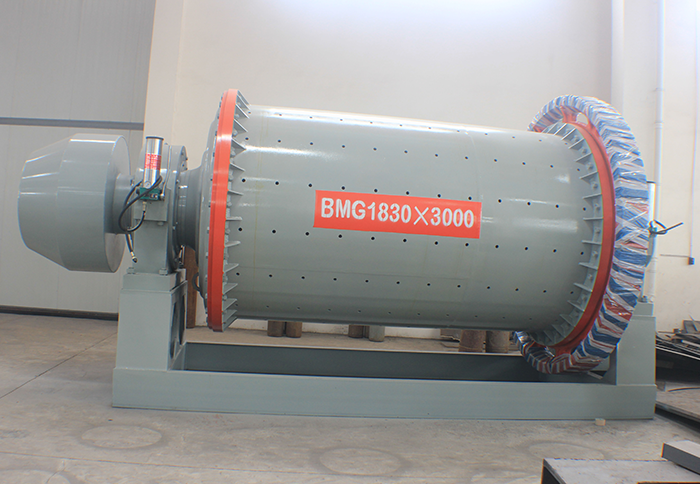
Ball mills grind different ores
Ore Hardness (Bond Work Index)
This is the most critical number. The Bond Work Index (BWI) measures the energy (kWh/ton) required to grind an ore.
The Rookie’s Mistake: Guessing the BWI or skipping the lab test to save money.
The Veteran’s Insight: The BWI is non-negotiable. An error in this number leads to buying an undersized Ball Mills. An undersized mill means your plant will produce less than planned, forever. This is a multi-million-dollar mistake.
Mineral Grain Size & Structure
This tells you how fine you need to grind.
The Rookie’s Mistake: Grinding everything to a fine powder, thinking “finer is better.”
The Veteran’s Insight: If your valuable minerals are coarse-grained, you only need to grind enough to liberate them. Over-grinding is a massive waste of energy and can create ultra-fine “slimes” that are difficult to recover. A mineralogical study tells you the target liberation size, which is the true goal of grinding.
Harmful Components like Clay
The composition of your ore matters.
The Rookie’s Mistake: Ignoring the non-valuable parts of the ore.
The Veteran’s Insight: High clay content is a nightmare. Clay absorbs water, increases the pulp viscosity, and can coat the valuable minerals, preventing them from being recovered later. It’s like adding glue to your slurry. You must account for this in your circuit design, potentially with pre-washing or specific reagents.
Factor 2: Mill Equipment – Is Your Ball Mill the Right Tool?
The mill itself is the core of the circuit. The right mill selection and configuration are essential for achieving high grinding efficiency.
The type and size of your mill must be matched to your ore’s BWI and your production targets. A Rod Mill is excellent for coarse grinding, while Ball Mills are the workhorses for achieving finer product sizes.
But beyond the size, the liners are critical. The steel liners inside the mill dictate how the charge is lifted and tumbles.
Rod Mill
Ball mill
Liner Profile
Grinding Action
Best For
Wave Liners
High abrasion, low impact
Fine grinding, secondary mills
Lifter Bar Liners
High impact, high cascading
Coarse grinding, primary mills
Rubber Liners
Lower noise, good for corrosive ores
Fine grinding where impact is less critical
Choosing the wrong liner is like trying to drive a nail with a rubber mallet. It reduces efficiency and leads to rapid, costly wear.
Factor 3: Grinding Media – The Science of Steel Balls?
The grinding media are the tools doing the work. Their management is a key part of optimizing grinding efficiency.
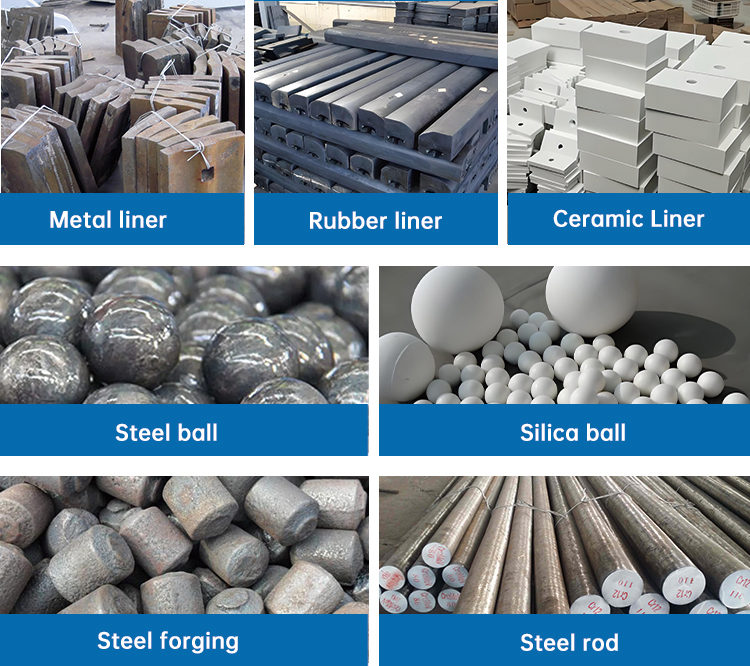
Ball Mill Spare Parts
Media Size and Ratio (The Ball Charge)
The size of the balls determines the grinding action.
The Rookie’s Mistake: Using only one size of large balls.
The Veteran’s Insight: A balanced steel ball ratio is crucial. You need large balls to have enough impact energy to break the coarsest feed. But you also need smaller balls, which have a much greater total surface area, to efficiently grind the finer particles. A properly graded charge matches the energy to the particle size, drastically improving efficiency.
Filling Rate (Charge Volume)
This is the percentage of the mill’s volume filled with balls (typically 35-45%).
The Rookie’s Mistake: Letting the charge level drop to save money on steel.
The Veteran’s Insight: The media charge is directly proportional to the mill’s power draw and grinding capacity. Letting the charge level drop is like intentionally de-rating your motor. It’s a classic example of false economy that throttles your entire plant’s production.
Factor 4: Operating Parameters – The Daily Dials for Efficiency?
This is where a skilled operator makes the difference between an average plant and a highly profitable one.
Pulp Density
This is the solids-to-water ratio and is arguably the most important operational parameter. The sweet spot is usually 65-75% solids by weight.
Too Dilute: The steel balls just clang together. You are polishing the media, not grinding ore.
Too Thick: The pulp becomes a thick mud that cushions the balls, preventing breakage.
Mill Rotation Speed
This is measured as a percentage of “Critical Speed” (the speed where the media centrifuges).
The Veteran’s Insight: The sweet spot is typically 72-78% of critical speed. This maximizes the cascading (abrasion) and cataracting (impact) motion of the charge. Too slow, and the charge slumps. Too fast, and it pins to the liner, stopping all grinding.
Feed Rate
The rate at which new ore enters the mill must be consistent.
The Rookie’s Mistake: Starving the mill or choking it.
The Veteran’s Insight: An experienced operator can hear the difference. A properly fed mill has a deep, productive rumble. An underfed mill has a high-pitched “clanging” of steel on steel. An overfed mill becomes quiet as it chokes. Consistent feed is key to stable, efficient operation.
Factor 5: Circuit Design – The System is the Solution?
A grinding mill does not work in a vacuum. Its efficiency is determined by how it’s integrated into the circuit. This is such a critical factor that it deserves its own category.
Open vs. Closed Circuit
The Rookie’s Mistake: Trying to get the final product size in a single pass (open circuit).
The Veteran’s Insight: A modern, efficient grinding process is always a closed-circuit grinding system. The mill discharge is pumped to a classifier, usually a Hydrocyclone. It separates the slurry, sending correctly sized particles on and returning coarse particles for another pass. This prevents over-grinding (saving energy) and ensures complete liberation (maximizing recovery). It is non-negotiable for efficiency.
One-Stage vs. Two-Stage Grinding
For ores that require a very fine grind, a single, large mill may not be the most efficient solution.
One-Stage: One large mill does all the work. Simpler, lower capital cost.
Two-Stage: A primary mill (e.g., a Rod Mill) does the coarse grinding, and a secondary Ball Mill does the fine grinding. This allows you to optimize the media and operating conditions for each stage, often resulting in lower overall energy consumption and better liberation.
How Can a Grinding Test Pinpoint Your Best Process?
The starting point for any new plant design or grinding process optimization is a grinding test. This is a small-scale laboratory procedure that provides the essential data needed to make multi-million-dollar decisions.
A comprehensive grinding test will determine:
The ore’s Bond Work Index (BWI).
The optimal grinding fineness required for mineral liberation.
The ideal media size and charge.
The expected power consumption for accurate mill selection.
Investing in a grinding test is the single best way to mitigate risk and ensure your grinding circuit is designed for maximum efficiency and profitability from day one.
About ZONEDING
Since 2004, ZONEDING has engineered robust and efficient Beneficiation Equipment for the global mining industry. We understand that grinding efficiency is the key to a profitable operation. We manufacture a complete range of Ball Mills, Rod Mills, and auxiliary equipment, and our metallurgical experts provide comprehensive grinding tests and circuit design services. We partner with our clients to deliver solutions that are not just machines, but complete, optimized systems designed to lower costs and maximize recovery.
Contact us today to discuss your grinding challenges and learn how a professional grinding test can unlock the full potential of your ore.
When a client asks about the , they usually expect a simple price for tanks, pumps, and conveyors. However, the equipment quote is only the tip of the iceberg. In my experience, the equipment represents only 30% to 40% of the total investment. The...
We use cookies to ensure that we give you the best experience on our website. If you continue to use this site we will assume that you are happy with it.
Privacy Policy
Send us a message
We would love to hear from you
Submit your question and our team will respond to the email provided as soon as possible.
 Zoneding Machine