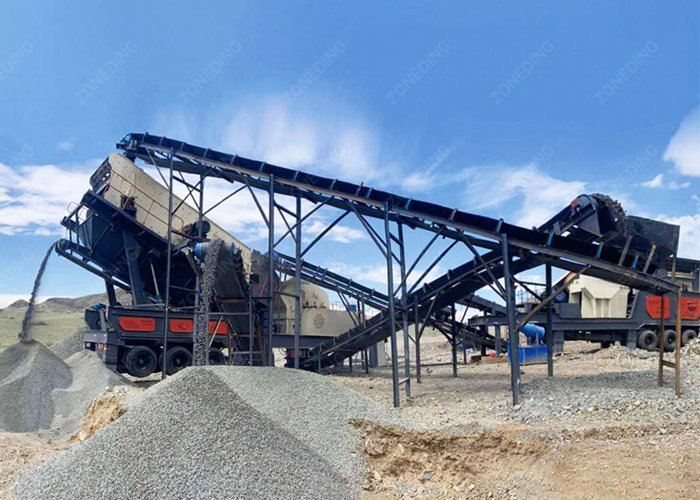
The Jaw Crusher is a mechanical device used for primary size reduction in the mineral processing and aggregate production industries. It is the first machine in a standard Crushing Production Line, tasked with breaking large run-of-mine rock into a smaller size for subsequent processing. The machine’s straightforward design, heavy-duty construction, and application of high-compressive force make it a standard for demanding, high-throughput operations. This guide provides a technical overview of its structure, operating principles, types, and selection criteria.
What Is a Jaw Crusher, and What Role Does It Play?
A Jaw Crusher is a type of mechanical crusher used for primary size reduction of raw materials. It operates by compressing material between a stationary plate and a moving plate. The primary function of a jaw crusher is to reduce large, solid materials into smaller, more manageable pieces.
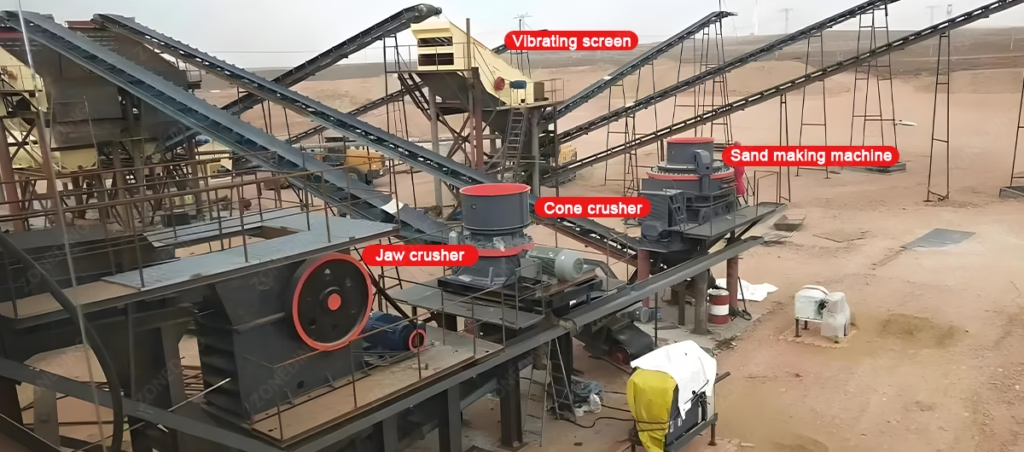
CRUSHING PROCESS-Primary, secondary, and tertiary crushing
In a crushing circuit, the jaw crusher performs the first stage of comminution. It accepts large-diameter feed, such as boulders directly from a quarry or mine, and produces a coarser output product. This product is then transferred to secondary and tertiary crushers for further size reduction. The reliability of the entire plant depends on the consistent performance of the primary jaw crusher, as it dictates the feed rate and size for all downstream equipment.
What Are the Core Components of a Jaw Crusher?
The durability of a jaw crusher is a result of its simple and robust engineering. A few key jaw crusher parts work together to generate and withstand high crushing forces. The design emphasizes strength and serviceability to ensure longevity in abrasive environments.
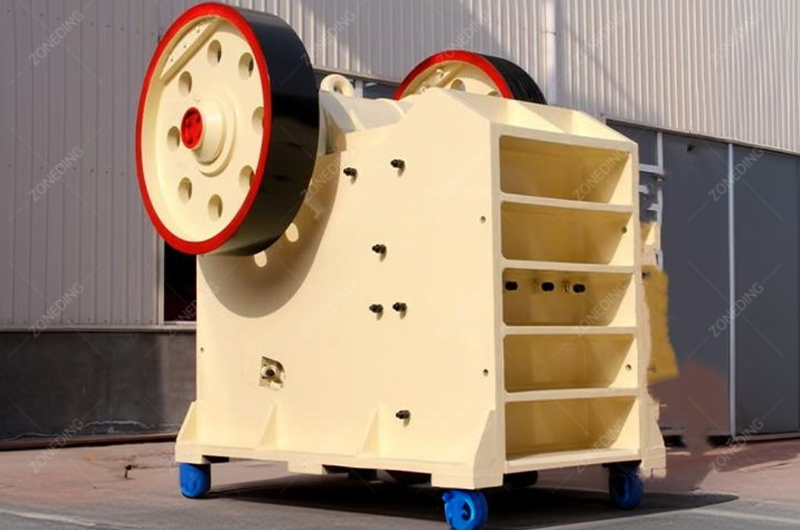
jaw-crusher-core-components
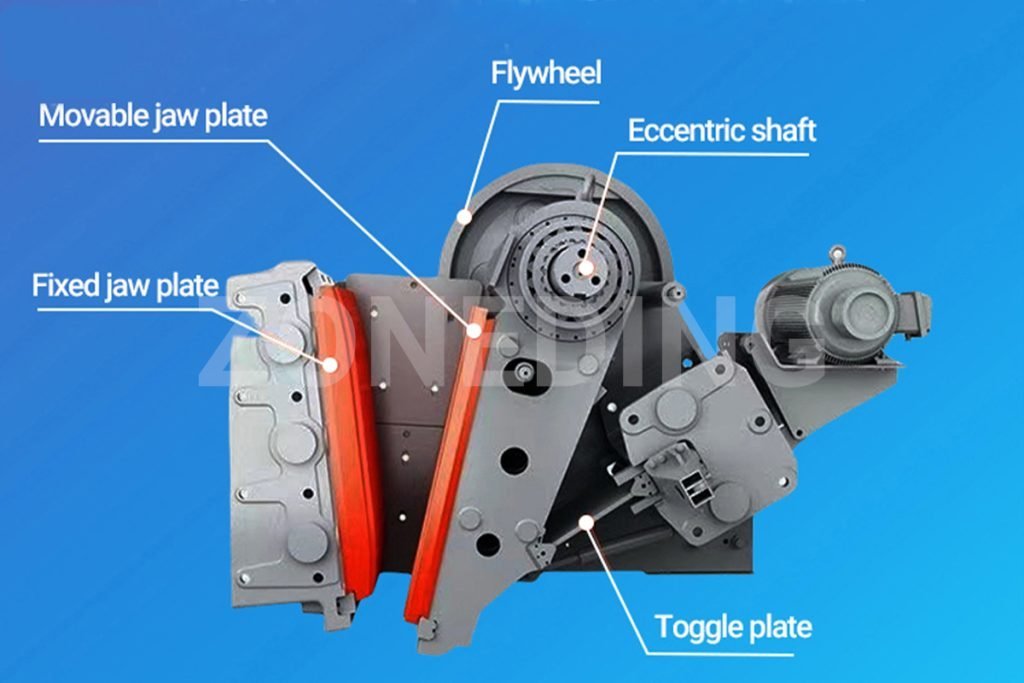
The main components include:
Main Frame: The heavy steel structure that houses all other components and absorbs operational stresses.
Fixed Jaw Plate: A stationary wear part, typically made of high-manganese steel, which forms one side of the crushing chamber.
Swing Jaw Plate: The moving wear part that pivots to crush material against the fixed jaw plate.
Eccentric Shaft: A heavy-duty shaft with an offset design that converts rotational motion into the reciprocating movement of the swing jaw.
Flywheel: A large, weighted wheel mounted to the eccentric shaft that stores kinetic energy to provide consistent power through the crushing cycle and protect the motor from shock loads.
Toggle Plate: A component that holds the lower part of the swing jaw in position. It also functions as a safety device, fracturing under excessive load to protect the main components from damage.
What Is the Jaw Crusher Working Principle?
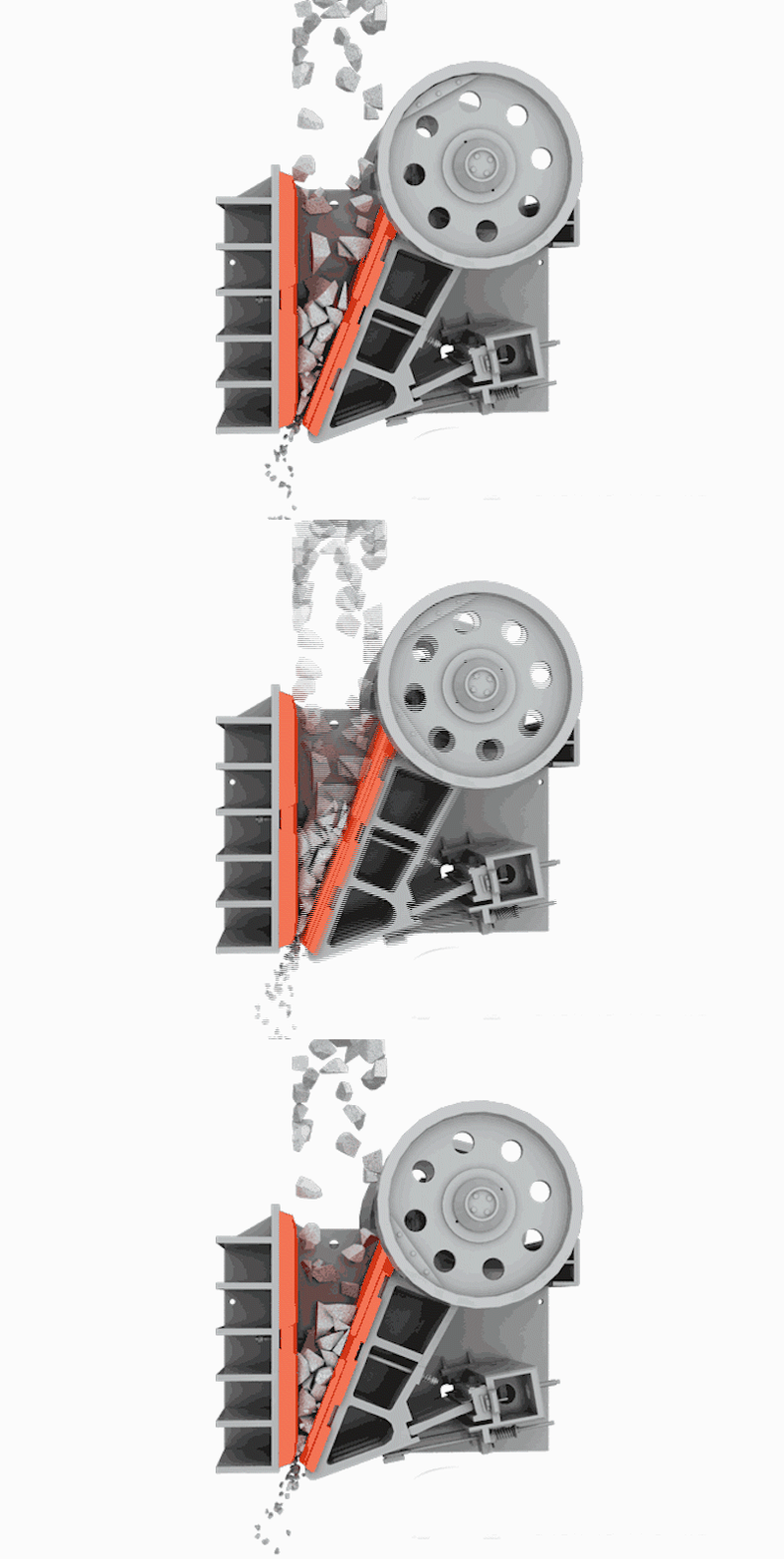
The jaw crusher working principle is based on compressive force. Material is fed into a V-shaped crushing chamber, formed by the fixed and swing jaw plates. The chamber is wider at the top and narrows at the bottom.
An electric motor rotates the flywheel and eccentric shaft. The eccentric motion of the shaft causes the swing jaw to move back and forth. During the forward stroke, the swing jaw compresses and breaks the material against the fixed jaw. During the backward stroke, the chamber opens, allowing the crushed material to fall further down. This cycle repeats, with material being progressively crushed until it is small enough to pass through the discharge opening, known as the Closed Side Setting (CSS).
What Are the Different Types of Jaw Crushers?
Jaw crushers are primarily classified by their pivot mechanism design. The two main categories are the single-toggle and double-toggle jaw crushers. Each type offers specific operational advantages.
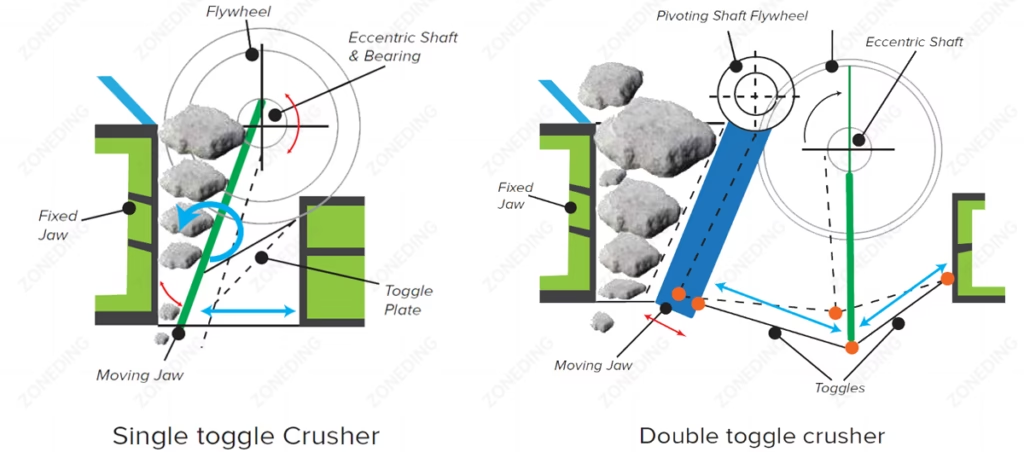
Jaw Crusher – Single Toggle vs Double Toggle
Single-Toggle Jaw Crusher
In a single-toggle design, the swing jaw is suspended directly on the eccentric shaft. This arrangement causes the jaw to move in an elliptical path, creating both compressive and rubbing forces. This design is mechanically simpler, with fewer moving parts, resulting in a lower initial cost and simpler maintenance. Single-toggle crushers typically provide a higher throughput. The rubbing action, however, can lead to accelerated wear on the jaw plates when processing highly abrasive materials.
Double-Toggle Jaw Crusher
The double-toggle jaw crusher uses a more complex mechanism where the swing jaw is actuated by a pitman and two toggle plates. The eccentric shaft is located behind the swing jaw, not above it. This design produces a purely compressive crushing motion with minimal rubbing. As a result, jaw plate wear is significantly reduced, making it ideal for crushing extremely hard and abrasive rock. The disadvantages include lower capacity, a heavier and more complex structure, and a higher manufacturing cost.
What Types of Ores and Materials Can a Jaw Crusher Handle?
A Jaw Crusher is engineered for hard rock crushing. It is highly effective at breaking materials that are hard, tough, and abrasive.
The machine is suitable for a wide range of materials:
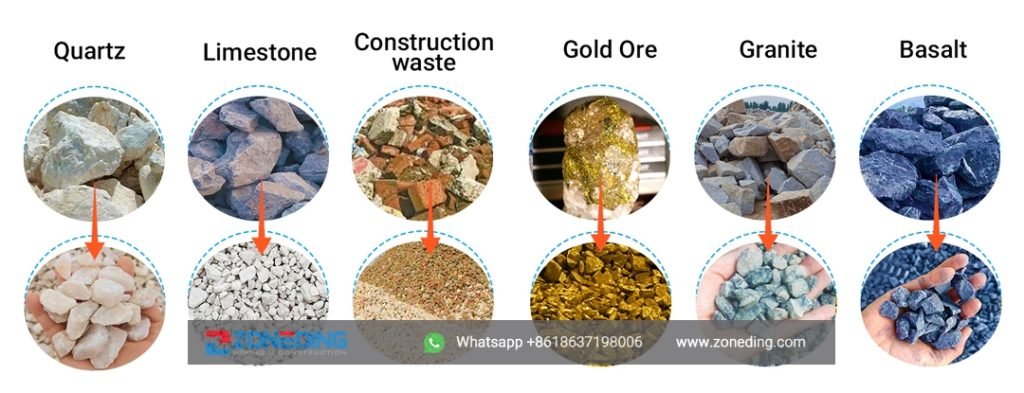
Jaw-crusher-material
Hard Rocks: These include granite, basalt, gabbro, and river stone. The crusher’s compressive action is well-suited for these materials.
Metallic Ores: It is standard equipment for the primary crushing of iron, copper, gold, and other metal ores before they are sent for further processing in machines like Ball Mills.
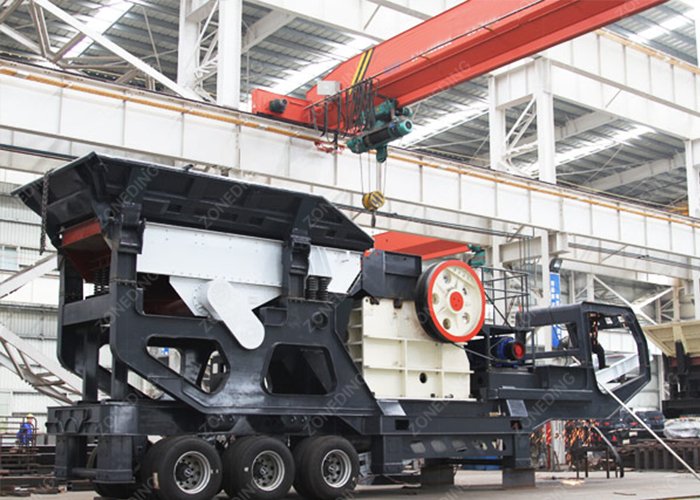
Construction Waste: A Mobile Jaw Crusher is an efficient tool for construction waste disposal, crushing concrete and asphalt into reusable aggregate.
Quarrying: Jaw crushers are essential in quarries for producing primary crushed stone for various construction applications.
The jaw crusher is not recommended for soft, sticky materials like clay. These materials tend to pack within the crushing chamber, causing blockages and halting production. An Impact Crusher is often a better alternative for such materials.
How Is the Right Jaw Crusher Model Selected for a Project?
A proper jaw crusher selection is critical for the efficiency of any crushing plant. An incorrectly sized machine can limit the plant’s capacity and increase operational costs. The selection process must be based on a technical evaluation of the project’s requirements.
The following key factors determine the appropriate model:
Maximum Feed Size: The crusher’s feed opening must be large enough to accept the largest rocks from the feed source.
Required Output Size (CSS): The Closed Side Setting must be adjustable to produce the target output size required by the secondary crushing stage.
Capacity (Tons Per Hour – TPH): The machine’s throughput capacity must align with the overall production targets of the plant.
Material Hardness and Abrasiveness: The material’s properties dictate the required robustness of the crusher and will influence the wear life of components like jaw plates.
A careful analysis of these parameters ensures the selection of the correct Jaw Crusher for a balanced and productive operation.
What Are the Key Differences Between a Jaw, Cone, and Impact Crusher?
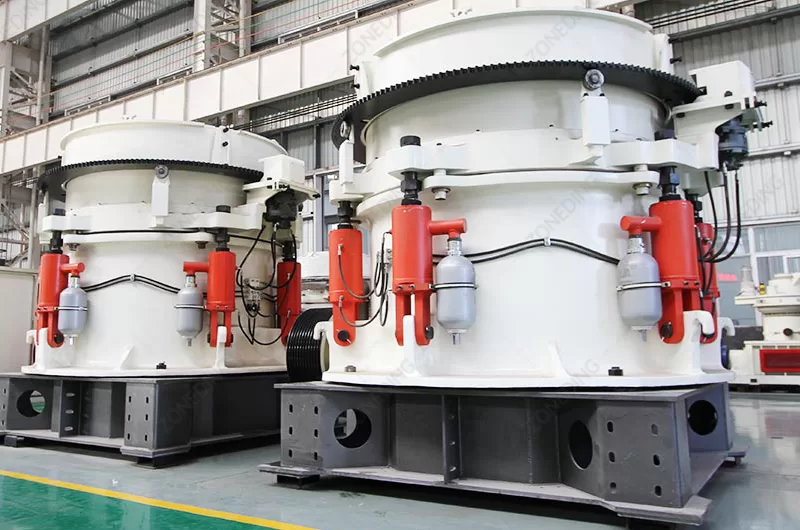
While all three crusher types reduce material size, their mechanisms, applications, and roles within a crushing production line are distinct. The jaw crusher is almost exclusively used for primary crushing, while cone and impact crushers are used for secondary and tertiary stages.
In summary, the Jaw Crusher begins the size reduction process. A Cone Crusher is then typically employed for further reduction of hard rock. An Impact Crusher is used when the material is less abrasive and a cubical product shape is important, such as for high-quality concrete aggregate.
Frequently Asked Questions
Question 1: What is the ‘nip angle’ on a jaw crusher and its significance?
The nip angle is the angle formed between the fixed and swing jaw plates. Its design is critical for crusher performance. A well-engineered nip angle allows the jaws to effectively grip and pull material into the crushing chamber. An excessively steep angle can cause material to slip upwards, reducing efficiency and increasing wear.
Question 2: What is the typical replacement frequency for jaw plates?
The service life of jaw plates depends on the abrasiveness of the material being processed. When crushing hard rock like granite, plates might require replacement every few months. For softer materials, they could last for over a year. Regular inspection for wear is crucial to prevent damage to the underlying components.
Question 3: What does CSS (Closed Side Setting) mean?
The CSS is the narrowest distance between the two jaw plates at the discharge point of the crushing chamber. This setting is the primary adjustment used to control the maximum size of the product exiting the crusher.
Question 4: Is a jaw crusher suitable for recycling concrete?
Yes, a Jaw Crusher is effective for recycling concrete. Its compressive force can easily break down concrete blocks. However, any embedded steel rebar must be removed from the feed to prevent damage to the machine.
Summary and Recommendations
The Jaw Crusher is a machine defined by its reliability and high-force capabilities. Its design is engineered to withstand continuous, heavy-duty operation in demanding environments for ore crushing and aggregate production.
The selection of the primary crusher is a critical decision for any crushing circuit. A correctly sized jaw crusher, properly installed and fed by a suitable Vibrating Feeder, will function as a dependable foundation for the entire plant. Its long-standing and widespread use confirms its status as the standard for primary crushing applications.
About ZONEDING
Since 2004, ZONEDING has manufactured high-performance mineral processing equipment. As a factory-direct supplier, the company provides a complete range of machinery, from single crushers to entire customized stone crushing plants. Its team of 15 professional engineers ensures that every machine is designed for maximum efficiency and a long service life. ZONEDING has delivered solutions to more than 120 countries.
Contact the company for a professional consultation and a competitive quote.
Learn how grinding size affects lead and zinc recovery, mineral liberation, flotation performance, and operating costs. Discover practical methods to optimize your grinding circuit and maximize flotation efficiency.
Many investors consider gold cyanidation extraction a simple chemical reaction. Commercial-grade operations face severe mechanical and metallurgical challenges daily. A successful plant demands precise engineering to match the specific ore chemist...
A represents the peak of integrated mineral processing technology. This machine functions as a complete factory on wheels or tracks. It performs feeding, crushing, and screening in one continuous flow. This setup eliminates the need for expensive ...
We use cookies to ensure that we give you the best experience on our website. If you continue to use this site we will assume that you are happy with it.
Privacy Policy
Send us a message
We would love to hear from you
Submit your question and our team will respond to the email provided as soon as possible.
 Zoneding Machine