Choosing the right Iron Ore Beneficiation Process is a critical decision that directly impacts the cost and efficiency of the steel industry. Decades of experience in mineral processing show a clear evolution from simple sorting to highly efficient and precise methods. Processing iron ore is not just about separation; it requires selecting the most economical and effective method based on an ore’s unique properties. These properties include mineral composition, particle size, and impurity types.
This guide explains the key Iron Ore Beneficiation Methods. It provides deep insights based on decades of hands-on experience, going beyond standard textbooks. Understanding these principles is essential for making the best choice for any mining operation.
Why is Process Selection Crucial? Key Factors Determining Costs and Profits?
Choosing the right Iron Ore Beneficiation Process is the single most important factor determining a mine’s profitability. An optimal process will Increase Iron Concentrate Grade while keeping operational costs low. A poorly chosen process, in contrast, leads to high energy consumption, excessive reagent use, and low recovery rates. This results in losing valuable iron in the tailings and wasting money on an inefficient system.
The key is to match the process to the ore’s specific characteristics. Every iron ore deposit is different. A process that works perfectly for a magnetite mine in one region might be completely unsuitable for a hematite deposit elsewhere. Factors like the liberation size of iron minerals, the type of gangue minerals, and the presence of harmful impurities like phosphorus and sulfur all influence the choice of technology. Making the right decision from the start saves millions in capital investment and operational expenses over the life of the mine.
What is the Best Method for Single, Strongly Magnetic Iron Ore (Magnetite)?
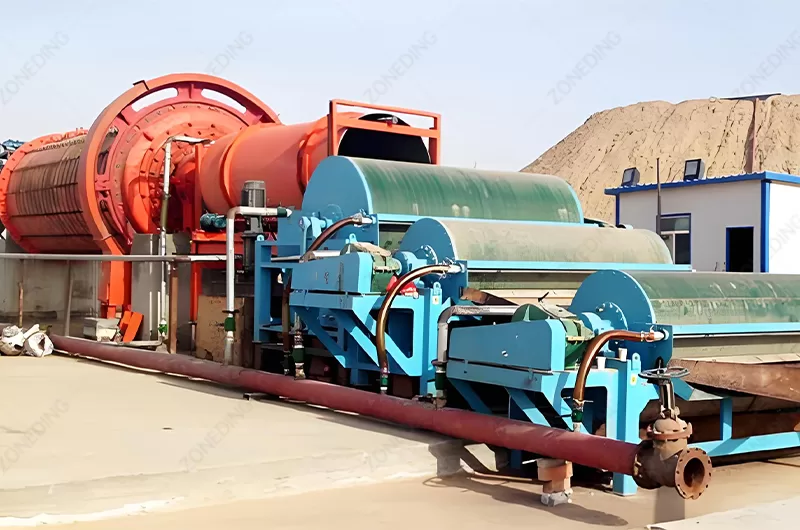
For simple, strongly magnetic iron ore, like most magnetite deposits, the most efficient and cost-effective method is weak magnetic separation. This process uses the natural magnetic properties of magnetite to separate it from non-magnetic gangue minerals. It is a straightforward and reliable Iron Ore Beneficiation Method.
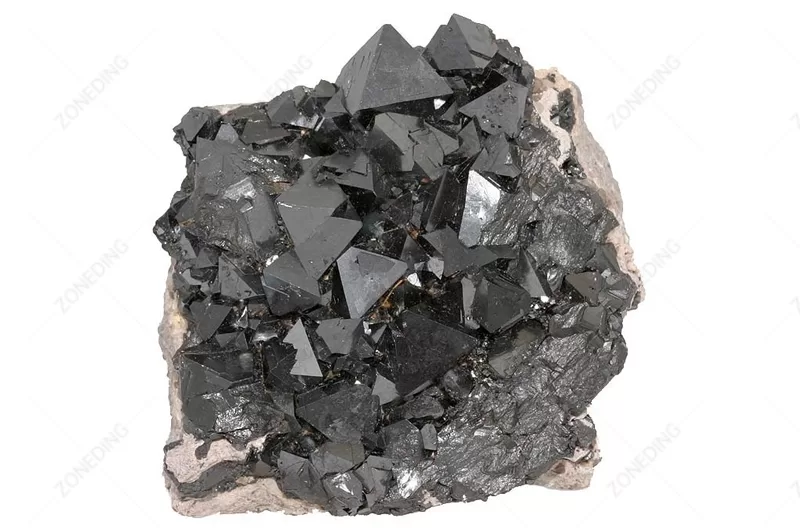
Magnetite
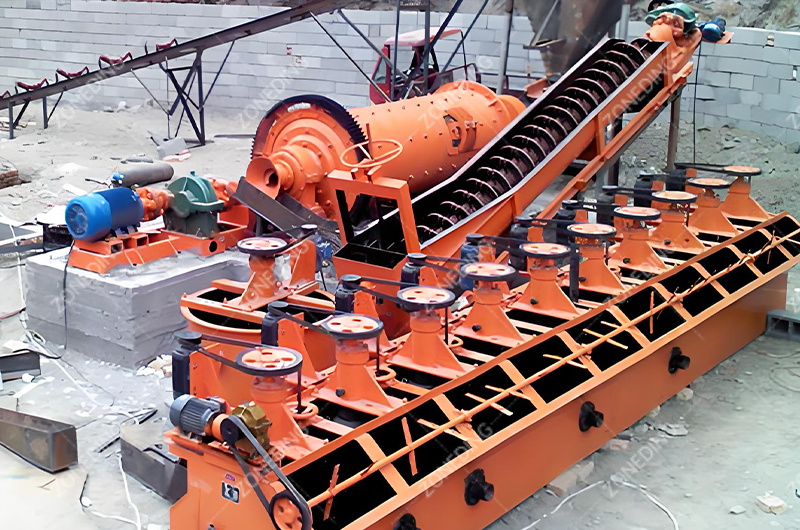
Magnetite-Processing-Plant
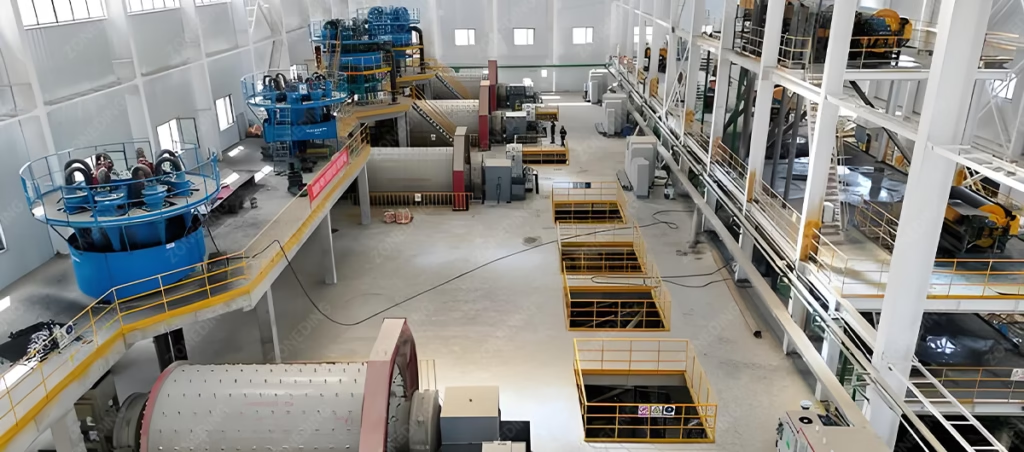
The secret to a successful Magnetite Beneficiation plant, however, is not just using a magnet. The key lies in a multi-stage process known as “staged grinding and staged separation.” First, the ore is ground coarsely and sent to a primary Magnetic Separator. This stage removes a large portion of the liberated waste rock. Then, only the partially concentrated ore is ground finer for the next separation stage. This approach prevents over-grinding, a major killer of efficiency. Over-grinding creates fine slime that is difficult to recover and handle. Staged separation saves energy, improves recovery, and makes the entire operation more profitable.
How to Use Gravity Separation for Coarse-Grained Weakly Magnetic Iron Ore (Hematite/Limonite)?
For weakly magnetic iron ore, like hematite or limonite, where the iron mineral particles are coarse, Gravity Separation is an excellent low-cost option. This method works because iron minerals are much denser than most gangue minerals like quartz. This density difference is used to separate them.
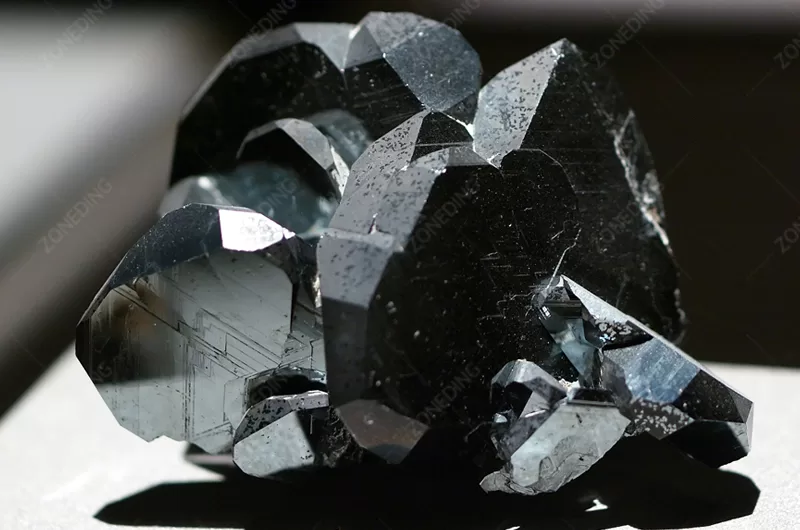
Hematite
Limonite
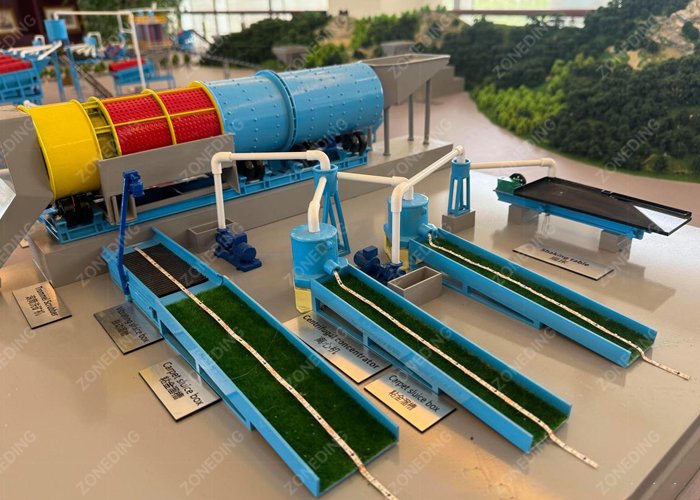
Gravity Separation
The core principle here is “early gangue rejection.” Before expensive fine grinding, Gravity Separation equipment like jigs or spiral chutes is used to remove as much waste rock as possible. This is a very important step. By removing coarse waste early, the amount of material that needs to be ground finer is significantly reduced. Grinding is one of the most energy-intensive parts of mineral processing. Reducing the grinding load leads to massive cost savings, making Gravity Separation a highly effective pre-concentration step in the overall Hematite Beneficiation process.
How to Choose Between Flotation and High-Intensity Magnetic Separation for Fine-Grained Weakly Magnetic Iron Ore?
Processing fine-grained, weakly magnetic iron ore is more challenging. When the iron minerals and gangue are finely intergrown, the ore must be ground very fine to liberate them. At this fine size, gravity separation is no longer effective. This leaves two main options: High-Intensity Magnetic Separation (HIMS) or Flotation.
High-Intensity Magnetic Separation uses very powerful magnets to attract weakly magnetic minerals like hematite. It is a clean process because it does not use chemical reagents. However, it is very sensitive to slime. Before the ore enters the HIMS unit, it must be thoroughly deslimed. Otherwise, the fine slime will clog the machine and ruin its performance.
Flotation
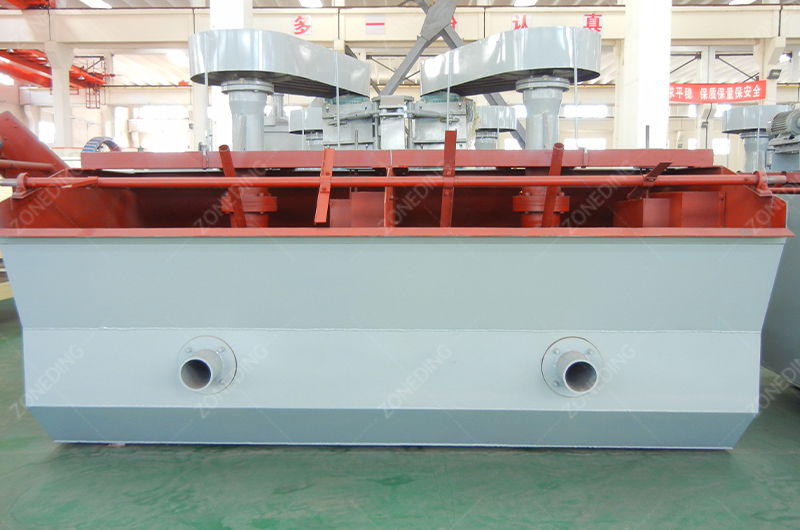
Flotation Machine
Flotation uses chemical reagents to make mineral particles attach to air bubbles and float to the surface. For iron ore, “reverse flotation” is typically used. In this process, the silica gangue is floated, leaving the iron minerals behind. Flotation can achieve very high-grade concentrates but has higher operational costs due to reagent consumption. The choice between these two methods depends on detailed Mineral Processing Test work and an economic evaluation.
How to Design the Most Efficient Combined Beneficiation Process for Mixed Ores?
Many iron ore deposits are not simple. They often contain a mix of strongly magnetic magnetite and weakly magnetic hematite. Sometimes, they also have complex associations with other minerals. For these mixed ores, a single Iron Ore Beneficiation Method is rarely sufficient. The most efficient solution is a Combined Beneficiation Process.
The goal of a combined process is to use the strengths of different methods to treat different parts of the ore. A common approach is to first use weak magnetic separation to easily recover the magnetite. The material not recovered by the weak magnets (the tailings) then becomes the feed for another process. This non-magnetic portion, which might contain hematite, can then be treated with gravity separation, high-intensity magnetic separation, or flotation. Designing a Combined Beneficiation Process requires a deep understanding of the ore’s mineralogy to maximize overall iron recovery from complex ore bodies.
Is Roasting Magnetic Separation the Final Solution for Refractory Iron Ore (like Siderite)?
Some iron ores are extremely difficult to process using standard methods. These are called Refractory Iron Ore. Examples include siderite (iron carbonate) or hematite that is very finely mixed with phosphorus-bearing minerals. For these challenging ores, Roasting Magnetic Separation can be the ultimate solution.
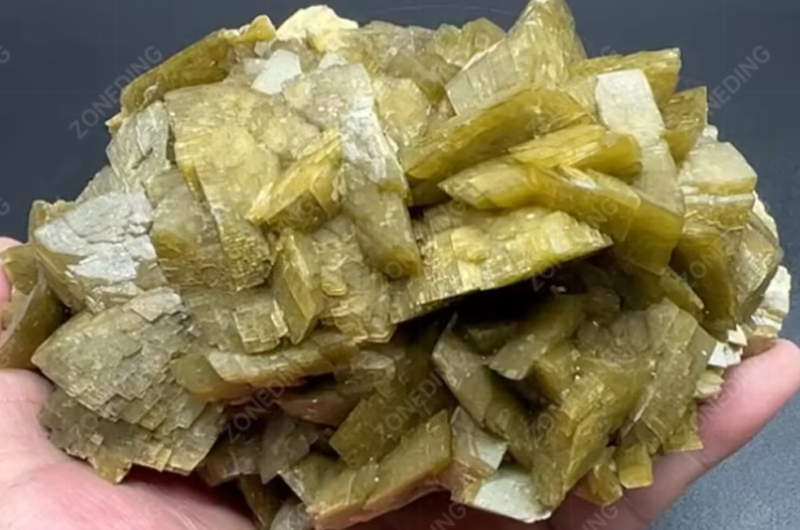
Siderite
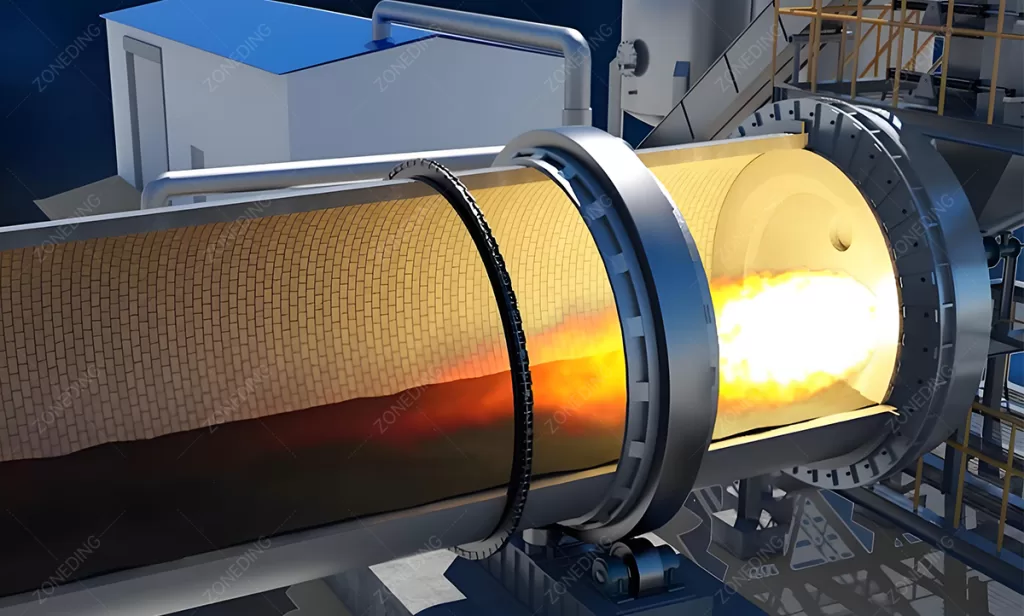
Roasting Magnetic Separation
This process involves heating the ore in a large kiln, like a Rotary Kiln, under controlled conditions. The heat transforms the weakly magnetic or non-magnetic iron minerals into strongly magnetic artificial magnetite. Once transformed, the ore can be easily treated using the simple and low-cost weak magnetic separation method. Roasting Magnetic Separation is a powerful technique that can unlock the value of difficult ore bodies. However, it is also the most expensive option due to significant equipment investment and high energy costs. This method is usually considered only when all other options have proven ineffective.
Final Decision: How to Tailor a Beneficiation Plan Through Ore Testing?
After exploring all these options, what is the basis for the final decision? The most critical step in designing the perfect Iron Ore Beneficiation Process is to conduct a thorough Mineral Processing Test. There is no substitute for this. Every ore body is unique, and designs cannot rely on assumptions or what worked for a neighboring mine.
A comprehensive test program reveals everything needed about the ore. It identifies the iron minerals, the gangue minerals, and their intergrowth. It determines the liberation size, which dictates the required grinding fineness. Most importantly, it tests different beneficiation methods on actual ore samples. The results provide clear data on recovery rates, concentrate grades, and potential problems. This data is the foundation for a successful plant design. Investing in a proper Mineral Processing Test eliminates guesswork and ensures the plant is perfectly tailored to the ore, maximizing long-term profitability.
Frequently Asked Questions
Question 1: What is the main difference between Magnetite Beneficiation and Hematite Beneficiation?
The main difference lies in their magnetic properties. Magnetite Beneficiation is simpler because magnetite is strongly magnetic, allowing for efficient separation using low-intensity magnetic separators. Hematite Beneficiation is more complex as hematite is weakly magnetic, requiring methods like Gravity Separation, High-Intensity Magnetic Separation, or Flotation.
Question 2: Why is gravity separation often used as a first step in an Iron Ore Beneficiation Process?
Gravity Separation is used as a cost-effective pre-concentration step, especially for coarse-grained ores. It removes a significant portion of low-density gangue (waste rock) before the expensive fine-grinding stage. This principle, known as ‘early gangue rejection,’ dramatically reduces energy consumption and overall processing costs.
Question 3: What is ‘reverse flotation’ in iron ore processing?
Reverse flotation is a common Flotation technique used in Hematite Beneficiation. Instead of floating the valuable iron minerals, this process uses specific chemical reagents to make the gangue minerals (like silica) attach to air bubbles and float. The valuable iron minerals sink and are collected as the concentrate. This method is often more efficient for iron ore.
Question 4: How does particle size affect the choice of beneficiation method?
Particle size is critical. Coarse-grained ores, where iron minerals are easily liberated, are suitable for low-cost methods like Gravity Separation. Fine-grained ores, where minerals are intricately locked, require fine grinding followed by more advanced techniques like Flotation or High-Intensity Magnetic Separation to achieve effective separation.
Question 5: What are the main operational costs associated with iron ore beneficiation?
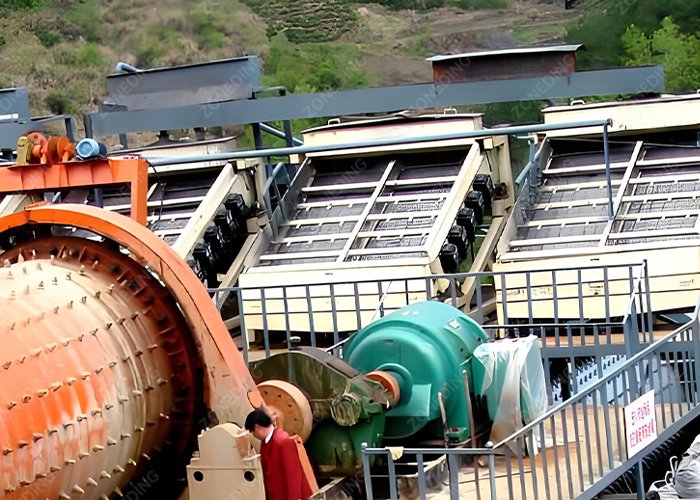
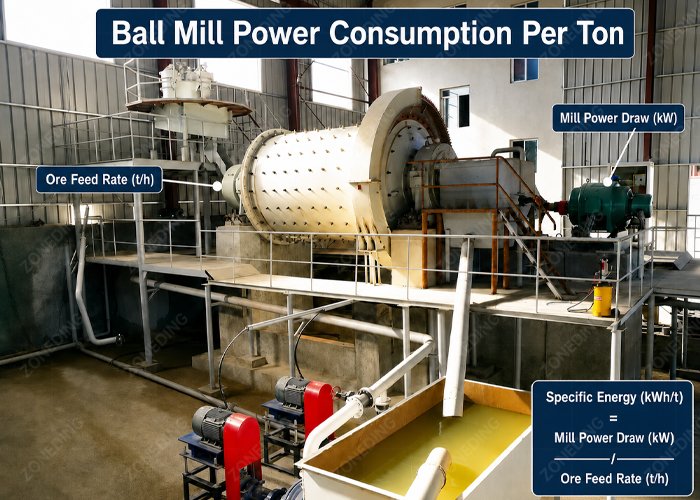
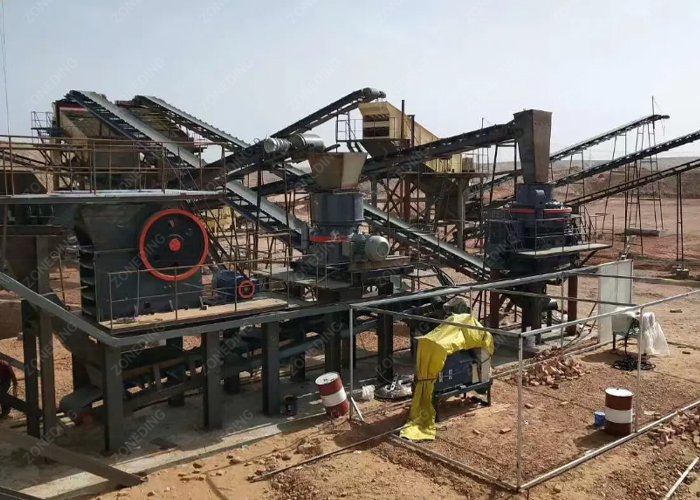
The main operational costs in an Iron Ore Beneficiation Process are energy (especially for grinding in Ball Mills), wear parts for equipment like crushers and mills, and chemical reagents (in flotation). For Roasting Magnetic Separation, fuel is the largest cost. Optimizing the process to reduce these costs is key to profitability.
Summary and Recommendations
There is no single “best” Iron Ore Beneficiation Method. The “most suitable” plan is always tailored to the specific ore. The path to success involves a clear strategy. First, start with a deep mineralogical analysis as the foundation for all decisions. Second, conduct comprehensive lab-scale and pilot-scale tests to validate the process and equipment choices before major investment. Finally, perform a thorough economic and sustainability assessment.
Building a beneficiation plant is a major undertaking. It requires a complete understanding of the process, technology, management, and environment. Experience shows that success is found in the details and in the practical wisdom gained over many years.
About ZONEDING
Since 2004, ZONEDING has been at the forefront of the mineral processing industry. We provide a complete range of Beneficiation Equipment and customized solutions to clients around the world. We specialize in designing and building reliable and efficient plants. Our support covers everything from initial design and manufacturing to installation and after-sales service. We are committed to helping clients achieve the highest possible value from their mineral resources.
Contact us today. Let our experts help design or optimize your Iron Ore Beneficiation plant. Unlock the full potential of your mine with ZONEDING’s proven technology and experience.
The success of a graphite processing plant depends on the ability to protect large flakes. Natural flake graphite value relates directly to flake size. Large flakes (+32 or +50 mesh) command prices several times higher than fine powder. An efficie...
ZONEDING helps gold plants improve output by controlling the full process, not just one reagent or one machine. A stable gold recovery rate comes from liberation control, classification stability, efficient separation, and strict loss ac...
Concrete recycling is a fast-growing industry. It turns old building waste into high-value products. Choosing the right machine is the most important part of the business. Different machines handle different materials and budgets. This guide compa...
We use cookies to ensure that we give you the best experience on our website. If you continue to use this site we will assume that you are happy with it.
Privacy Policy
Send us a message
We would love to hear from you
Submit your question and our team will respond to the email provided as soon as possible.
 Zoneding Machine