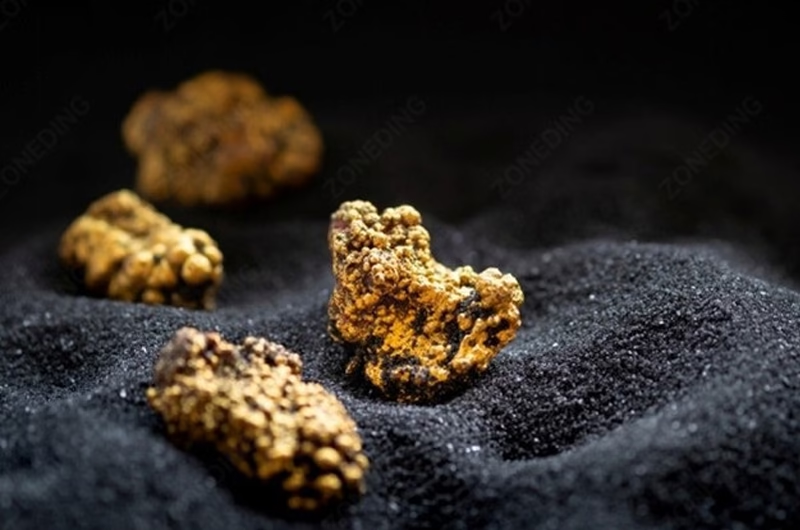
In the gold mining industry, carbonaceous gold ore is known as the “Silent Thief.” High gold grades may appear in geological reports, yet recovery rates can plummet below 30% due to the dreaded preg-robbing effect. The natural organic carbon in the ore acts like a sponge, stealing dissolved gold before it can be recovered. Based on decades of experience addressing this issue, the following overview outlines carbonaceous gold ore treatment strategies—ranging from simple chemical blinding to advanced roasting—designed to transform a loss-making mine into a profitable operation.
Carbonaceous gold ore is a complex type of refractory ore containing naturally occurring organic carbon. This carbon acts identically to the activated carbon we intentionally add in processing plants. It absorbs the gold-cyanide complex during leaching, a phenomenon we call the preg-robbing effect. If you do not neutralize this natural carbon, it will rob the gold from the solution and carry it out to the tailings dam.
The core problem here is competition. In a standard cyanidation process, you dissolve gold into a liquid state and add activated carbon to absorb it. However, in carbonaceous ores, the “bad carbon” (organic matter) is already present. It is often faster and more aggressive than your added carbon. The gold dissolves perfectly fine, but you never see it because it gets “robbed” immediately. The severity of this issue is measured by the Preg-Robbing Index (PRI). Understanding your ore’s PRI is the first step to stopping the theft.
Types of Carbon in Gold Ore
Understanding the enemy is half the battle.
Carbon Type
Characteristics
Impact on Recovery
Treatment Difficulty
Elemental Carbon
Graphite, resemble activated carbon
High Preg-robbing
High
Organic Acids
Humic acids
Consumes reagents
Medium
Hydrocarbons
Oil-like substances
Coats gold particles
Low to Medium
How to Efficiently Remove Carbon and Recover Gold?
There is no “magic pill” for carbonaceous gold ore treatment; you must match the method to the carbon’s activity level. Based on 50 years of industry evolution, we don’t just try one method; we often combine them. Effective removal or suppression involves a spectrum of strategies, ranging from “snatch games” using stronger carbon to physical separation via flotation, or total destruction via roasting.
For example, we might blend the ore to lower the carbon grade and then use chemical agents. For extremely difficult ores, we might float a concentrate and roast only that small portion. Here are the core strategies we will explore in depth:
7 Core Strategies for Handling “The Silent Thief”
Competitive Adsorption (CIL): Using the CIL process to outcompete natural carbon.
Chemical Blinding: Using kerosene to mask the carbon surfaces.
Flotation Separation: Physically removing the carbon before it touches cyanide.
Roasting: Burning the carbon off at high temperatures.
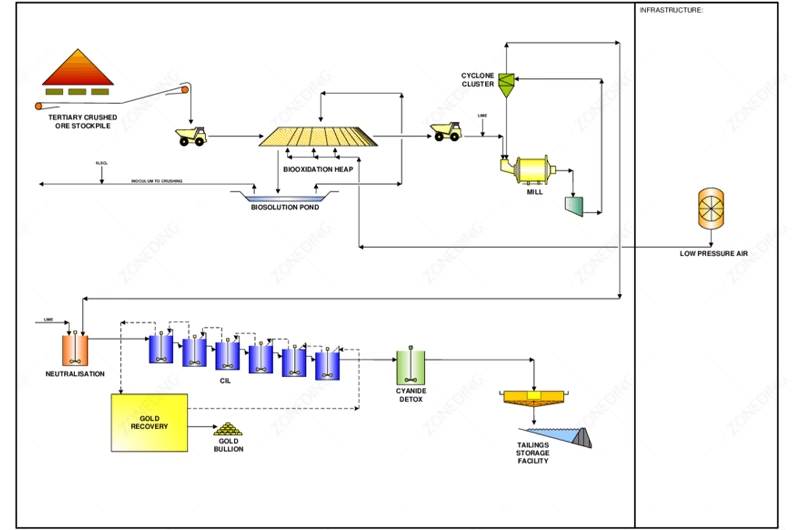
Bio-oxidation: Using bacteria to passivate the carbon surface (best for sulfide-carbon double refractory ores).
Non-Cyanide Leaching: Using Thiosulfate, which carbon does not absorb.
Ore Blending: Diluting the carbon content with oxide ore to make it manageable.
CIL vs. CIP: Why is CIL (Carbon-in-Leach) the Baseline for Carbonaceous Ores?
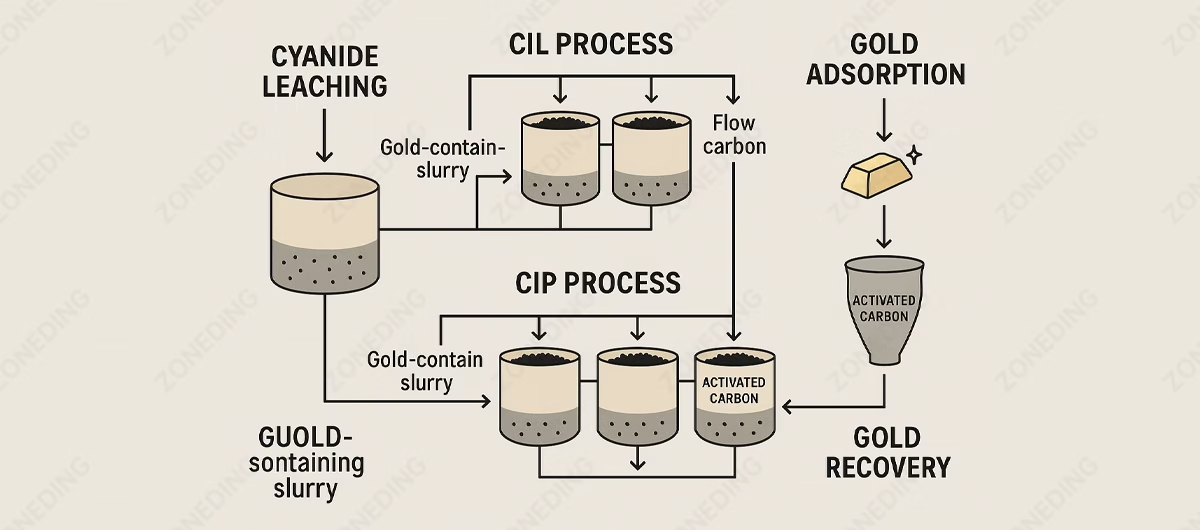
For mild to moderate carbonaceous ores, you must use Carbon-in-Leach (CIL), never Carbon-in-Pulp (CIP). Many inexperienced design institutes make the mistake of recommending CIP, but this is suicide for carbonaceous ore. In CIP, leaching happens before adsorption. The natural carbon steals the gold in the first tank before it ever reaches your adsorption circuit.
Gold CIL Plant technology solves this by allowing simultaneous leaching and adsorption. This enables you to play a “snatch game” against the natural carbon. As soon as the gold atom dissolves, it has two choices: stick to the natural “bad” carbon or stick to your added “good” carbon. You must rig the game so your carbon wins. This is the most fundamental defense against preg-robbing.
Cyanide Leaching and Carbon Adsorption for Gold Extraction
How to Win the “Snatch Game”
To make CIL work, you need to be aggressive with your parameters. Standard settings will fail.
Double the Carbon Density: In a normal mine, you might use 10-15g/L of activated carbon. For preg-robbing ore, you must increase this to 25-30g/L. You need to physically overwhelm the natural carbon.
Use High-Activity Carbon: Do not buy cheap carbon. You need premium coconut shell carbon with a very high iodine number. Your carbon must be faster and stronger than the ore’s carbon.
Optimized Transfer: Move loaded carbon out of the system quickly to prevent equilibrium shifts that might favor the natural carbon.
Chemical Blinding Technology: Can Kerosene Stop Carbon Activity?
Yes, adding kerosene or diesel acts as a “blinding agent” that passivates the natural carbon. We often call this the “poor man’s lifesaver.” The hydrocarbons in the kerosene selectively adsorb onto the surface of the organic carbon in the ore. This forms an oily film that blocks the active sites, preventing them from absorbing the gold-cyanide complex.
This is the most cost-effective solution for mines that cannot afford a roasting plant. It works best on ores with low to moderate preg-robbing indices. However, the application technique is critical. You cannot just dump diesel into the tank and hope for the best. You need precise conditioning in Mixer tanks.
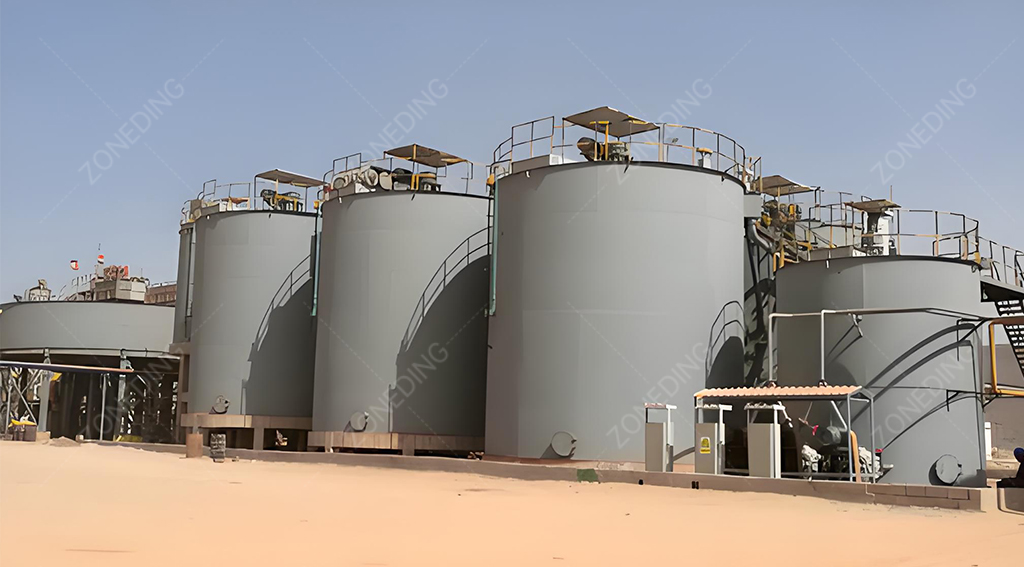
Gold-CIP-Tanks
Critical Operational Rules for Blinding Agents
Pre-treatment is Mandatory: You must add the kerosene and surfactant before the slurry enters the cyanide leaching circuit.
Conditioning Time: Give the reagent 30 to 45 minutes to thoroughly coat the natural carbon particles.
The “Contamination” Risk: Never add kerosene after leaching has started. If you do, the oil will coat your expensive activated carbon, rendering it useless. You will stop the theft, but you will also stop the recovery.
Flotation Decarbonization: How to Separate Carbon Before Cyanidation?
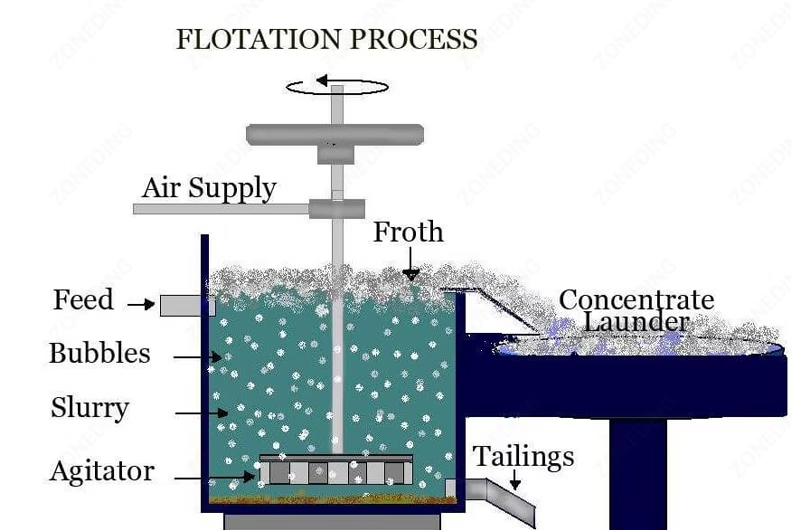
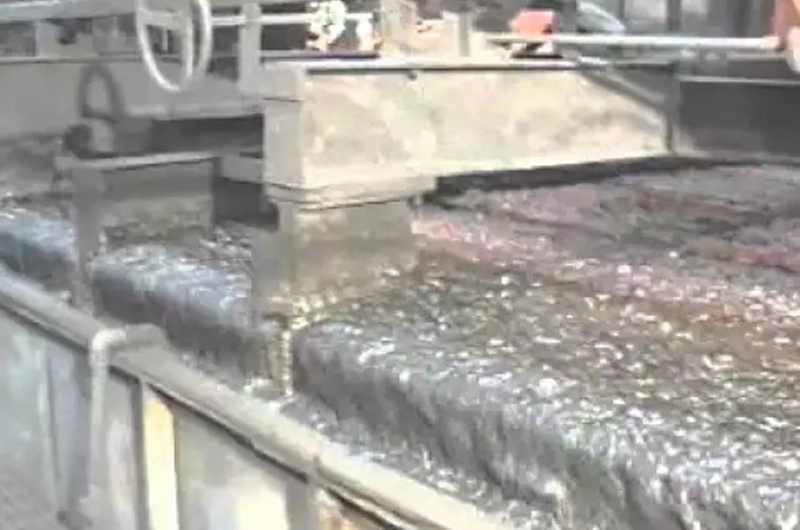
Flotation decarbonization uses “reverse thinking” to physically remove the problem. Instead of fighting the carbon chemically, we use Flotation Machines to float the carbonaceous matter out of the slurry. This prevents the carbon from ever entering the leaching tanks. This method is highly effective when the carbon can be easily separated from the gold-bearing minerals.
froth flotation process
Flotation Decarbonization
This strategy requires a clear understanding of where your gold is hiding. Is it in the carbon? Or is it in the sulfides? Depending on the mineralogy, we choose one of two paths.
Strategy A: Discarding the “Bad” Carbon
If your mineralogy shows that the organic carbon is barren (contains no gold), you are in luck.
Flash Flotation: Use a pre-flotation stage to generate a carbon-rich froth.
Discard: Send this froth to the tailings.
Leach: Send the clean, low-carbon underflow to the CIL circuit. This is the cheapest and most efficient method.
Often, gold is locked inside sulfides that are associated with carbon.
Float Everything: Produce a bulk concentrate containing the gold, sulfides, and carbon.
Volume Reduction: You have reduced the mass to 5%-10% of the original ore.
Targeted Treatment: You only need to roast this small volume. The 90% tailings can go directly to CIL. This significantly lowers the Capital Expenditure (CAPEX) for roasting equipment.
Roasting Pre-treatment: The “Nuclear Option” for High-Carbon Ores
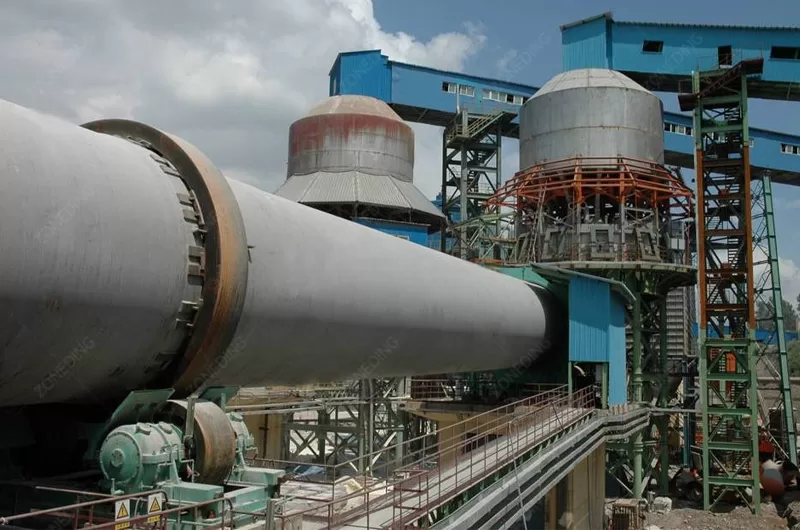
Oxidative roasting is the only solution for high-grade ores with extreme preg-robbing indices. This process involves heating the ore to 650°C – 700°C in a Rotary Klin. The intense heat burns the organic carbon into carbon dioxide (CO2), permanently destroying its ability to steal gold. It also oxidizes sulfides, liberating refractory gold.
Roasting is expensive and technically demanding. It is a “nuclear option” because it destroys the problem completely. However, it comes with high energy costs and environmental permitting challenges. It is usually reserved for large-scale mines with high gold grades that can justify the investment.
Bio-oxidative leaching
Rotary kiln
The “Death Zone” of Temperature Control
Operating a roaster is a delicate balancing act.
Too Low (<650°C): The carbon is not fully burned. The preg-robbing effect remains.
Too High (>750°C): Sintering occurs. The iron minerals in the ore melt and encapsulate the gold again (Secondary Encapsulation). Even though the carbon is gone, the cyanide can no longer reach the gold.
Insight: Many roasting plants fail not because they don’t burn the carbon, but because they burn it too hot and lock the gold away forever.
Economic Evaluation: Balancing Cost and Recovery Rate
High recovery does not always mean high profit. You must balance the cost of treatment against the value of the recovered gold. Sometimes, a simple Ball Mill grinding circuit combined with blending is more profitable than a complex roasting plant. The decision hinges on your Preg-Robbing Index (PRI) and ore grade.
Do not blindly chase 95% recovery if it costs you more than the gold is worth. For many miners, the “Blending Strategy” is the smartest economic move. This involves establishing a strict geological model and mixing carbonaceous ore with oxide ore (e.g., 1:4 ratio). This dilutes the concentration of “bad carbon” to a level where a standard CIL circuit can handle it.
Process Selection Decision Matrix
Scenario
Ore Characteristics
Recommended Process
Cost Level
Scenario 1
Low PRI
CIL + Kerosene Blinding
Low
Scenario 2
Medium PRI
CIL + Kerosene + Blending
Medium
Scenario 3
High PRI + High Grade
Flotation + Roasting
High
Scenario 4
High PRI + Low Grade
Abandon / Heap Leach (if feasible)
Risk of Loss
Practical Tips for Operators
Test First: Never design a plant without a PRI test.
Monitor Tailings: If dissolved gold in tailings is high, your carbon is failing. If solid gold in tailings is high, your liberation or preg-robbing is the issue.
Start Simple: Try blending and kerosene before investing in roasters.
Frequently Asked Questions
Q1: What is the Preg-Robbing Index (PRI)? The PRI is a laboratory measurement that determines how active the natural carbon in your ore is. It involves spiking a sample with a known amount of gold and measuring how much is “stolen” by the ore. A high PRI indicates severe recovery issues.
Q2: Can I use diesel instead of kerosene? Yes, diesel works similarly to kerosene as a blinding agent. However, kerosene generally disperses better in the slurry. You must use a surfactant with either option to ensure the oil coats the carbon effectively.
Q3: Does bio-oxidation remove carbon? Bio-oxidation primarily targets sulfide minerals (eating the sulfur). However, the bacterial activity and the environment created can partially passivate organic carbon surfaces. It is a good middle-ground option for double refractory ores (sulfide + carbon).
Q4: Why not just use chlorine to destroy the carbon? Chlorination was used in the past, but it is extremely corrosive, toxic, and expensive. Modern environmental regulations and the high cost of chlorine gas have made this method largely obsolete in favor of roasting or CIL.
About ZONEDING
ZONEDING Machine is a leading manufacturer of mineral processing equipment in China. We specialize in solving complex metallurgical challenges, including carbonaceous gold ore treatment. With over 20 years of experience, we provide complete solutions ranging from crushing and grinding to CIL plants and roasting kilns. Our goal is to help you maximize recovery and profitability.
Limestone is one of the easiest and most profitable materials to crush. It is widely used for road construction, concrete production, asphalt plants, cement manufacturing, and infrastructure projects. However, many buyers ask the same question bef...
The success of a graphite processing plant depends on the ability to protect large flakes. Natural flake graphite value relates directly to flake size. Large flakes (+32 or +50 mesh) command prices several times higher than fine powder. An efficie...
We use cookies to ensure that we give you the best experience on our website. If you continue to use this site we will assume that you are happy with it.
Privacy Policy
Send us a message
We would love to hear from you
Submit your question and our team will respond to the email provided as soon as possible.
 Zoneding Machine