 Zoneding Machine












Mobile Crusher Plant Price in South America
536Compare mobile crusher plant prices, supply scope, capacity, shipping and installed costs for mining, quarry and road projects in South America.
View detailsSearch the whole station Crushing Equipment
High Pressure Grinding Rolls (HPGR) and Vertical Roller Mills (VRM) continue to gain attention in the market. However, the Ball Mill still holds over 80% of the global market share in mining. This dominance is not merely due to tradition. It stems from the equipment’s unmatched reliability and operational security. This article analyzes the technical Advantages of Ball Mill technology and explains why it remains the standard choice for mineral processing plants in 2026. It explores the mechanical resilience and process flexibility that define this essential machinery.
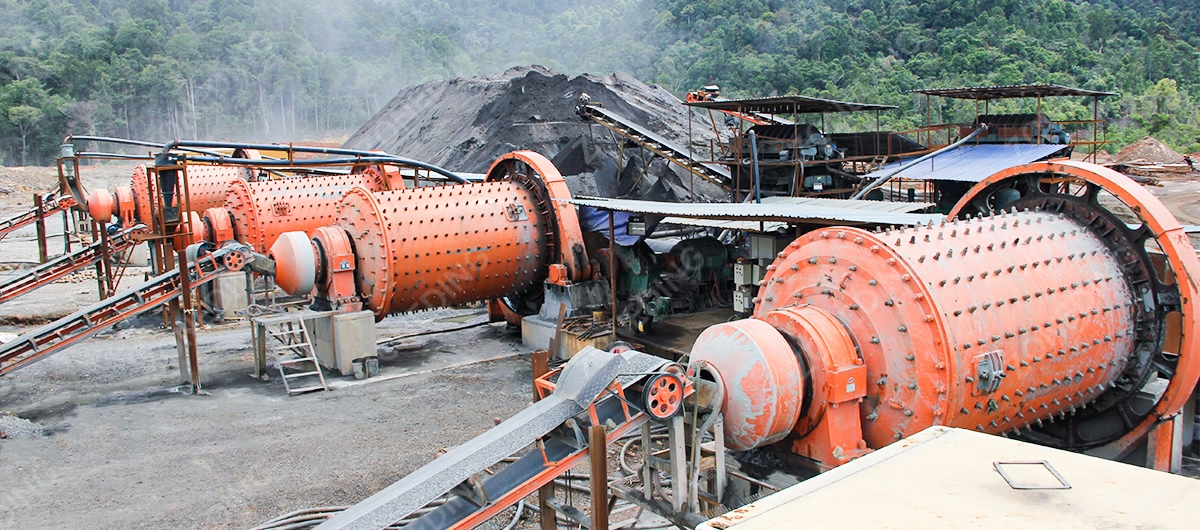
The primary advantages of a ball mill lie in its high tolerance for foreign materials (tramp iron), simple mechanical maintenance, and exceptional longevity. Unlike precision grinding equipment that requires strictly clean feed, a ball mill operates effectively even with feed fluctuations. It creates a robust barrier against production stoppages, providing a stable “insurance policy” for the entire processing line to ensure continuous operation.
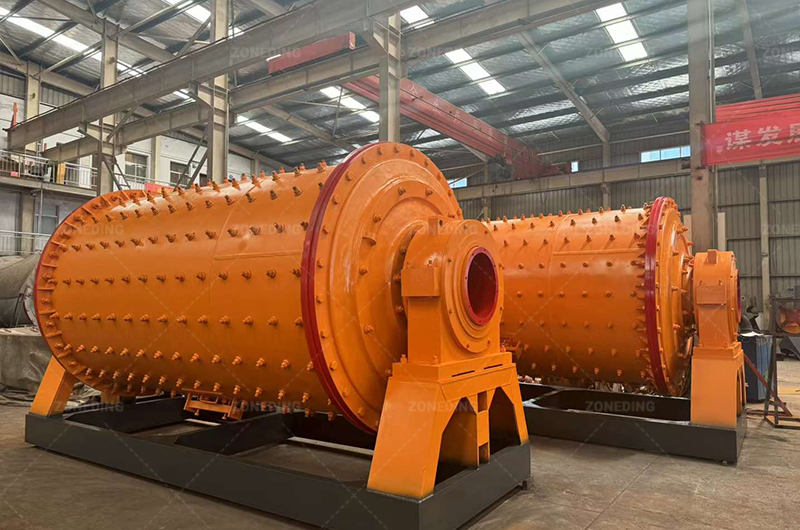
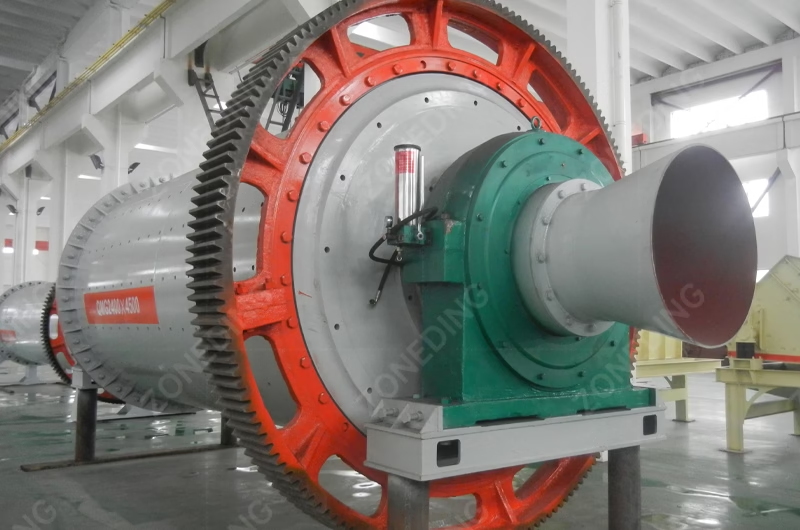
Ball Mill Reliability is largely defined by its ability to handle “Tramp Iron.” In mining operations, drill bits, bucket teeth, or bolts often mix with the ore. If these metal pieces enter a vertical mill or HPGR, they can cause significant damage to the roll surfaces or hydraulic systems. A ball mill, however, simply grinds these pieces down or incorporates them as additional grinding media. This capability prevents catastrophic downtime. Furthermore, the maintenance requirement is low because the structure is purely mechanical. Technicians do not need advanced knowledge of mechatronics or complex hydraulics to service the machine, making it ideal for remote mining sites where specialized skills are often scarce.
A well-maintained ball mill offers an extremely long service life. The core component is the steel shell, which is completely protected by replaceable wear liners. As long as liners are replaced regularly, the structural integrity of the mill remains intact. Ball mills frequently operate efficiently for over 50 years, contrasting sharply with high-speed mills that suffer from fatigue stress. When calculating the long-term cost, this extended lifespan significantly offsets energy costs, making the mill a permanent asset for the mining operation.
| Feature | Ball Mill | Vertical Roller Mill | Practical Benefit |
|---|---|---|---|
| Tramp Iron Tolerance | Very High | Low / None | Reduces emergency shutdowns. |
| Maintenance Type | Mechanical (Simple) | Hydraulic/Electric (Complex) | Easier repairs in remote areas. |
| Operational Lifespan | 50+ Years | 15-20 Years | Maximizes return on capital investment. |
A ball mill handles powder efficiently by combining impact crushing with a unique scrubbing action that cleans mineral surfaces. This process is not just about reducing particle size; it prepares the mineral surface for subsequent chemical reactions. The tumbling media polishes the particles. This Ball Mill Grinding Efficiency is critical for downstream processes like leaching and flotation, where surface chemistry dictates recovery rates.
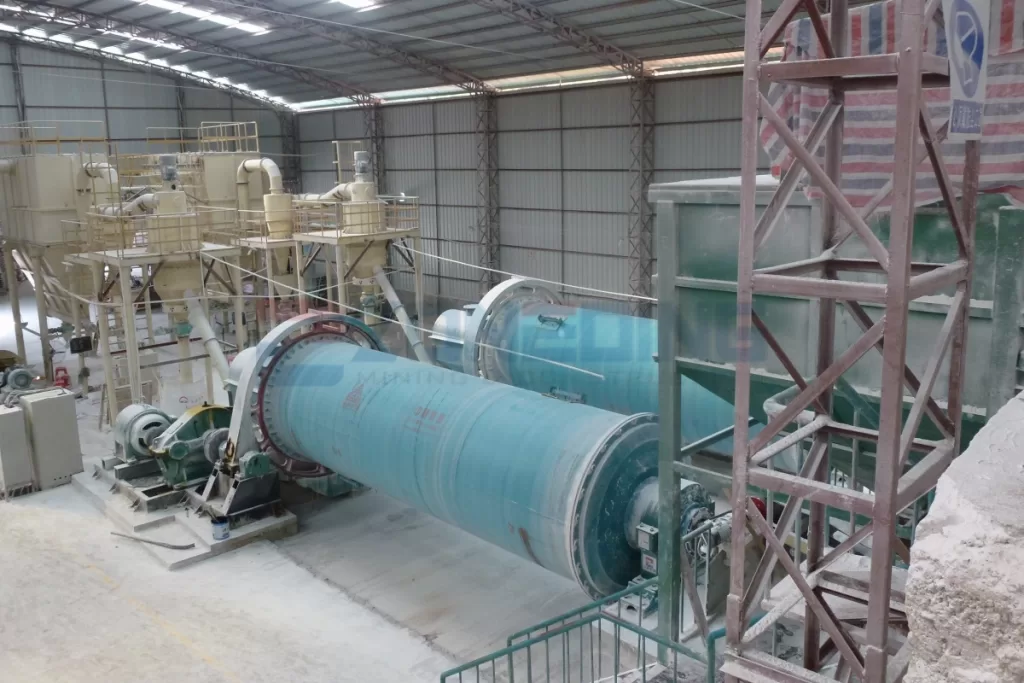
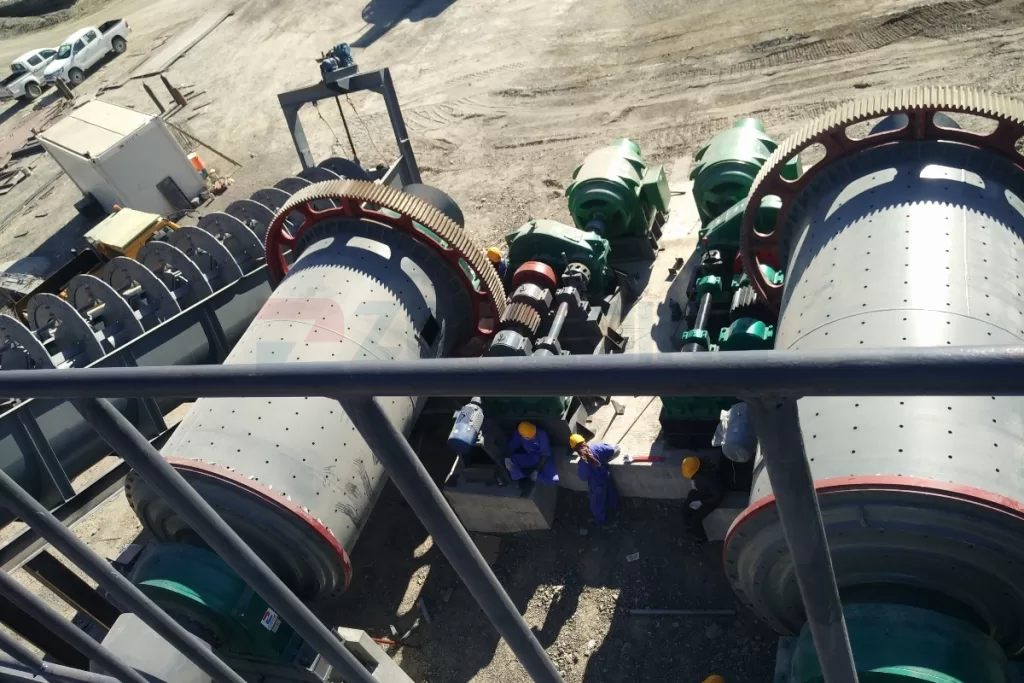
Distinguishing between compression and scrubbing is essential. Vertical mills crush rock primarily through compression, which often leaves coatings on the mineral particles. A ball mill functions as a high-energy scrubber where steel balls slide and roll over the ore. This action strips away oxidation layers or clay coatings. In a Gold CIL Plant, this is vital because clean gold surfaces react faster with cyanide. This scrubbing effect improves the Degree of Mineral Liberation by exposing the valuable mineral directly to the reagents. Compression-based technologies struggle to replicate this level of surface preparation.
Engineers often worry about over-grinding or producing too much slime, but this issue is solvable with the correct mill design. A Grate Discharge ball mill uses a diaphragm to force slurry out of the mill. This mechanism maintains a low pulp level, ensuring particles exit the mill immediately after reaching the target size. This reduces residence time. For brittle minerals like tungsten or tin, this design prevents the formation of unrecoverable ultra-fine powder and ensures a steep particle size distribution curve.
The ball mill acts as a universal solution for grinding diverse raw materials across multiple industries. Its robust design allows it to process materials regardless of their hardness or abrasiveness. It handles everything from soft gypsum to extremely hard tungsten carbide. This versatility makes it the primary choice for the cement industry, silicate product manufacturing, and new building material production. It effectively processes refractory materials, fertilizers, and glass ceramics.
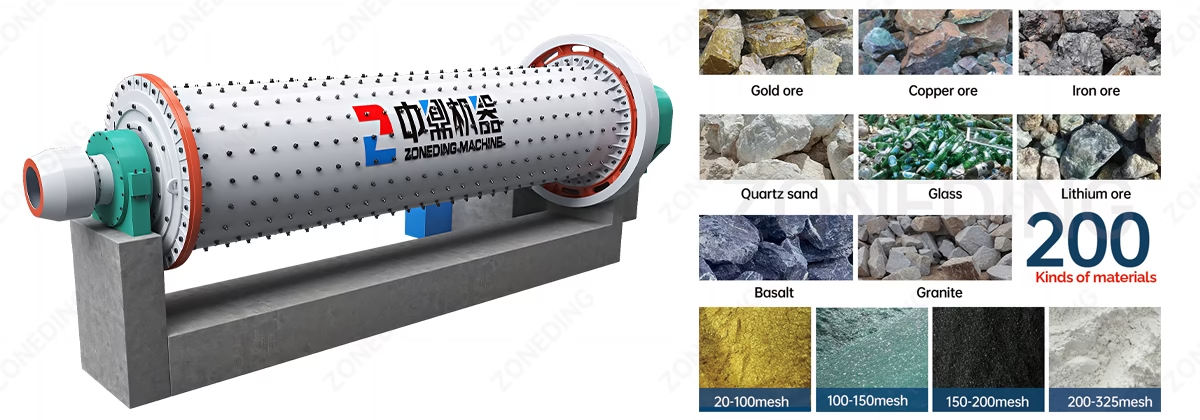
Key Material Categories:
Materials with high silica content wear down machinery quickly. Impact crushers or roller mills often suffer from rapid wear on expensive parts. The ball mill distributes this wear across thousands of replaceable steel balls. This distribution makes it the most economical method for processing highly abrasive materials like quartzite and granite.
The ball mill excels in production environments that demand continuous operation, fine particle sizes, and low maintenance complexity. It is the preferred choice for scenarios where equipment failure is not an option.
1. Secondary and Tertiary Grinding Stages
The ball mill is most effective after the crushing stage. It dominates secondary grinding applications where the feed size is 20mm or less, and the target output is between 0.074mm and 0.4mm. It provides the necessary fine grinding to ensure efficient chemical reaction or flotation in downstream processes.
2. 24/7 Continuous Operation
Mining and cement plants operate around the clock. The ball mill design supports continuous heavy-duty cycles with minimal downtime. Its simple mechanical structure lacks complex hydraulic systems that often fail under constant stress. This reliability ensures steady throughput for high-capacity production lines.
3. Closed-Circuit Grinding Systems
For applications requiring precise control over particle size distribution, the ball mill integrates seamlessly into closed circuits. When paired with a **** or hydrocyclone, it creates a stable system that recycles coarse material. This setup maximizes energy efficiency and guarantees a uniform product size.
4. Remote and Harsh Environments
Mines located in remote areas often lack specialized maintenance teams. The ball mill’s simple mechanics allow for easy on-site repairs. Basic maintenance does not require advanced electronics or proprietary tools. This ease of service makes it the ideal solution for operations in developing regions or extreme climates.
A ball mill usually partners with a Vibrating Feeder for stable input and a Hydrocyclone or Spiral Classifier for size control. This combination forms the “Closed-circuit Grinding System.” The mill grinds the material, and the classifier separates the fine product from the coarse. The coarse material returns to the mill for re-grinding. This cycle ensures that only particles meeting the size requirement leave the system.
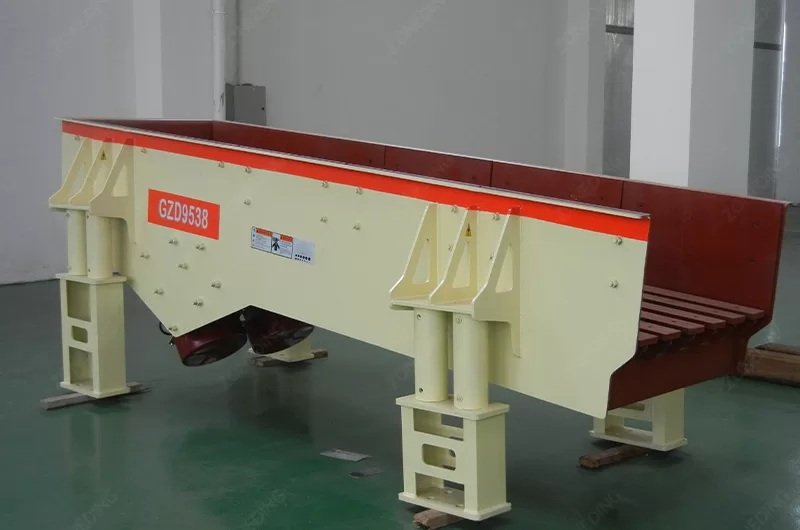
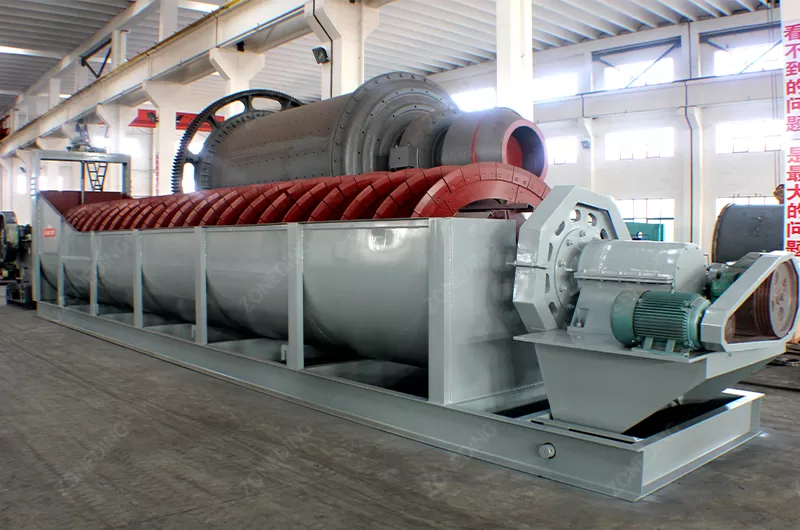
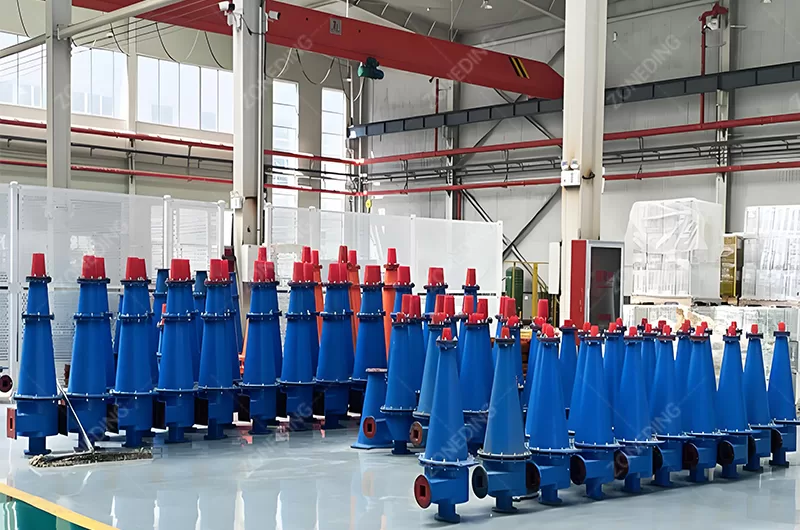
The Vibrating Feeder is crucial as it acts as the throttle, delivering a constant tonnage to ensure the mill operates at peak power efficiency. At the discharge end, the classifier determines the final product quality. A Spiral Classifier is robust and handles coarse sand (up to 100 mesh), providing a large buffer for the circulating load. For finer grinding (200 mesh or finer), Hydrocyclones are the standard, using centrifugal force for sharp separation. The balance between the mill and these partners defines the plant’s throughput.
The circulating load in a closed circuit can reach 300% or 400%, and the ball mill handles this high volume without stalling. Proper pump sizing is essential to move this material. If the classification is inefficient, the mill wastes energy re-grinding material that is already fine enough. Operators must balance water addition at the mill discharge to optimize classifier performance. This balance maximizes the system’s capacity.
The fundamental physics of ball milling remains unchanged, but the technology is evolving. In 2026, the industry is witnessing a shift towards intelligent operation. Mills now integrate sensors to monitor liner wear and load levels in real-time. Advanced composite liners are replacing pure steel to reduce noise and weight. The industry is focusing on data-driven optimization to lower energy consumption while maintaining reliability.
Q1: Is a ball mill less energy-efficient than a vertical mill?
Theoretical energy efficiency is lower, but in wet hard rock mining, the gap narrows. The Ball Mill often yields a lower total cost per ton when considering maintenance, availability, and spare parts costs.
Q2: How is output particle size controlled?
Size is controlled through the external classifier, not just the mill. Adjusting the classifier weir height or cyclone pressure changes the cut point. Inside the mill, the ball charge size is adjusted to influence grinding kinetics.
Q3: Can a ball mill run without water?
Yes, dry ball mills exist and use air classification systems. However, wet grinding is generally 30% more efficient for mineral processing because water helps transport material and prevents coating on the grinding media.
Q4: How often must steel balls be added?
Balls are typically added daily or based on power draw readings. As balls wear, the mill draws less power. Adding fresh balls restores the target amperage and maintains grinding efficiency.
Q5: What is the difference between Grate and Overflow discharge?
Grate discharge forces material out quickly, reducing over-grinding and increasing capacity. Overflow discharge relies on gravity overflow, resulting in finer grinding and a simpler mechanical structure.
The Advantages of Ball Mill technology center on reliability, adaptability, and chemical process benefits. It tolerates tramp iron that destroys other machines and acts as an effective scrubber and mixer. It allows operators to adapt to changing ore bodies over decades. It remains the backbone of the mining industry because it guarantees production continuity.
Mining operations dealing with hard rock, variable feed conditions, or remote locations should prioritize ball mills. The risk to production stability often outweighs theoretical energy savings. Calculating long-term operational costs is essential. Contact us to analyze ore properties and select the right mill configuration.
ZONEDING is a leading manufacturer of mineral processing equipment in China. The company focuses on building machines that withstand the harshest mining environments. ZONEDING ball mills feature heavy-duty bearings and premium alloy liners. We design complete grinding circuits tailored to specific mineralogy, prioritizing production stability.
Ensure your plant runs without interruption. Contact ZONEDING today for a customized grinding solution and technical consultation.
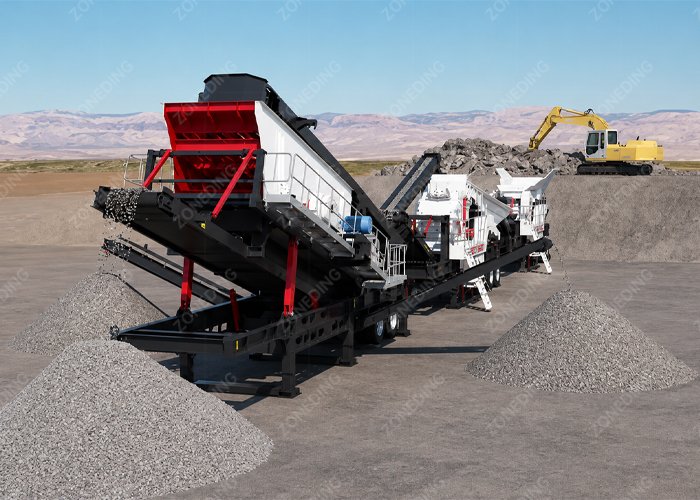
Compare mobile crusher plant prices, supply scope, capacity, shipping and installed costs for mining, quarry and road projects in South America.
View details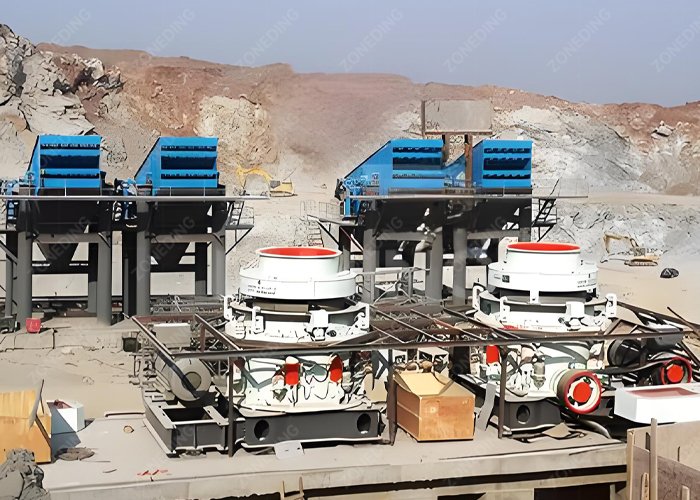
Aggregate plants face challenges with hard rock processing daily. Cone crushers in the aggregates industry solve this exact problem efficiently. High-grade construction projects require perfectly shaped stones constantly. These machines handle ext...
View details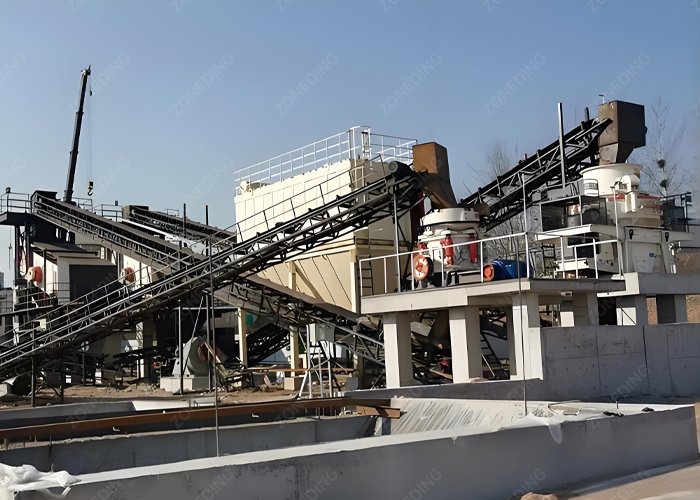
Designing an is fundamentally different from designing an aggregate plant. Iron ore has a very high specific gravity, often between 4.5 and 5.2, and extreme abrasiveness. If you use standard design formulas for limestone, your structures might col...
View details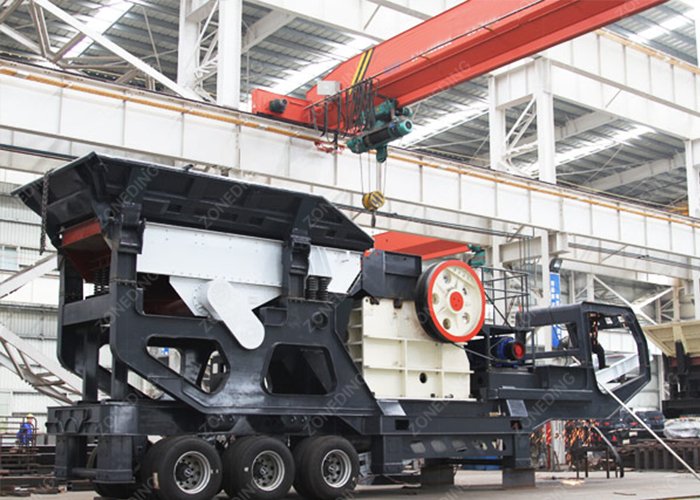
: Compare mobile jaw crusher prices, feed sizes, capacities and configurations for quarry, mining and aggregate projects in South America.
View details