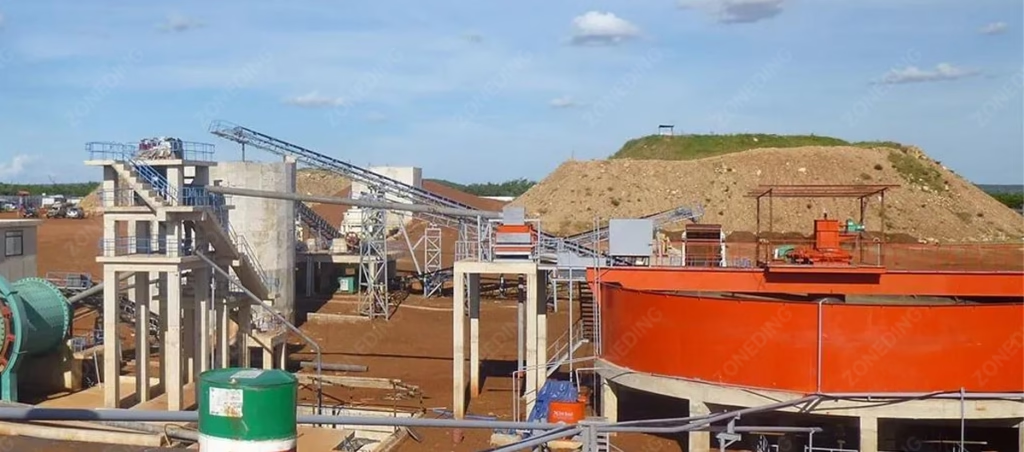
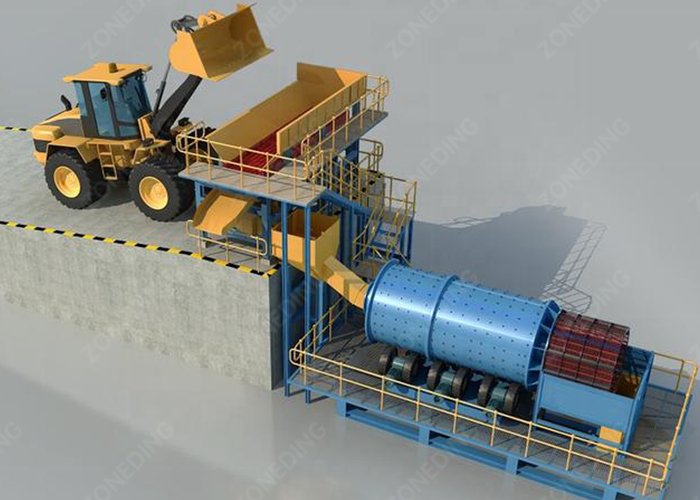
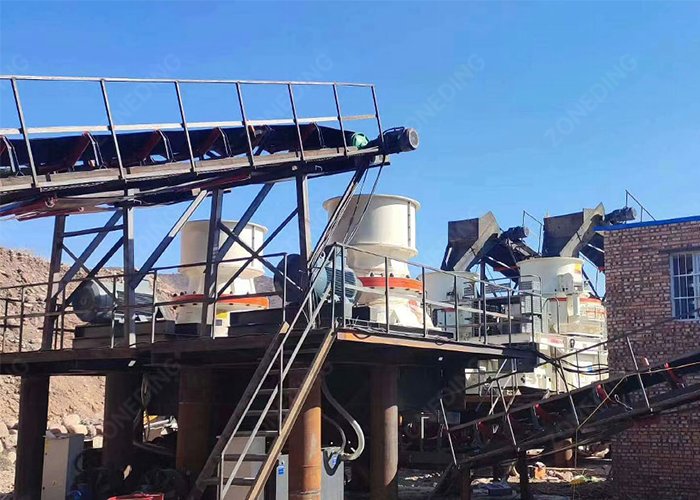
The extraction of iron concentrate from raw ore represents the largest sector in the global mineral processing industry. Unlike precious metals, iron ore production relies heavily on volume, making cost control the primary driver of profitability. A minor reduction in energy consumption or liner wear per ton translates into significant financial gains when scaled to millions of tons annually. Designing an efficient processing plant requires a strict adherence to mineralogy and mass balance. This article outlines the standard technical stages for converting raw rock into commercial-grade iron powder, emphasizing modern strategies for energy reduction and grade improvement.
Process Overview & Analysis: Why Determine Magnetism and Dissemination Size First?
No universal flowchart exists for iron ore processing. The design depends entirely on the specific properties of the ore body. Two physical characteristics dictate every subsequent engineering decision: the magnetic susceptibility of the iron mineral and the dissemination particle size.
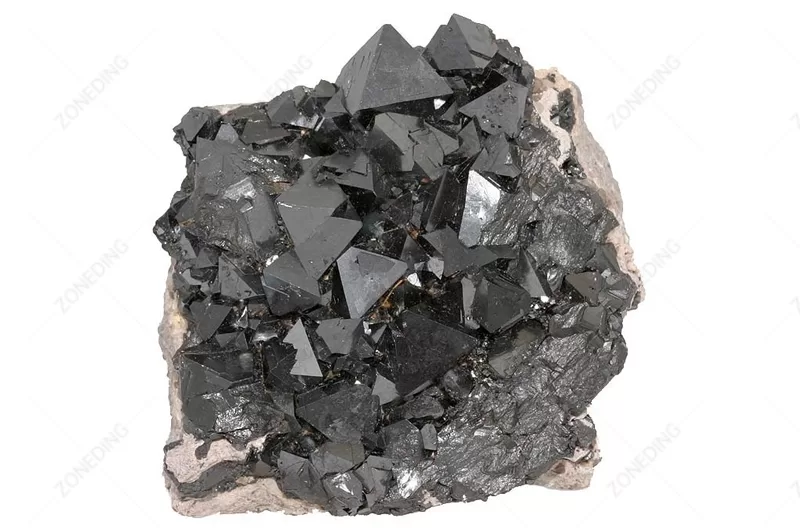
Magnetite
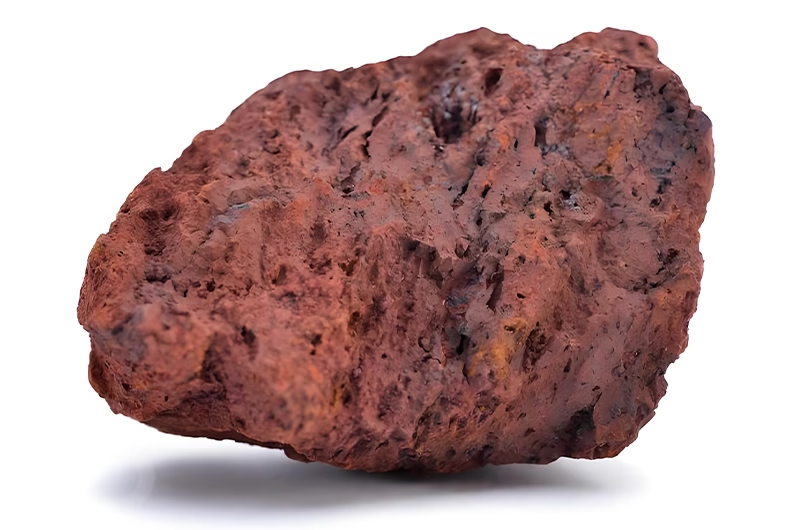
Hematite
Magnetite (Fe3O4) is strongly magnetic. This property allows for physical separation using low-intensity magnetic fields, which constitutes the most cost-effective processing method. Hematite (Fe2O3) and Limonite are weakly magnetic or non-magnetic. These minerals require high-intensity magnetic separation or complex flotation circuits. Misidentifying the ore type leads to fundamental design failures.
The dissemination size refers to the particle size at which the iron mineral mechanically separates from the silica gangue. This value determines the required grinding fineness. Coarse-grained ores require less grinding energy, while fine-grained taconites demand energy-intensive fine grinding to achieve monomer dissociation.
Phase 1 (Crushing & Screening): Optimizing the Three-Stage Closed-Circuit System
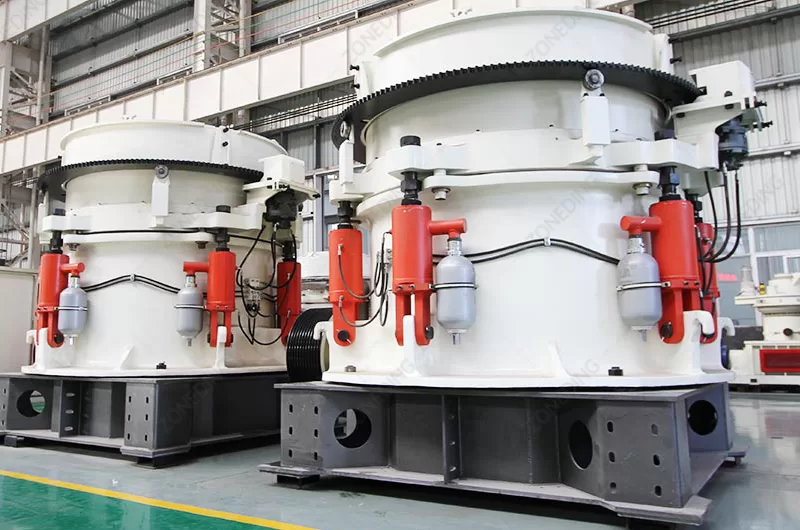
The primary objective of the crushing stage is to reduce Run-of-Mine (ROM) rocks from 1000mm down to a size suitable for grinding, typically 12mm to 15mm. A standard configuration employs a three-stage closed-circuit system. A Jaw Crusher handles primary crushing, followed by cone crushers for secondary and tertiary reduction. Vibrating screens return oversized material to the tertiary crusher, ensuring a consistent product size.
Jaw Crusher
Cone Crusher
A critical optimization in modern plants is the inclusion of Dry Magnetic Cobbing. This process uses a magnetic pulley (Dry Magnetic Drum) at the discharge of the crushing circuit. Approximately 20% to 30% of the mined rock consists of barren waste rock (gangue) that contains no iron. Removing this waste before the grinding stage significantly reduces energy consumption. The ball mill then processes only the enriched ore, effectively increasing plant capacity by 30% without additional grinding equipment.
For hard iron ores, High Pressure Grinding Rolls (HPGR) are replacing traditional tertiary cone crushers. HPGR technology utilizes inter-particle breakage to create micro-cracks within the ore structure. This process reduces the Bond Work Index of the material. Ore processed by HPGR requires 20% to 40% less energy to grind in the subsequent ball mill stage, offsetting the higher initial investment of the equipment.
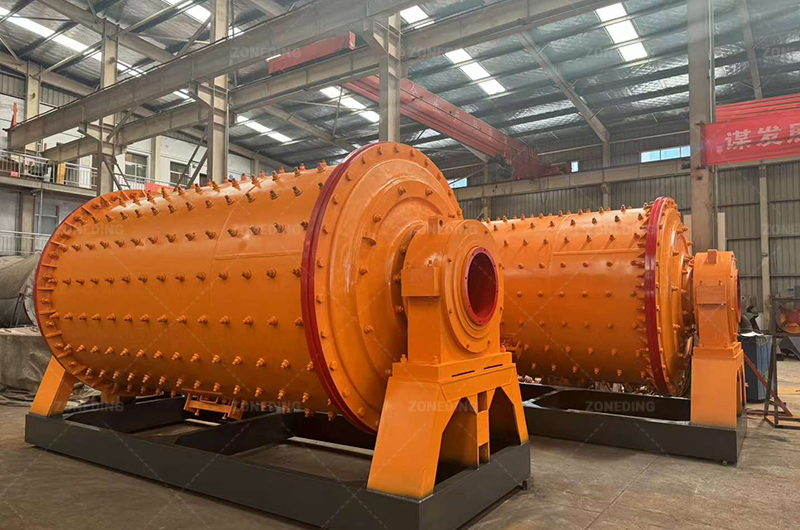
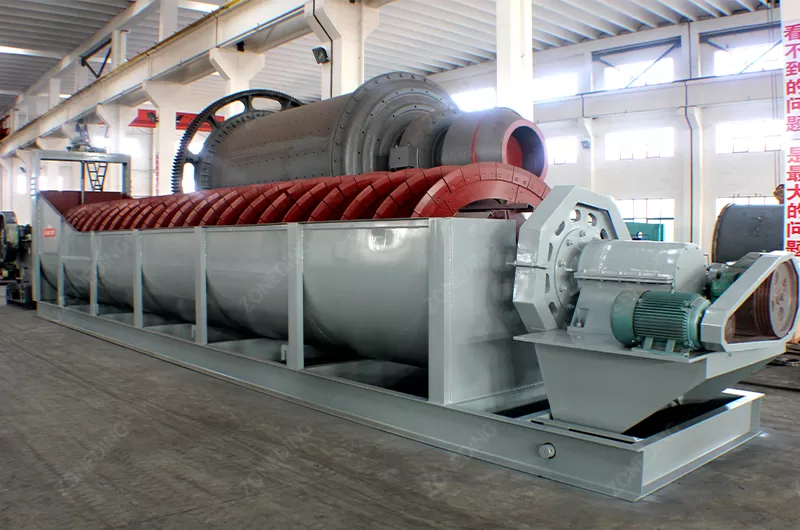
The grinding circuit liberates the iron minerals from the gangue. A typical setup involves Ball Mills operating in closed circuits with classifiers. The mill tumbles steel balls to pulverize the ore, while the classifier ensures only particles reaching the target fineness move to the separation stage.
Inefficient designs attempt to grind all ore to the final liberation size (e.g., 200 mesh) in a single pass. A superior strategy is Stage Grinding, Stage Separation.
Ball Mill
Spiral classifier
Primary Grinding: The ore is ground to a coarse size (e.g., 40-50% passing 200 mesh).
Primary Separation: A magnetic separator removes liberated silica immediately.
Secondary Grinding: Only the rough concentrate proceeds to the second ball mill. This method prevents the over-grinding of already liberated silica, significantly reducing the volume of material entering the secondary mill and saving electricity and steel media.
Phase 3 (Coarse & Fine Selection): Extracting Magnetite via Magnetic Separation
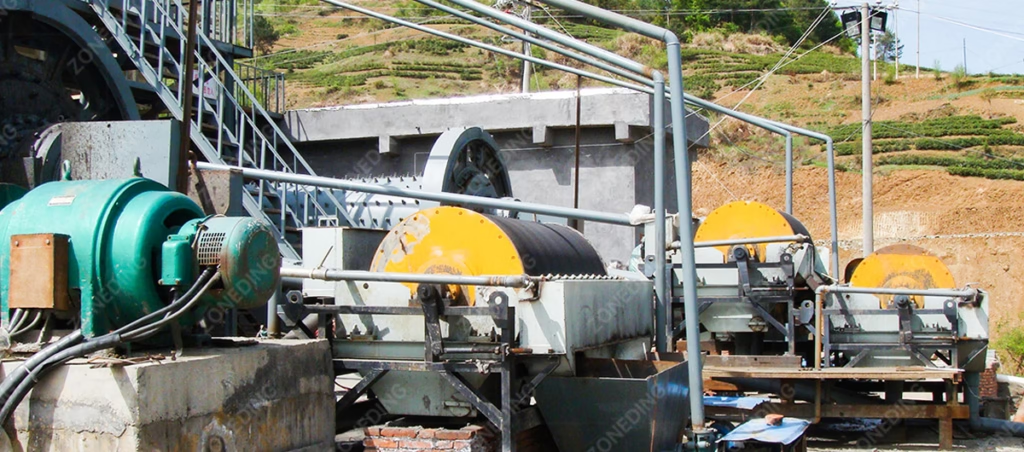
For magnetite ores, Magnetic Separators are the core separation equipment. The process utilizes the strong magnetic permeability of magnetite to pull valuable particles away from the non-magnetic slurry flow.
Magnetite magnetic separation site
The magnetic field strength decreases as the concentrate grade increases.
Roughing: Uses higher field strength (approx. 3000-4000 Gauss) to maximize recovery and discard bulk tailings.
Cleaning: Uses lower field strength (approx. 1000-1500 Gauss) to reject interlocked particles (middlings) consisting of iron and silica.
Finishing: Uses specific magnetic setups to produce the final concentrate with an iron content typically between 63% and 65%.
Supplementary Processes (Gravity & Flotation): Handling Weak Magnetic Ores
Hematite does not respond to standard low-intensity magnetic separators. Historically, roasting was used to convert hematite to magnetite, but high costs have made this obsolete. Modern flows rely on gravity separation and high-intensity magnetics.
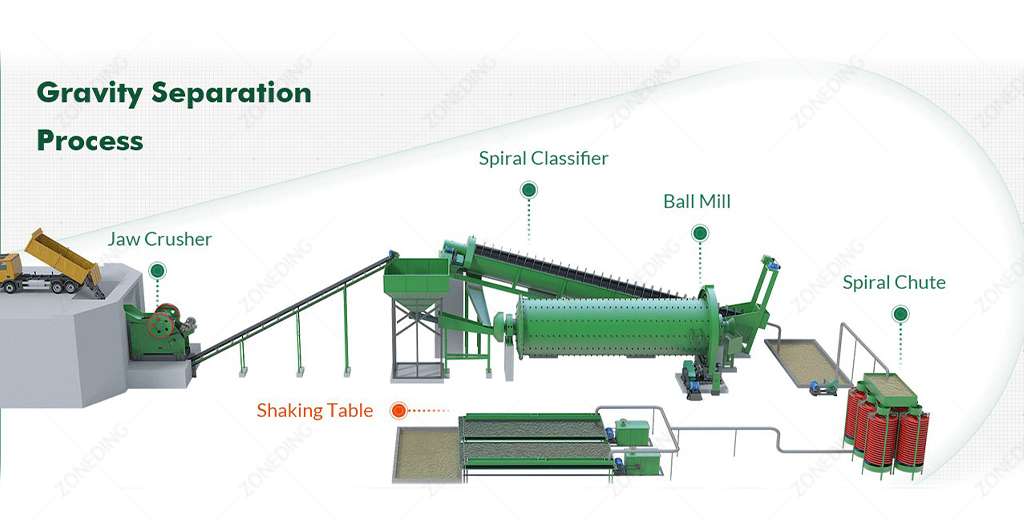
Gravity separation
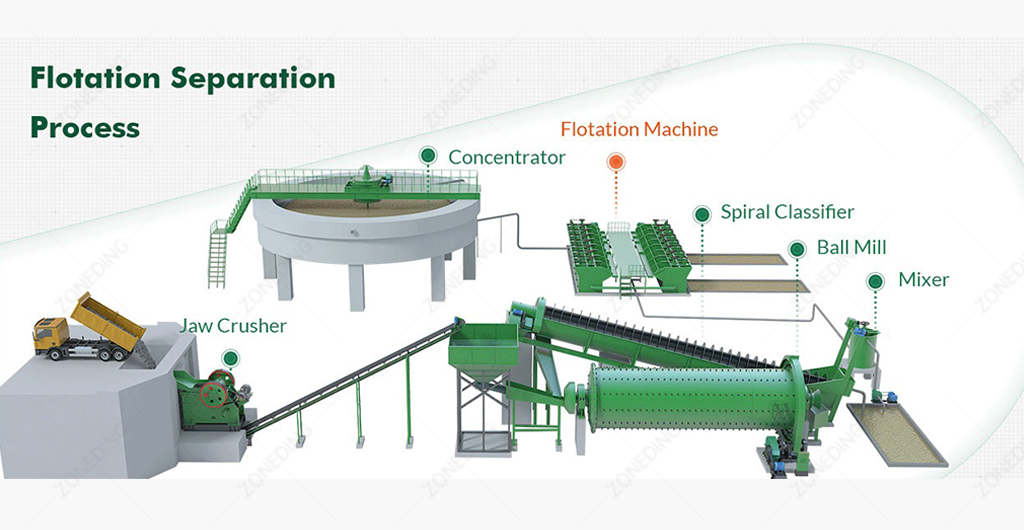
Flotation process
Spiral Chutes utilize the density difference between iron (heavy) and silica (light) to separate coarse-grained hematite effectively. For fine-grained hematite, High Gradient Magnetic Separators (HGMS) or SLon separators employ vertical rings and pulsating mechanisms with field strengths up to 15,000 Gauss to capture weak magnetic particles.
To achieve high-purity concentrates (Fe > 68%, SiO2 < 2%) suitable for pellets or DRI (Direct Reduced Iron), reverse flotation is necessary.
The Method: The process floats the silica gangue while the iron sinks.
Chemical Regime: Cationic collectors (Amines) are preferred over anionic collectors. Amines function better at lower temperatures and require simpler activator systems.
Operational Caution: Amine collectors are corrosive. All Flotation Machines, pipes, and tanks in this circuit require rubber lining to prevent rapid equipment failure.
Phase 4 (Dewatering & Concentration): Producing Commercial Iron Powder
The final concentrate leaves the separation circuit as a slurry with high water content. It first enters a High Efficiency Concentrator (Thickener). Sedimentation increases the solids content from 30% to approximately 60-70%, recycling clarified water back to the grinding circuit.
Dewatering & Concentration
The thickened slurry must be filtered to form a transportable filter cake.
Ceramic Filters: Popular for their low energy consumption and high vacuum. However, they struggle with ultra-fine particles (-325 mesh) or ores containing slimes, which clog the ceramic micropores.
Vertical Plate Pressure Filters: For concentrates requiring very low moisture limits (e.g., TML standards for shipping <9%), pressure filters are the reliable choice. They use positive pressure rather than vacuum, forcing water out of even the finest filter cakes. [Tailings Management] Modern environmental standards discourage wet tailings dams. The industry trend moves toward Dry Stacking. Tailings are thickened and filtered to a moisture content of roughly 15%. This allows for safe stacking and recovers over 80% of the process water, a critical factor for mines in arid regions.Equipment TypeFunctionMaterial SuitabilityJaw CrusherPrimary ReductionAll Ore TypesHPGRTertiary CrushingHard/Abrasive OresBall MillFine GrindingAll Ore TypesLIMS SeparatorMagnetic RecoveryMagnetiteReverse FlotationSilica RemovalHigh Purity RequirementsPressure FilterDewateringUltra-fine Concentrate
About ZONEDING
ZONEDING Machine is a leading manufacturer of Beneficiation Equipment. We specialize in designing complete iron ore processing lines, from crushing and screening to magnetic separation and flotation. Our engineering team assists mining companies in optimizing flowsheets to maximize iron recovery and minimize operational costs. Contact ZONEDING today for a customized iron ore processing proposal.
Anti-clogging screening equipment provides the most reliable way to handle sticky materials in 2026. Traditional vibrating screens often fail when clay moisture exceeds 10%. This leads to frequent downtime and high cleaning costs. Our technic...
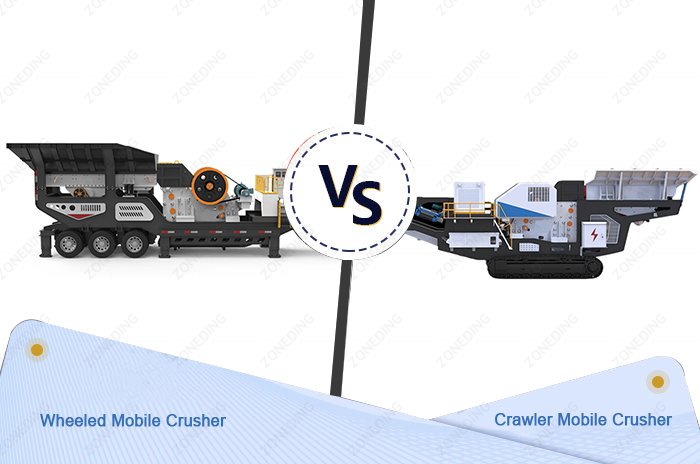
Choosing mobile crushing equipment determines project setup speed and long-term operating costs. Many buyers only look at the transport method. They ignore the hidden costs of site preparation and energy consumption. This guide shows the real diff...
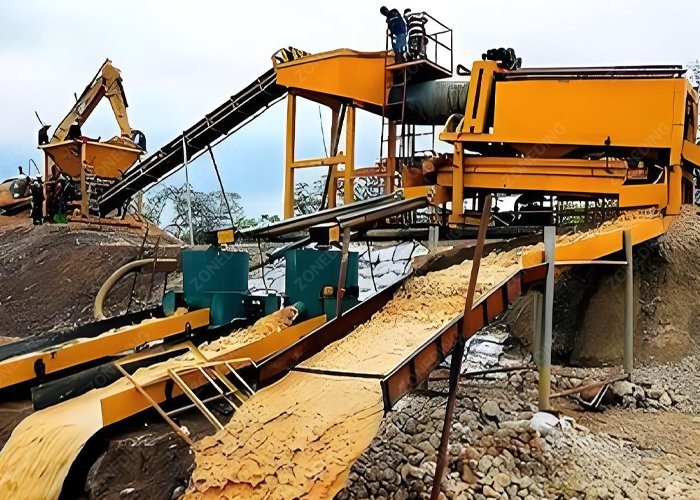
Many investors consider alluvial operations simple dirt-washing tasks. However, commercial-grade operations face severe technical challenges daily. A successful demands precise engineering to match the physical ore characteristics. This guide reve...
One of the first questions buyers ask before purchasing a cone crusher is: How many tons per hour can a cone crusher produce? The answer is not as simple as reading a specification sheet. Many operators discover that actual production differs sign...
We use cookies to ensure that we give you the best experience on our website. If you continue to use this site we will assume that you are happy with it.
Privacy Policy
Send us a message
We would love to hear from you
Submit your question and our team will respond to the email provided as soon as possible.
 Zoneding Machine