Ball mills are essential equipment in gold beneficiation. They finely grind ore. They liberate gold particles. One critical factor influencing a ball mill’s performance is its Gold Ball Mill Steel Ball Configuration. This configuration holds the key to efficient operation. It affects both Grinding Efficiency and Gold Recovery Rate.
Many operators adopt basic approaches to steel ball configuration. Larger balls are used for coarser ore, and smaller balls for finer. Operators also frequently mix various sizes.This basic method often leads to low Grinding Efficiency. It results in high energy consumption. It can cause accelerated wear. Ultimately, it affects the final Gold Recovery Rate.
Gold Ball Mill Steel Ball Configuration involves more than just selecting ball sizes and quantities. Effective ball mill optimization demands a thorough understanding of ore properties, in-depth knowledge of grinding mechanisms, careful consideration of equipment parameters, and an assessment of economic factors. Optimizing ball mill performance requires a scientific approach to steel ball arrangement.
This article presents key insights into Gold Ball Mill Steel Ball Configuration. These insights offer practical knowledge for enhancing grinding operations. They help optimize your Gold Processing Flow.
Why Gold Ball Mill Steel Ball Configuration is Key for Grinding Efficiency and Gold Recovery Rate?
The Gold Ball Mill Steel Ball Configuration directly impacts the effectiveness of gold ore grinding. An incorrectly configured ball charge cannot properly break down ore particles. This leads to inefficiency. The primary goal of grinding is to achieve a specific particle size. This liberates valuable minerals like gold. If gold particles are not sufficiently liberated, they cannot be recovered during subsequent beneficiation steps. This directly lowers the Gold Recovery Rate.
The interaction between steel balls and ore particles within the mill is complex. It involves both impact and attrition. Impact forces break larger particles. Attrition grinds smaller particles. The distribution of ball sizes, the total ball load, and the ball material influence these forces. Optimizing these elements ensures that ore is ground to the desired fineness. This maximizes the Gold Liberation Degree. This is a fundamental step for high Gold Recovery Rate.
Impact on Grinding Mechanism
Proper Gold Ball Mill Steel Ball Configuration ensures the right balance of impact and attrition. Larger balls provide the necessary impact to crush coarse feed. Smaller balls provide more surface area for attrition grinding of finer particles. Without this balance, grinding media can become ineffective. This results in either over-grinding of fine material or under-grinding of coarse material. Both situations reduce Grinding Efficiency.
Link to Gold Recovery
The Gold Recovery Rate is directly tied to the liberation of gold from its host rock. Grinding must achieve a particle size where gold is sufficiently exposed. This allows it to be separated. Incorrect Gold Ball Mill Steel Ball Configuration can lead to poor liberation. Gold remains locked within larger particles. This makes it unrecoverable by common methods like flotation or gravity separation. Therefore, optimizing the steel ball configuration is a crucial step towards maximizing the overall Gold Recovery Rate.
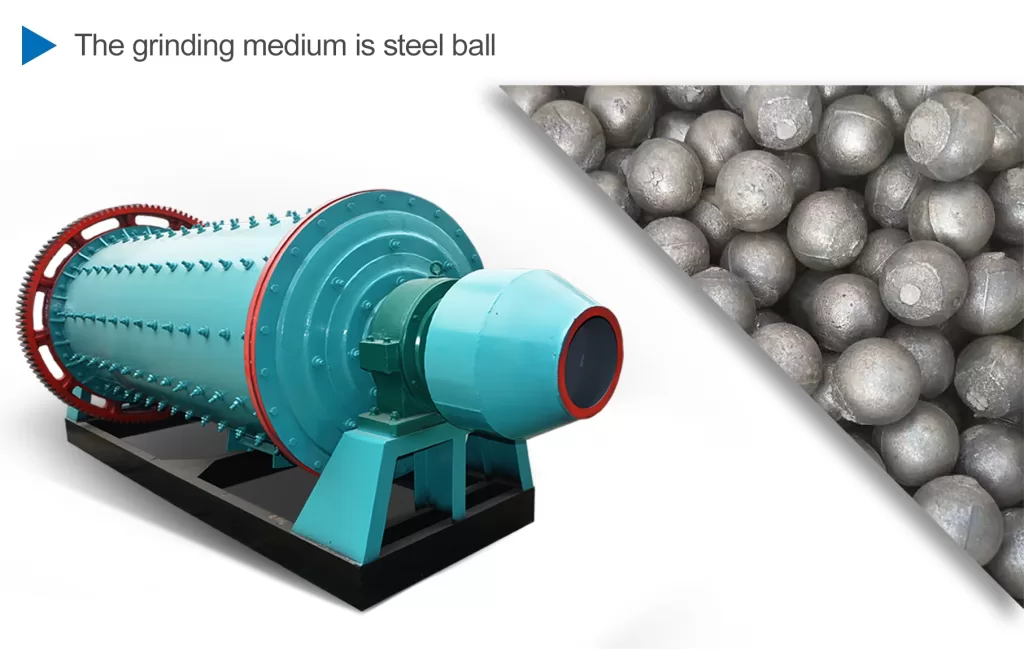
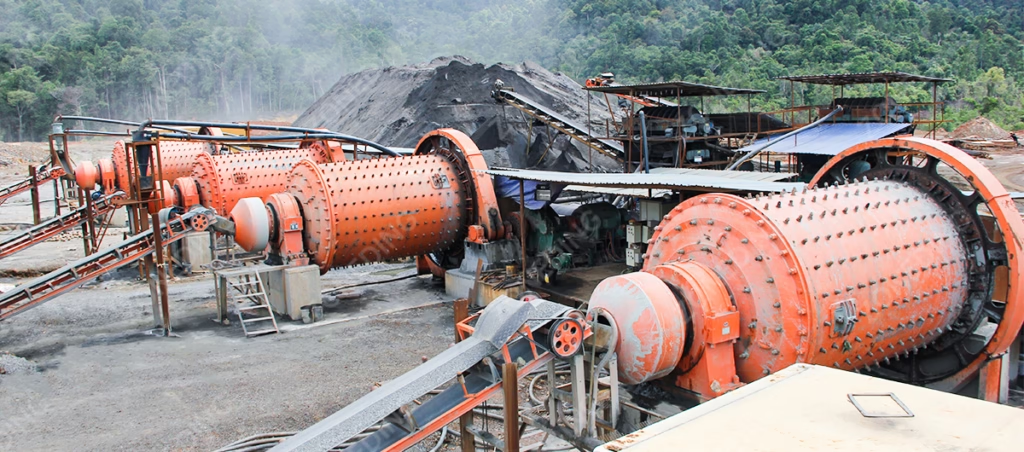
Ball mill working principle
Core Elements of Gold Ball Mill Steel Ball Configuration: Loading, Size Ratio, Material
The effectiveness of Gold Ore Grinding hinges on three core elements of steel ball configuration. These elements are the loading volume, the Steel Ball Ratio of different sizes, and the Steel Ball Material Selection. Each factor plays a distinct role. They combine to determine the overall Grinding Efficiency.
These core elements work together. They create the optimal grinding environment inside the ball mill. Adjusting one element affects the others. A balanced approach leads to maximum Gold Recovery Rate. Understanding these factors is essential for Grinding Optimization.
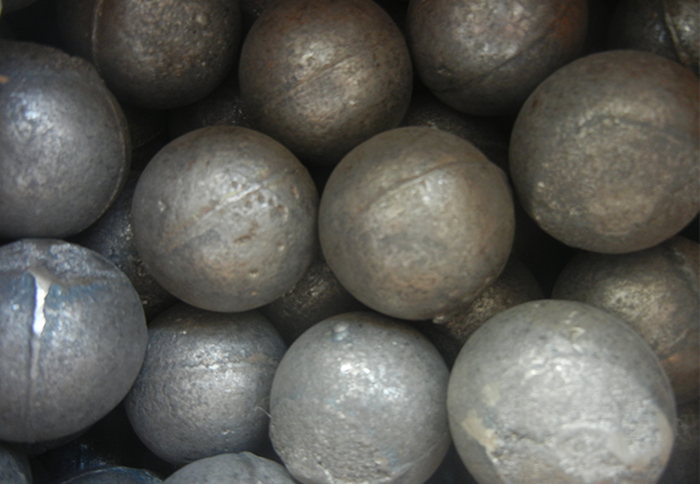
Ball mill steel ball configuration
Ball Loading Volume
The total volume of steel balls loaded into the mill is critical. An ideal loading volume typically ranges from 35% to 45% of the mill’s effective internal volume. This percentage applies to overflow mills. Grate discharge mills might use a slightly higher percentage. This volume affects the steel balls’ movement trajectory. It also impacts energy transfer.
Excessive loading (over 50%) limits the steel balls’ lift height. This reduces impact force. It promotes attrition. It increases sliding wear. Energy consumption may rise. It can also lead to mill blockage. Insufficient loading (below 30%) reduces impact and attrition actions. This lowers Grinding Efficiency. It can also cause premature wear of mill liners due to excessive impact from falling balls.
Steel Ball Ratio (Size Distribution)
The Steel Ball Ratio is the proportion of different ball sizes within the mill. It is not a simple mix of large, medium, and small balls. It represents a precise grading curve. This curve aims to create a balanced impact-attrition environment inside the mill. It ensures effective processing of different particle sizes.
Larger balls primarily provide impact. They break down coarse ore. Medium balls offer both impact and attrition. They process intermediate-sized particles. Smaller balls mainly provide attrition. They grind fine particles. They also fill voids between larger balls. This increases the effective grinding surface area. It enhances Grinding Efficiency. Initial ball charges often follow an “inverted triangle” or “bell-shaped” ratio. This means lower percentages of the largest and smallest balls. It has a higher percentage of medium-sized balls.
Steel Ball Material Selection
Steel Ball Material Selection involves balancing wear resistance, impact toughness, and cost. It is not simply about choosing the hardest material.
High-chrome cast balls: These offer high hardness and excellent wear resistance. However, they are brittle. Their impact toughness is low. They suit hard, attrition-dominant grinding.
Medium-chrome cast balls/Low-chrome cast balls: Their properties fall between high-chrome and forged balls. They provide good wear resistance and some impact toughness. These are widely used.
Forged steel balls: These offer good impact toughness. They resist breakage. However, their hardness is relatively lower. Their wear resistance is less than high-chrome balls. They suit lower hardness, impact-dominant grinding.
Steel ball consumption represents a significant portion of ball mill operating costs (typically 20-40%). Choosing the correct material can effectively reduce the grinding cost per ton of ore.
Customizing Gold Ball Mill Steel Ball Configuration Based on Ore Characteristics
Effective Gold Ball Mill Steel Ball Configuration requires customization. It adapts to specific ore properties. Generic configurations often fail to optimize Grinding Efficiency and Gold Recovery Rate. Each gold deposit has unique geological features. These features influence grinding requirements.
Tailoring the configuration involves understanding the ore’s physical and chemical attributes. This approach ensures the ball mill operates at peak performance. It directly impacts the economic viability of the Gold Processing Plant.
Ore Physical Properties Determine Max Ball Size
The maximum size of steel balls depends on the physical properties of the raw ore. These include maximum feed particle size, ore hardness, and toughness.
Maximum feed particle size: The largest steel ball diameter should be 15-20 times the maximum feed particle size. If feed particles are large but steel balls are too small, coarse ore will be deflected. It will not be effectively broken by impact. This leads to low Grinding Efficiency.
Hardness and toughness (Bond Work Index – BWI): Ores with high hardness and toughness require greater impact energy. Larger, heavier steel balls provide this impact. They effectively break down resilient ore.
Blindly using universal steel ball sizes can cause issues. Large ore particles may not break effectively. Alternatively, overly large steel balls may waste energy grinding fine particles. Accurate feed particle size distribution analysis and Bond Work Index (BWI) determination are crucial. They form the basis for scientifically determining the maximum steel ball diameter.
Optimizing Steel Ball Ratio for Specific Ore Types
The Steel Ball Ratio should reflect the ore’s grinding characteristics. This ensures optimal Gold Liberation Degree. For friable ores, a higher proportion of smaller balls might be needed. This promotes attrition grinding. For tough, coarse ores, a higher proportion of larger balls provides necessary impact.
Many operations use a static Steel Ball Ratio. This relies on general guidelines. This approach often results in over-grinding of fine particles. It also leads to insufficient grinding of coarse particles. This produces a product with an undesirable particle size distribution. The specific ratio of large, medium, and small balls needs adjustment. It depends on the grindability characteristics of the particular gold ore.
Material Selection Based on Ore Abrasiveness
The abrasiveness of the ore directly impacts Steel Ball Material Selection. Highly abrasive ores cause faster wear on steel balls. For such ores, high-chrome cast balls offer superior wear resistance. This choice can reduce ball consumption costs. Less abrasive ores might tolerate forged steel balls. These offer better impact toughness at a lower cost.
Careful material selection ensures optimal wear life for the steel balls. It prevents premature failure. It maintains consistent Grinding Efficiency. Poor material choices lead to rapid ball consumption. It can also damage mill liners. This increases overall maintenance costs.
Common Problems from Incorrect Gold Ball Mill Steel Ball Configuration and Avoidance Strategies
Incorrect Gold Ball Mill Steel Ball Configuration leads to several operational issues. These problems affect both the Grinding Efficiency and the Gold Recovery Rate. Understanding these common pitfalls helps in avoiding them. This ensures a more cost-effective operation.
Such issues often stem from a lack of systematic approach. They can also result from insufficient ore characterization. Addressing these problems early prevents significant economic losses.
Low Grinding Efficiency and High Energy Consumption
A common problem is low Grinding Efficiency. This occurs when the Steel Ball Ratio is inappropriate. For example, if there are too many small balls for coarse feed, impact breakage is insufficient. Large particles pass through unground. If there are too many large balls for fine feed, energy is wasted on unnecessary impacts. This results in inefficient grinding. This directly leads to higher Ball Mill Energy Consumption per ton of ore.
To avoid this, conduct regular particle size analyses of the feed and product. Adjust the Steel Ball Ratio based on these analyses. This ensures a balanced distribution of impact and attrition forces. This optimization improves Grinding Efficiency.
Accelerated Wear of Grinding Media and Mill Liners
Improper Gold Ball Mill Steel Ball Configuration can cause rapid wear. This applies to both the steel balls and the mill liners. Using steel balls with insufficient hardness for hard ore causes fast ball wear. Conversely, using brittle, high-chrome balls for high-impact grinding can lead to ball breakage. This further degrades Grinding Efficiency.
Incorrect ball loading volume also contributes to wear. Overloading increases sliding wear. Underloading can cause excessive impact on liners. This shortens liner life. Steel Ball Material Selection should match ore abrasiveness and hardness. This extends the lifespan of both the balls and the liners. Regular inspection of liners for wear patterns also helps identify configuration issues.
Poor Gold Liberation and Reduced Recovery
The ultimate consequence of incorrect configuration is poor Gold Liberation Degree. If ore is not ground to the optimal particle size, gold particles remain encapsulated. They are then unable to be separated effectively. This directly reduces the Gold Recovery Rate. For example, insufficient small balls in the charge can result in coarse gold particles remaining unliberated.
To counteract this, periodic metallurgical testing of mill products is necessary. Assess the Gold Liberation Degree at various particle sizes. Adjust the Gold Ball Mill Steel Ball Configuration to achieve the desired liberation. This ensures that gold is exposed for subsequent recovery processes.
Avoiding Common Problems
Detailed Ore Analysis: Prioritize comprehensive analysis of ore hardness, abrasiveness, and feed particle size distribution before configuring.
Dynamic Adjustments: Do not rely on a static configuration. Adjust the Steel Ball Ratio and total load based on continuous monitoring and product analysis.
Quality Steel Balls: Invest in steel balls with appropriate material properties. This ensures durability and minimizes breakage.
Operator Training: Ensure operators understand the principles of ball mill operation and steel ball configuration. This enables informed adjustments.
Daily Management and Adjustment of Gold Ball Mill Steel Balls for Continuous Optimization
Gold Ball Mill Steel Ball Configuration is not a static setup. It requires continuous management and adjustment. This ensures ongoing optimization of Grinding Efficiency and maximum Gold Recovery Rate. Steel balls wear down during operation. Their size distribution changes. This dynamic process needs active monitoring and intervention.
Regular adjustments maintain the optimal grinding environment. This adapts to varying ore conditions. It accounts for ball wear. This approach prevents common problems. It sustains high operational performance.
Dynamic Ball Addition Strategy
Steel balls continuously wear down and decrease in size during grinding. The wear rate differs among ball sizes. Therefore, ball addition should not simply replicate the initial Steel Ball Ratio. It needs dynamic adjustment. The focus should be on adding larger balls to replenish the worn charge.
The steel ball charge inside the mill is a dynamic system. It constantly changes in size distribution due to wear. The ball addition strategy aims to maintain this system in its optimal grinding state. Many operations add balls based on initial ratios or add only a single size. This leads to a reduction in larger balls over time. The overall ball size distribution shifts towards smaller sizes. This lowers Grinding Efficiency.
The size of added balls should be slightly larger than the largest effective grinding balls currently in the mill. For example, if the initial charge included 80mm balls, replenishment might require 90mm or even 100mm balls. The quantity added should be based on daily steel ball consumption. This is typically calculated per ton of ore processed.
Liner Selection and its Interaction with Steel Balls
Mill liner shape (e.g., wavy, stepped, smooth) interacts with the steel ball configuration. Liner design influences the trajectory and grinding action of steel balls. Liners guide the steel balls’ movement.
If liner design is inappropriate, or if the steel ball configuration is incorrect, damage can occur. Grinding effectiveness may also be reduced. For example, high-lift liners with small steel balls can cause excessive impact breakage. This leads to over-grinding. Smooth liners with large balls can cause excessive sliding. This reduces Grinding Efficiency. The lifespan of mill liners and Grinding Efficiency largely depend on their compatibility with the steel ball configuration. Liner wear patterns provide important clues about the suitability of the steel ball configuration.
Impact of Circulating Load on Ball Configuration
In closed-circuit grinding systems, the mill typically forms a circuit with classification equipment. These include hydrocyclones or classifiers. The circulating load ratio directly affects the material particle size distribution inside the mill. This, in turn, influences the effectiveness of the steel balls.
The circulating load is the material returned to the mill that has not yet reached the desired fineness. This material changes the particle size distribution inside the mill. The steel ball configuration must adapt to these changes. It must ensure that coarse particles are processed promptly. Many operations focus solely on the grinding effect of a single pass through the mill. They ignore the impact of the circulating load on the mill’s internal state and steel ball efficiency. Both excessive and insufficient circulating loads can reduce Grinding Efficiency.
Typically, a circulating load between 200% and 400% is considered optimal. A higher circulating load means the mill feed contains more fine and intermediate-sized material. This may require adjusting the Steel Ball Ratio. An increase in medium and small balls can enhance attrition grinding.
Data-Driven Grinding Optimization
Traditional steel ball configuration often relies on experience. Modern mineral processing plants should adopt data-driven optimization. This involves real-time monitoring of mill parameters. These include current, power consumption, vibration, and sound. Regular analysis of feed and product particle sizes is also performed. Steel ball wear rates are monitored. This data helps establish a scientific model for adjusting steel ball configuration.
Modern technology allows for insight into the mill’s internal conditions. This facilitates precise adjustments. Many operations lack systematic data collection and analysis capabilities. Steel ball configuration adjustments remain based on qualitative observations. This hinders continuous optimization.
Implementing automated monitoring systems and data analysis tools offers significant benefits. Despite initial investment, these tools optimize Grinding Efficiency. They reduce Ball Mill Energy Consumption and steel ball consumption. The long-term benefits outweigh the initial costs. Continuous data analysis and optimization ensure the mill operates at its best. It extends equipment life. It adapts to long-term changes in ore properties.
Gold Ball Mill Steel Ball Configuration vs. Rod Mill Media
While ball mills are common for fine grinding, rod mills also play a significant role. They are often used for coarser grinding or when over-grinding needs to be minimized. The grinding media used in rod mills, typically steel rods, operate differently than the steel balls in ball mills. Understanding these differences is crucial for selecting the right equipment and optimizing their respective grinding media configurations for Gold Ore Grinding.
steel balls
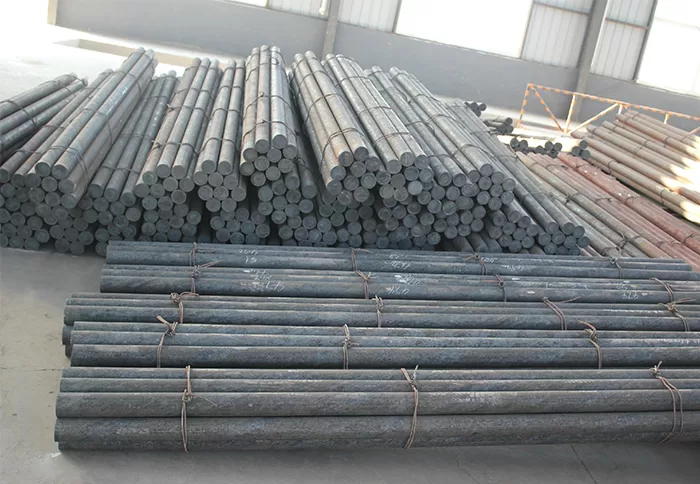
steel rods
Differences in Grinding Action
Ball Mills: Utilize steel balls that tumble and impact the ore. The grinding action is both impact (from falling balls) and attrition (from balls sliding against each other and ore particles). This combination effectively produces a wide range of particle sizes. It often results in a higher proportion of fines.
Rod Mills: Use steel rods that roll and tumble parallel to each other. The grinding action is primarily line contact. This leads to attrition and shearing. This produces a more uniform product size distribution. It causes less over-grinding compared to ball mills. Rod mills are often preferred for preparing feed for subsequent beneficiation steps. They are good when a narrower particle size range is required.
Media Configuration
Ball Mill Steel Ball Configuration: Involves a Steel Ball Ratio of various sizes (e.g., 20mm to 100mm). This achieves a balance of impact and attrition. The aim is to optimize Grinding Efficiency across a broad particle size range.
Rod Mill Rod Configuration: Typically uses rods of a single or very narrow size range. The rods’ length should be slightly less than the mill’s length. The diameter is selected based on the feed size and ore hardness. The uniform size of rods promotes even grinding. It minimizes segregation within the mill.
Applications in Gold Processing Flow
Ball Mills: Are widely used for fine grinding of gold ore. This is especially true when a high Gold Liberation Degree requires a very fine product. They are integral to most Gold Processing Plants. This includes processes before flotation or leaching. Examples are Gold CIL Plant or Gold CIP Processing Plant.
Rod Mills: Can be used as primary grinding machines for gold ore. This is particularly for preparing material for gravity concentration or subsequent ball milling. They are effective when a coarse to medium, uniform product is desired. They are also useful when sticky ores need processing without excessive over-grinding.
The choice between a ball mill and a rod mill, and their respective media configurations, depends on the specific ore characteristics, the desired product fineness, and the overall Gold Processing Flow strategy.
Summary and Recommendations
Optimizing the Gold Ball Mill Steel Ball Configuration is not a one-time task. It is a continuous process of monitoring, analysis, and adjustment. This process requires a deep understanding of mineralogy. It needs precise control over mechanical operations. It also demands a clear insight into economic efficiency. Operations that treat steel ball configuration as a scientific discipline achieve the highest Grinding Efficiency and maximum value from their ball mills.
Successful Gold Ore Grinding relies on several key factors: thorough ore characterization, selection of appropriate ball material, optimization of ball loading and Steel Ball Ratio, and effective management of ball addition. Continuous data analysis and integration of monitoring technologies are crucial for long-term optimization and achieving a high Gold Recovery Rate.
About ZONEDING
ZONEDING has been a leader in mineral processing since 2004. We provide a full range of Crushing Equipment and Beneficiation Equipment and solutions. We serve clients worldwide. ZONEDING specializes in customized gold processing solutions. Our machines are recognized for reliability, efficiency, and top performance. We offer full-process support. This covers design, manufacturing, installation, and after-sales service. ZONEDING assists in achieving superior Gold Recovery Rate. This ensures a successful investment.
Contact us today. Our experts can assist in designing or optimizing any Gold Processing Flow. Maximize your mineral value with ZONEDING’s proven technology and experience.
One of the first questions buyers ask before purchasing a cone crusher is: How many tons per hour can a cone crusher produce? The answer is not as simple as reading a specification sheet. Many operators discover that actual production differs sign...
The performance of a crusher plant acts as the heart of every modern infrastructure project. High-quality aggregate production for construction determines if a bridge stands for a century or fails in a decade. Choosing the right machinery helps co...
Magnesite mining and processing is a major sector for industrial investment in 2026. High-purity magnesium oxide (MgO) is now a critical material for steel, chemicals, and farming. Success in this industry depends on raising ore purity while cutti...
Jaw crusher prices can vary from a few thousand dollars to more than one million dollars depending on capacity, feed size, mobility, automation, and material hardness. In real quarry and mining projects, the cheapest machine is often not the most ...
We use cookies to ensure that we give you the best experience on our website. If you continue to use this site we will assume that you are happy with it.
Privacy Policy
Send us a message
We would love to hear from you
Submit your question and our team will respond to the email provided as soon as possible.
 Zoneding Machine