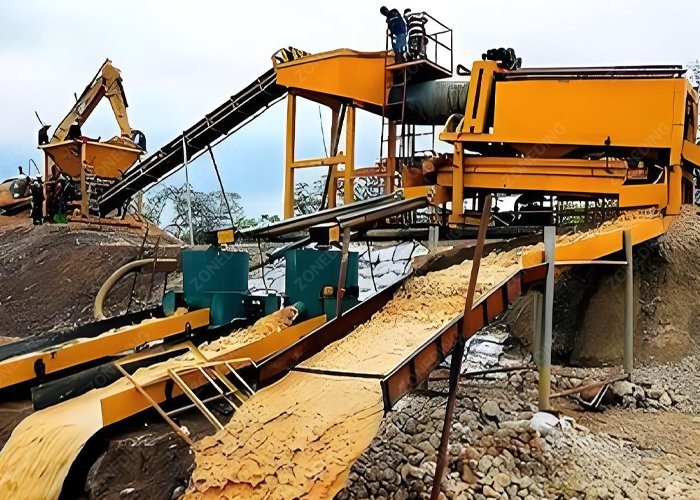
Processing tin ore (Cassiterite) might appear straightforward due to its significant weight. However, decades of industry experience demonstrate that high specific gravity is deceptive. Cassiterite is fragile and shatters easily. Without a precise strategy, potential profits are washed away into the tailings pond. This guide provides ZONEDING’s deep expertise on maximizing tin recovery rate through optimized tin ore gravity separation, focusing on objective analysis and technical precision.
Why Is Gravity Separation the Top Choice for Tin Ore (Cassiterite): What Is the Core Principle?
Tin ore, primarily in the form of Cassiterite, stands as the classic candidate for gravity separation. The reason lies in physics. Cassiterite possesses a high specific gravity, typically between 6.8 and 7.1. In contrast, the associated gangue minerals—usually quartz, feldspar, or calcite—are much lighter, with a specific gravity hovering around 2.6 to 2.7. This massive difference forms the foundation of the entire process, allowing water to serve as a medium for separating the heavy tin from the light waste. However, the reality of cassiterite beneficiation proves more complex than simple settling. While the density difference acts as the primary driver, it is not the only factor. The process relies on particle movement within a fluid medium, utilizing gravity, centrifugal force, and fluid resistance. Minerals are separated based on density, size, and shape. For alluvial tin (placer deposits), liberation is naturally good, often making gravity separation the only necessary method. For hard rock tin (lode deposits), the challenge increases. The rock must be crushed and ground to liberate the tin crystal without crushing the crystal itself. Here, the art of gravity separation truly begins, offering the lowest operating cost and a clean environmental footprint while remaining the backbone of the global tin industry.
Tin ore gravity separation
The Core Mechanism of Separation
The separation occurs when mineral particles move through a fluid, usually water. Heavy particles (Tin) settle faster than light particles (Sand).
Free Settling: Particles fall freely in still water, with density dominating.
Hindered Settling: Particles fall in a crowded suspension, where slurry density aids separation.
Flowing Film: Water flows over a surface (like a table or chute). Heavy particles stay close to the surface, while light particles are washed away by the current.
Deep Dive: What Key Factors Directly Determine the Success of Tin Ore Gravity Separation?
Many operations fail by treating tin ore processing identically to iron or copper processing, focusing solely on grinding fineness. This approach is flawed. In tin ore gravity separation, three hidden factors dictate the tin recovery rate: hydraulic classification, prevention of over-grinding, and particle shape management.
“Equal-Settling Ratio” and Classification
Simply screening tin ore by size and feeding it to a shaker is insufficient. The soul of gravity separation lies in hydraulic classification, based on the “Equal-Settling Ratio.” A small, heavy tin particle settles at the same speed as a large, light quartz particle. Feeding a mixed size range to a Shaking Table results in large sand washing away the small tin. The feed must be classified. Grouping “small heavy tin” with “small heavy sand” is physically impossible before separation. Instead, hydraulic classifiers are used to group particles that settle at the same speed. This usually results in a feed containing “small heavy tin” and “large light sand.” On the table, the small tin hides between the riffles, while the large sand washes over the top. Without strict classification, recovery rates can drop by 15-20%.
Mineral Crystal Structure and “Over-Grinding”
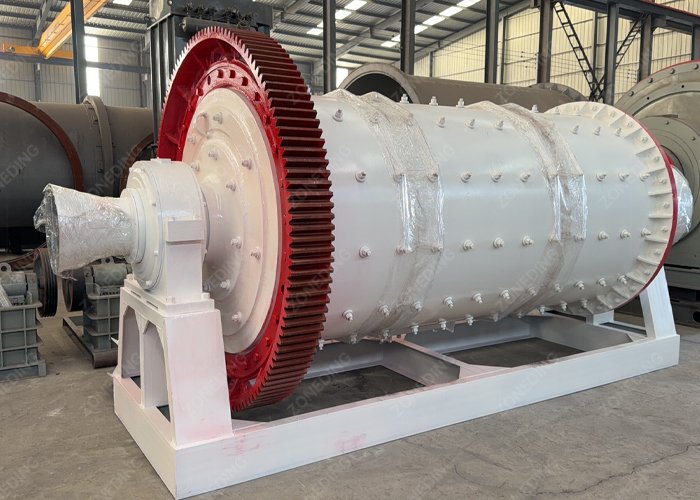
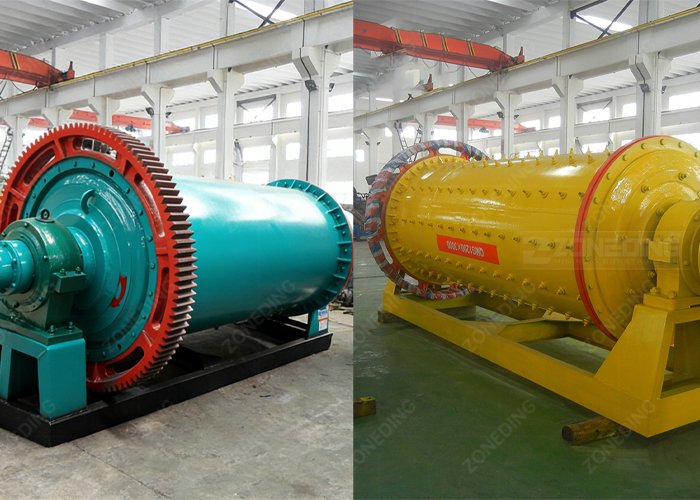
This represents the most significant pain point in the industry. Cassiterite is extremely brittle and friable. Prolonged grinding causes it to shatter into microscopic dust (slimes). Gravity separation fails when particles are smaller than 37 microns. The objective is to liberate the tin without destroying it. For primary grinding, a Rod Mill is strongly recommended over a ball mill. Rod mills use line contact, cracking the rock while protecting the mineral crystals, producing a uniform product with fewer fines. If a ball mill must be used, a quick discharge is essential. Tin must never remain in the mill once liberated.
Particle Shape Challenges
Particle shape is a frequently overlooked factor. Ideally, tin particles are granular or cubic. However, depending on the crushing method and original crystal habit, tin can break into flat, flake-like shapes. On a shaking table or spiral, flat particles act like surfboards, presenting a large surface area relative to weight. The water current lifts them, causing them to float away into the tailings despite being heavy. If the ore produces flat particles, standard gravity flowsheets will fail. Crusher settings may need adjustment to produce cubical particles, or Jigs might be required for coarser recovery, as Jigs are less sensitive to particle shape than flowing film devices.
Factor
Ideal Condition
Problematic Condition
Impact on Recovery
Sizing
Narrow hydraulic classification
Wide size distribution
High Loss of fine tin
Grinding
Rod milling (uniform size)
Ball milling (over-grinding)
Severe Loss via slimes
Shape
Cubic / Granular
Flat / Flaky
Moderate Loss to tails
Advantages: What Economic and Environmental Benefits Does Tin Gravity Separation Bring?
Tin ore gravity separation serves as more than just a technical choice; it is a strategic business decision offering distinct economic advantages over flotation or chemical leaching. These benefits are crucial for maintaining a healthy tin ore processing operation.
Unbeatable Operating Costs
The operational expenditure (OpEx) for gravity separation remains incredibly low, often one-third or less of flotation costs. The process requires no expensive chemical reagents like collectors, frothers, or modifiers. The primary consumables are water and electricity. Wear parts on equipment like spirals and tables exhibit long lifespans. For mining companies, this low cost base provides resilience against fluctuating metal prices.
Environmental Friendliness
With global regulations tightening, gravity separation offers a compliant solution. As a physical process, it discharges no toxic chemicals into the tailings dam. Wastewater is easier to treat and recycle, simplifying the permitting process, reducing the risk of environmental fines, and facilitating the acquisition of a “Social License to Operate.”
The Strategy of “Early Rejection”
The greatest value of gravity separation lies in the ability to “discard early.” In hard rock mining, much of the mined material is waste. By utilizing coarse gravity devices like a Spiral Chute or heavy media separation early in the circuit, 60-70% of waste rock can be rejected before the expensive fine grinding stage. This significantly reduces the energy load for the remainder of the plant and increases overall capacity without the addition of more mills.
Challenges: What Are the Unignorable Disadvantages and Limitations?
Acknowledging limitations is essential. Gravity separation is not a magic solution and possesses a specific physical boundary defined by particle size. This limitation serves as the “Achilles’ heel” of cassiterite beneficiation.
The 37-Micron Barrier
Gravity separation operates on the principle of settling velocity. As particles decrease in size, fluid resistance (viscosity) dominates over gravity. For tin ore, the practical limit for effective gravity recovery sits around 37 microns (400 mesh). Below this size, a tin particle behaves like mud, staying suspended in the water and flowing out with the tailings. In many older plants, over-grinding generates massive amounts of -37 micron tin, resulting in recovery rates as low as 50%. The equipment simply cannot detect the weight of these microscopic particles.
Low Capacity per Unit (For Finishing)
While roughing equipment like spirals boasts high capacity, finishing equipment does not. A Shaking Table produces the highest grade concentrate, yet its capacity is low. A standard table might only process 0.5 to 1 ton per hour. Processing 200 tons per day requires a large floor area filled with numerous tables, increasing civil engineering costs and the building footprint.
Practical Operational Tips
Tailings Monitoring: The presence of fine grey/black powder in tailings indicates tin loss. The size fraction should be tested; if it is -40 microns, gravity methods will not suffice.
Water Pressure Stability: Gravity separation requires steady water pressure. Fluctuating pressure destroys table stability. Installing a steady-head water tank is necessary.
Load Management: Pushing a table beyond capacity destroys recovery instantly. Running at 80% load is preferable to 110%.
Equipment and Process Strategy: Compensating for Disadvantages with Combinations
To overcome single-machine limitations, a combination strategy is employed. Specific equipment is placed at specific stages to maximize strengths and mitigate weaknesses. A standard modern tin ore processing plant utilizes a specific hierarchy.
Jigger-Separator-Machine
Spiral-Chute
Shaking-Table
The Equipment Trinity
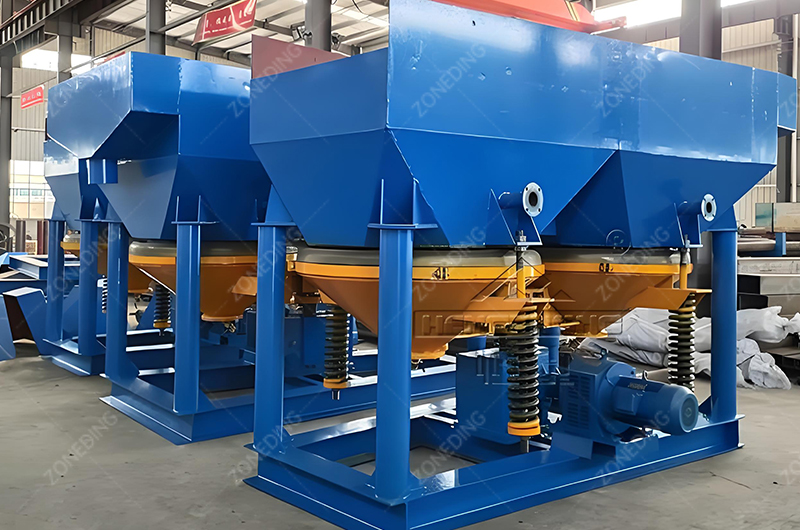
Coarse Recovery (20mm – 2mm): Jigging Separator Machine The Jig acts as the workhorse for coarse ore, mimicking manual panning on an industrial scale. Capable of handling a wide size range and less sensitive to shape, it is used immediately after screening or coarse crushing to recover large tin nuggets and discard large waste rock, reducing the grinding mill load.
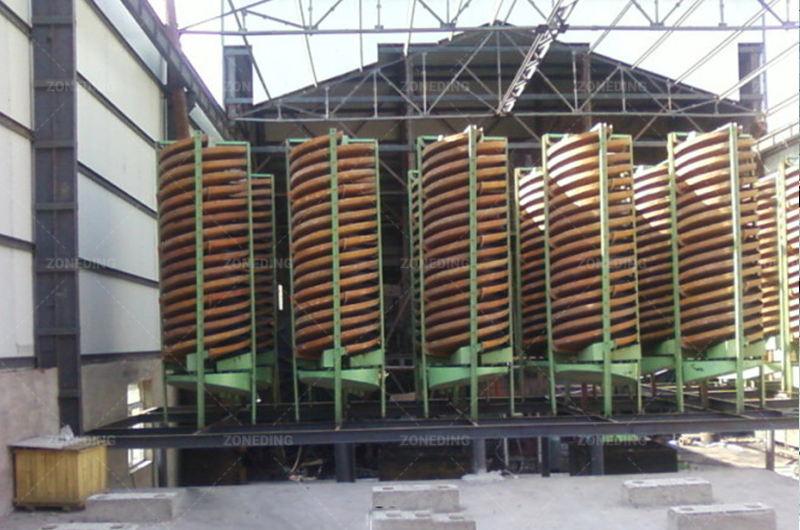
Roughing and Scavenging (2mm – 0.074mm): Spiral Chute Spirals are high-capacity, zero-power units used for the middle size fraction. Excellent for “roughing”—quickly reducing material volume—they produce a rough concentrate sent to tables while discarding the bulk of the sand. They occupy minimal vertical space.
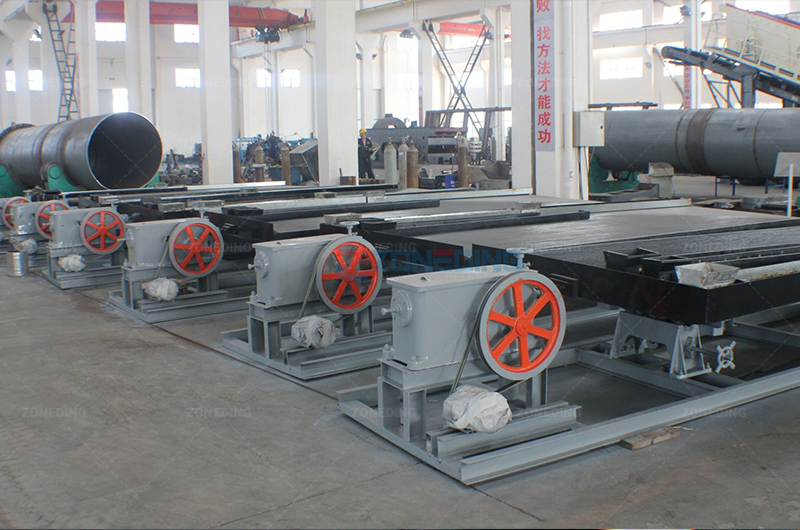
Cleaning and Finishing (< 2mm): Shaking Table The table serves as the precision instrument of the operation. With low capacity but extreme accuracy, it receives rough concentrate from jigs and spirals. The table separates material into clean concentrate, middlings, and tailings, capable of producing a final tin concentrate grading over 60% Sn. It is the only machine capable of such high enrichment in a single pass.
Solving the Fine Particle Loss Pain Point: Introducing New Technologies or Combined Processes
When gravity separation encounters the 37-micron barrier, two choices exist: accepting the loss or introducing advanced technology. For high-value tin, the industry strives to recover every grain.
Centrifugal concentrator
Magnetic-Separator
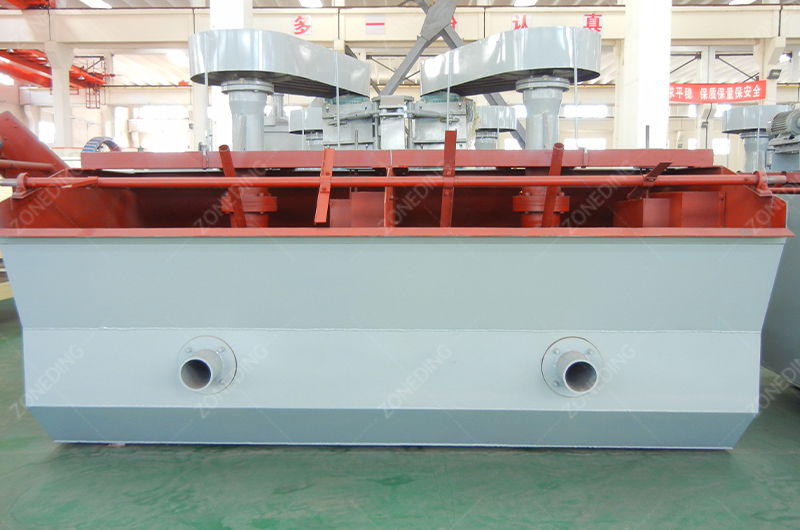
Flotation-Machine
High-G Centrifugal Concentration
For fine tin (down to 10-15 microns), standard gravity fails. However, amplifying gravity yields success. A Centrifugal Concentrator spins the slurry, creating a force of 60G or more. This artificial gravity forces even the tiniest tin particle against the bowl wall. This technology has revolutionized fine tin recovery from old tailings and slime circuits. Although expensive, the payback is rapid for fine ore.
The Tungsten-Tin Separation Challenge
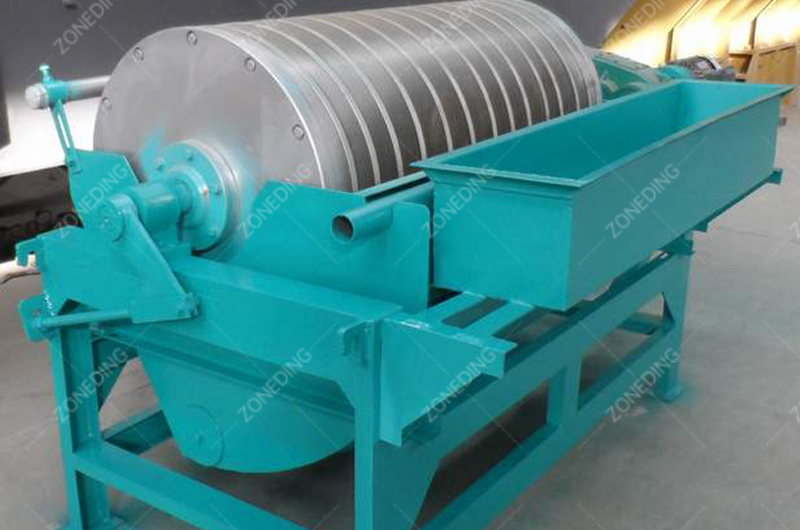
Tin often occurs with Wolframite (Tungsten ore). Their densities are nearly identical (7.0 vs 7.1), making gravity separation impossible. This results in a mixed Tin-Tungsten concentrate. To separate them, magnetism is utilized. Wolframite is weakly magnetic, while Cassiterite is non-magnetic. Passing the mixed gravity concentrate through a Magnetic Separator (specifically a High-Intensity Magnetic Separator) allows the magnet to pull the tungsten out, leaving pure tin.
Flotation for Ultra-Fines
If the tin exists as “mud” (under 10 microns), even centrifuges struggle. The final resort involves Flotation Machine technology. This method uses specific collectors (like alkyl sulfosuccinamate) to render tin hydrophobic, allowing it to attach to bubbles and float. Complex and costly, this is usually reserved for large-scale operations with rich slime tailings.
Operational Combat Guide: Maintaining Stability via Key Indicators
Designing the plant constitutes only half the battle; effective operation is the other half. In daily tin ore gravity separation, consistency is paramount.
The Golden Rule: Stage Grinding, Stage Separation
Attempting to liberate all tin in one pass is inadvisable. The “Stage Grinding, Stage Separation” approach must be adopted.
Grind the ore slightly.
Screen the material.
Send liberated material to a Jig or Spiral immediately to recover tin now.
Return only oversize/middlings to the mill.
Repeat. This removes tin as soon as it is free, preventing re-entry into the mill and subsequent pulverization into unrecoverable slime. This strategy alone can boost recovery by 10-30%.
Desliming is Non-Negotiable
Primary slimes (clay from the mine) increase slurry viscosity, acting like thick syrup and preventing fine tin from settling. Before feeding Spirals or Tables, desliming is essential. A Hydrocyclone is used to remove ultra-fine clay (-10 micron). While a tiny fraction of tin might be lost in the cyclone overflow, removing the mud skyrockets the efficiency of gravity equipment on the remaining 99% of the tin. It is a calculated trade-off that yields positive results.
Operational Checklist
Vibrating Screen Efficiency: Screens must be checked daily for holes. Oversize rocks on a shaking table destroy separation.
Pulp Density: Feed density must remain constant. For tables, 20-25% solids is ideal. Fluctuations cause the mineral band on the table to shift wildly.
Riffle Wear: Table riffles require regular inspection. Worn riffles cannot hold tin and must be replaced proactively.
Frequently Asked Questions
Q1: Can gravity separation recover tin particles smaller than 40 microns? Generally, efficiency drops significantly below 37-40 microns (400 mesh) as fluid viscosity hinders particle settling. For tin recovery in the 10-40 micron range, Centrifugal Concentrators or flotation methods are required, as traditional tables and spirals become ineffective. Q2: How does the processing of alluvial tin differ from hard rock tin? Alluvial tin is already liberated from the rock, so crushing and grinding are usually unnecessary. The process focuses on washing, desliming with trommels, and gravity concentration via Jigs. Hard rock tin requires a complete crushing and grinding circuit (preferably with Rod Mills) to liberate the cassiterite before separation. Q3: Why is desliming critical before feeding shaking tables? Slimes (ultra-fine mud) increase the viscosity of the slurry, preventing fine heavy minerals from settling. If not removed via Hydrocyclones, these slimes carry fine tin over the riffles into the tailings, drastically reducing recovery rates. Q4: What is the main advantage of using a Jig over a Shaking Table? A Jigging Separator Machine handles much coarser material (up to 20mm) and has a significantly higher throughput capacity. Jigs are ideal for “roughing” to remove large waste rock early in the process, whereas shaking tables are low-capacity “finishing” tools for producing high-grade concentrate. Q5: How can Wolframite (Tungsten) be separated from Cassiterite (Tin)? Since both minerals have similar specific gravities (approx. 7.0), gravity separation cannot separate them. However, Wolframite is weakly magnetic while Cassiterite is non-magnetic. Therefore, a high-intensity Magnetic Separator is utilized to separate the tungsten from the tin concentrate after gravity processing.
Summary and Recommendations
Tin ore gravity separation represents a battle against the fragile nature of Cassiterite. Success requires more than distinguishing heavy from light; it demands careful handling. Density differences must be leveraged using Jigging Separator Machines and Shaking Tables. The disadvantages of fine particle loss must be fought using Rod Mills and “Stage Grinding” strategies. The impact of slimes must be mitigated using Hydrocyclones. Copying a flowsheet from a textbook is ill-advised. The specific ore’s crystal size, shape, and associated minerals dictate the design. Coarse tin requires focus on Jigs, while fine tin necessitates investment in classification and centrifuges.
Take Action for The Mine
If high tin grades are appearing in tailings or there is uncertainty regarding over-grinding, professional analysis is required. Contact ZONEDINGtoday. ZONEDING goes beyond selling machines by analyzing mineralogy, conducting laboratory tests, and designing custom gravity circuits that protect tin and maximize returns. Stop washing revenue into the tailings pond.
The stands as the most important machine in a modern gold mine. This heavy equipment grinds raw ore into fine particles to release precious metals. Achieving a high recovery rate depends on the efficiency of this grinding process. If the machine f...
Choosing between a rod mill and a ball mill is the most vital step in any mineral processing journey. This decision affects the recovery rate and the monthly electricity bill of a mining project. A uses long steel bars to crush material. A Ba...
Many investors consider alluvial operations simple dirt-washing tasks. However, commercial-grade operations face severe technical challenges daily. A successful demands precise engineering to match the physical ore characteristics. This guide reve...
We use cookies to ensure that we give you the best experience on our website. If you continue to use this site we will assume that you are happy with it.
Privacy Policy
Send us a message
We would love to hear from you
Submit your question and our team will respond to the email provided as soon as possible.
 Zoneding Machine