Many mine operators invest heavily in advanced gold gravity concentrators, only to find that valuable fine gold is still escaping with the tailings. Maximizing the gold recovery rate is not about buying the machine with the highest G-force. It is a science that starts with understanding the gold itself. Effective gravity concentration depends on a complete strategy, from ore analysis to equipment placement. This guide provides a clear path for selecting the right gold processing equipment to capture every possible ounce of gold.
Before selecting any gold processing equipment, a professional beneficiation test is essential. Many project failures stem from choosing machinery based on specifications alone, without understanding the ore’s unique character. A beneficiation test, which includes a detailed mineralogical analysis, provides the roadmap for the entire plant. It answers the most important questions about the gold before any significant capital is spent. This analysis prevents costly mistakes and ensures the selected equipment can actually perform. A comprehensive report reveals several key characteristics. First is the gold particle size distribution, showing how much gold is coarse, fine, or micro-fine. Second is the gold’s morphology—is it blocky, flaky, or dendritic? Flaky gold is notoriously difficult to recover with gravity methods alone. Third is the liberation characteristic, which shows if the gold is free or locked within other minerals like quartz or sulfides. Finally, the test identifies associated heavy minerals that can interfere with the concentration process. This data is the foundation for all smart equipment selection.
Gold Shape (Morphology): Flaky gold may require a combination of gravity and flotation.
Liberation Size: Dictates the necessary grinding fineness in the Ball Mill.
Associated Heavy Minerals: Affects the stability and efficiency of gravity equipment beds.
Placer Gold vs. Lode Gold: Which Equipment is Prioritized?
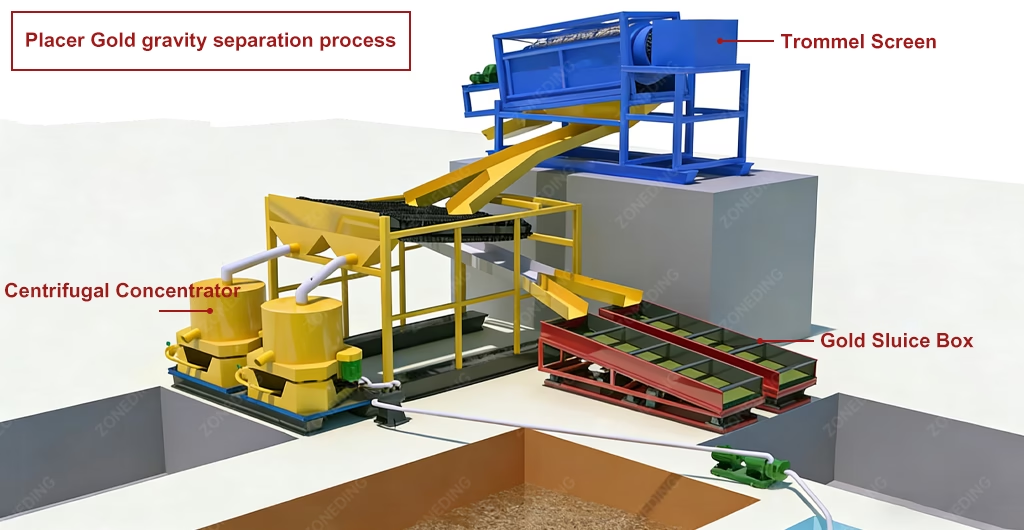
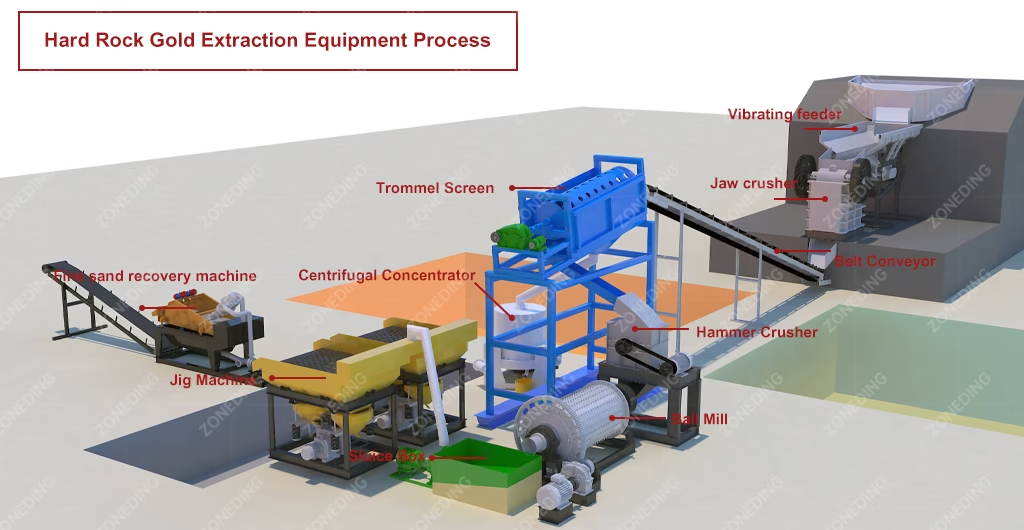
The type of gold deposit—placer or lode—fundamentally changes the equipment strategy. The choice of gold gravity concentrator depends entirely on whether the gold is found in loose sediments or locked within hard rock. Treating them the same way leads to poor efficiency and low gold recovery rates. Each type demands a distinct processing flowsheet tailored to its characteristics. For placer gold (sand gold), the gold is already liberated and mixed with sand, gravel, and clay. The primary challenge is processing very large volumes of material economically. The focus is on washing, screening, and rough gravity concentration. Equipment like trommel screens, jigs, and Spiral Chutes are prioritized. For lode gold (hard rock gold), the gold is encased in rock. This requires a multi-stage process of crushing and grinding to liberate the gold before it can be concentrated. Here, crushers, grinding mills, and high-efficiency concentrators like centrifugal machines play the central role.
Shaking Table, Spiral Chute, or Centrifuge: Which is Best?
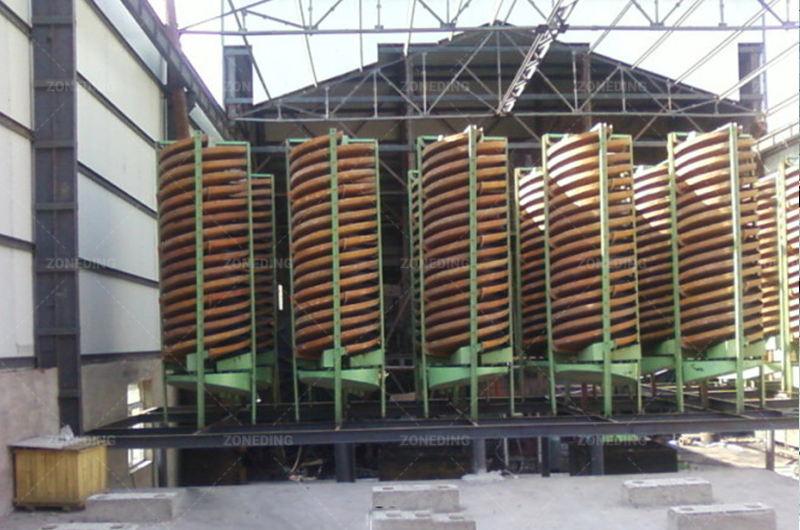
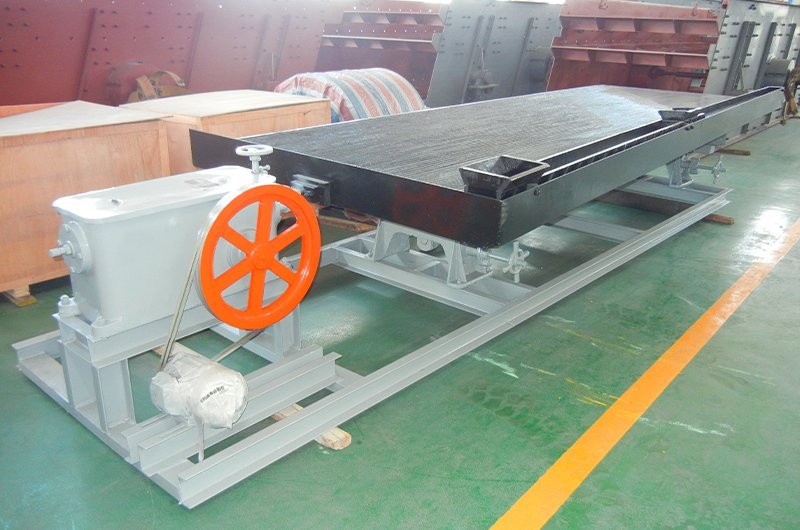
There is no single “best” gold gravity concentrator; there is only the best tool for a specific job. A successful gold plant often uses a combination of these machines. A Spiral Chute, a Shaking Table, and a Centrifugal Concentrator each excel in different roles. Understanding their strengths and weaknesses is crucial for designing an efficient and cost-effective flowsheet. A spiral chute is the workhorse for bulk processing. It is ideal for making a primary, low-grade concentrate from a large, low-grade feed. It has no moving parts and is very cheap to operate. A centrifugal concentrator is a high-tech machine designed for recovering fine and ultra-fine gold that other methods miss. It uses high G-forces to separate tiny, heavy particles. A shaking table is the finisher and the diagnostician. It takes the rough concentrate from spirals or centrifuges and cleans it into a very high-grade final product. It also provides a visual separation of minerals, allowing operators to diagnose process issues.
Gravity Equipment Comparison
Spiral Chute
Centrifugal Concentrator
Shaking Table
Equipment
Primary Function
Best Application
Key Advantage
Spiral Chute
Bulk Roughing
Large-volume, low-grade ores
Very low operating cost
Centrifugal Concentrator
Fine Gold Recovery
Recovering gold <150 microns
High efficiency for fine particles
Shaking Table
Cleaning & Finishing
Upgrading rough concentrates
Produces high-grade product, visual feedback
How Gold Particle Size Determines the Equipment Combination
The size of the gold particles dictates the entire gravity concentration strategy. A “one-size-fits-all” approach will always lead to gold loss. A process designed for coarse gold will lose the fines, and a process for fines might be inefficient for coarse gold. An optimal flowsheet layers different types of gold processing equipment to capture gold across its full size range. For coarse gold (larger than 150 microns), simple and robust machines like jigs and spirals are very effective. They can capture nuggets and large flakes early in the process. For fine gold (between 20 and 150 microns), a Centrifugal Concentrator is essential. Its enhanced gravitational field is necessary to separate these small particles from the lighter gangue. For micro-fine gold (smaller than 20 microns), gravity concentration becomes very difficult. At this stage, processes like Gold Flotation or leaching are often required to achieve a high gold recovery rate. The goal is to build a circuit that captures gold at each size fraction.
Is an Expensive Centrifugal Concentrator a Worthwhile Investment?
A centrifugal concentrator is a significant investment, but its ROI often comes from recovering previously lost fine gold. The decision should not be based on price alone but on the value it can unlock. The marketing focus on high G-force can be misleading. The real secret to a good centrifugal concentrator is its ability to maintain a “fluidized” bed of minerals. Fluidized bed concentrators (like the Knelson type) inject water into the concentrating cone. This water keeps the mineral bed loose, allowing heavy gold particles to sink through and be captured. Non-fluidized models rely purely on extreme G-force, which can compact the mineral bed too tightly. If the ore has many other heavy minerals, this compact bed can block fine gold from being captured. Therefore, for most fine gold applications, a fluidized design offers superior and more consistent performance. The high cost is often justified within months by the increased fine gold recovery.
Where Should Gravity Equipment Be Placed in the Production Line?
The placement of gravity concentration equipment within the circuit is just as important as the equipment itself. The best practice for lode gold operations is to place the gold gravity concentrator inside the grinding circuit. This is a critical strategy to prevent the over-grinding of gold. Gold is soft and malleable. If it stays in a Ball Mill for too long, it gets hammered into ultra-fine, difficult-to-recover flakes. By placing a concentrator to treat the discharge from the ball mill, any liberated gold is captured immediately. This “in-circuit” placement acts as a gold trap. It removes the gold before it can be over-ground or sent back to the mill by the hydrocyclone. While this may require a larger concentrator to handle the high circulating load, the improvement in the overall gold recovery rate provides a rapid return on that investment. The motto is: recover gold as soon as it is free.
How to Evaluate a Gold Equipment Supplier
A good supplier sells more than just a machine; they provide a complete solution. When evaluating suppliers of gold processing equipment, look beyond the price tag. The supplier’s technical expertise and after-sales service are paramount for long-term success. An expert supplier should act as a partner, helping to design the most effective flowsheet based on the specific ore characteristics. Key evaluation criteria include the supplier’s ability to interpret beneficiation test results and recommend a customized equipment combination. Do they have experience with similar ore types? Do they provide detailed engineering drawings and process flow diagrams? Furthermore, their after-sales support is critical. This includes installation guidance, commissioning, and, most importantly, operator training. A highly efficient Centrifugal Concentrator can perform poorly if the operator doesn’t know how to adjust parameters like water pressure and cycle time. A reliable supplier ensures the plant’s team has the skills to maximize the gold recovery rate.
Common Questions (FAQ)
Question 1: What is the most common mistake in gold gravity concentration? The most common mistake is buying equipment before conducting a proper mineralogical analysis. This often leads to a mismatch between the machine’s capability and the ore’s characteristics, resulting in significant and preventable gold loss, especially fine gold. Question 2: Why is water pressure so important for a centrifugal concentrator? In a fluidized bed concentrator, the backwash water pressure must be extremely stable. Even small fluctuations can cause the mineral bed to either compact (blocking gold) or become too loose (flushing gold out), leading to a dramatic drop in the fine gold recovery rate. Question 3: Can I only use a shaking table for my small-scale mine? A Shaking Table is excellent for final cleaning, but it has a low capacity. For a primary concentrator, it is better to first use a higher-capacity machine like a spiral or small centrifuge to create a rough concentrate, and then use the shaking table to upgrade it. Question 4: What does “in-circuit” gravity recovery mean? It means placing a gravity concentrator within the grinding loop, typically between the ball mill discharge and the hydrocyclone. This allows for the immediate capture of liberated gold, preventing it from being over-ground into ultra-fine particles that are much harder to recover. Question 5: Is a higher G-force always better in a centrifugal concentrator? Not necessarily. While high G-force is needed, the ability to fluidize the concentrating bed with water is often more important for fine gold recovery. An overly compacted bed from extreme G-force without fluidization can prevent fine gold from being captured.
Summary and Recommendations
Achieving the maximum gold recovery rate is an art guided by science. The process begins with a deep understanding of the ore through professional testing. The selection of gold gravity concentrators must be a tailored strategy, not a simple purchase. The key is to build a multi-stage circuit that uses the right equipment for each gold particle size, from coarse jigs to fine-gold centrifuges, and finishes with precision shaking tables. Remember the core principles for success: 1. Analyze the ore first. 2. Place concentrators strategically to prevent over-grinding. 3. Combine different equipment to capture all gold sizes. 4. Partner with a supplier who provides technical support and training. By following this path, a mining operation can turn potential losses into measurable profits.
About ZONEDING
ZONEDING has been a trusted manufacturer of mineral processing equipment since 2004. As a factory-direct B2B supplier, ZONEDING has delivered complete processing solutions to over 120 countries. With a team of 15 senior engineers and an 8,000-square-meter production facility, ZONEDING specializes in customizing gold processing plants. The company provides full-service support, from initial beneficiation testing and flowsheet design to equipment manufacturing, installation, and operator training, ensuring clients maximize their return on investment. Contact ZONEDING for a professional consultation on a Gold Processing Plant solution tailored to any mining project.
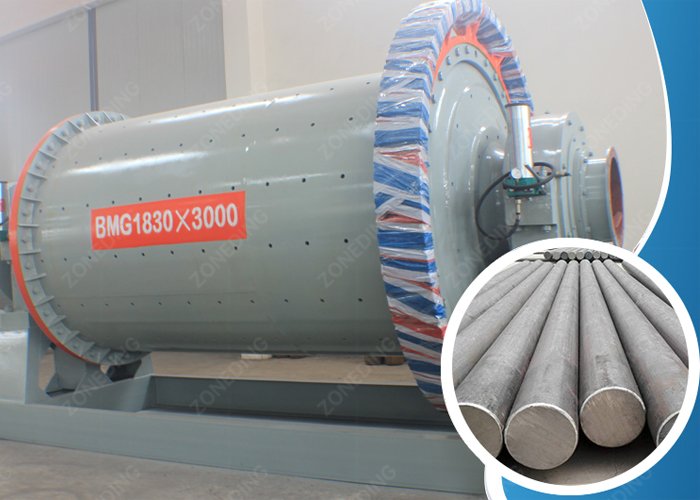
A rod mill working principle differs from other grinding tools because it uses long steel rods instead of balls. This machine is the best choice for preventing "over-grinding," which ruins fragile minerals. Many plants lose profit becaus...
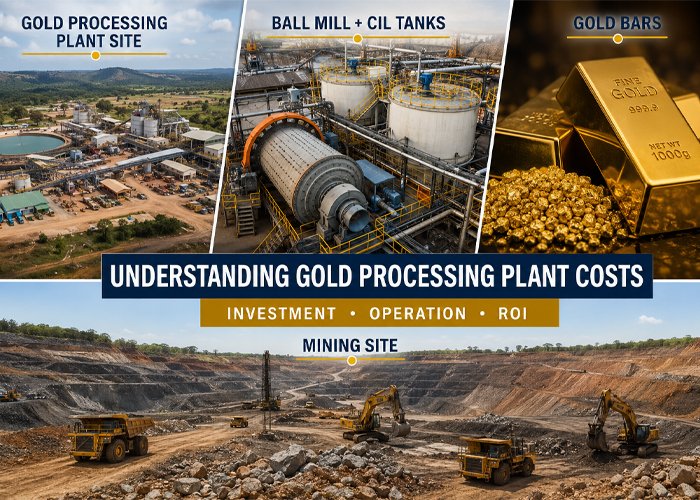
One of the first questions investors ask before starting a mining project is: How much does a gold processing plant cost? Unfortunately, there is no single answer. A small gravity gold plant may cost less than a luxury house in some countries, whi...
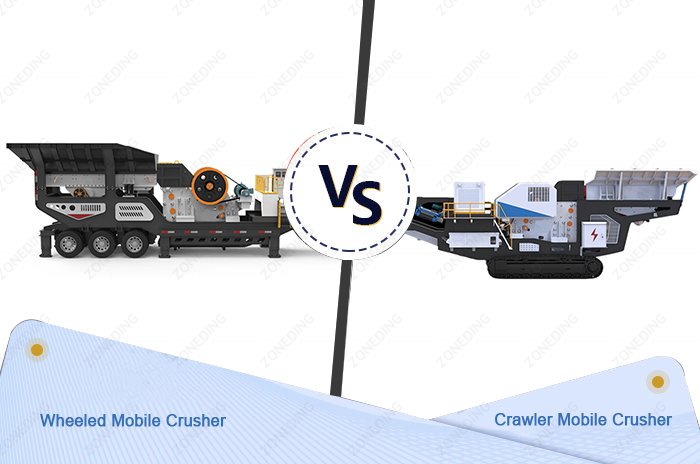
Choosing mobile crushing equipment determines project setup speed and long-term operating costs. Many buyers only look at the transport method. They ignore the hidden costs of site preparation and energy consumption. This guide shows the real diff...
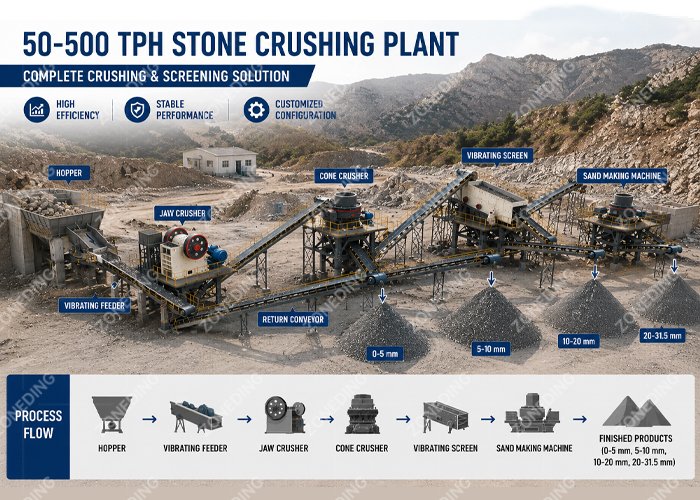
The cost of a stone crusher plant in 2026 can range from $50,000 to more than $1.5 million depending on capacity, rock type, equipment configuration, automation level, and mobility requirements. Many first-time buyers only compare crusher prices, ...
We use cookies to ensure that we give you the best experience on our website. If you continue to use this site we will assume that you are happy with it.
Privacy Policy
Send us a message
We would love to hear from you
Submit your question and our team will respond to the email provided as soon as possible.
 Zoneding Machine