Working with titanium ore is a complex task. It presents both challenges and significant opportunities. Effective mineral processing is crucial. It is not just about separating minerals. It is about maximizing value. It is also about doing things efficiently. This process takes raw ore and turns it into valuable concentrate. Industry experience shows that every small detail matters. Each step in the process offers a chance to optimize. This article shares key strategies. These strategies improve production efficiency. They also boost the value of the final product.
Titanium Ore Basics: Its Importance and the Necessity of Beneficiation?
Titanium is a vital metal. It has many uses. It is known for its strength. It is also light and resists corrosion. It is used in aircraft. It is used in medical implants. It is also used in paints and plastics. This is why titanium ore beneficiation is so important. It extracts this valuable material from its raw form. Raw ore needs processing. This removes waste materials. It concentrates the valuable titanium minerals. This step makes titanium useful for industries.
What is Titanium Ore? Its Main Uses?
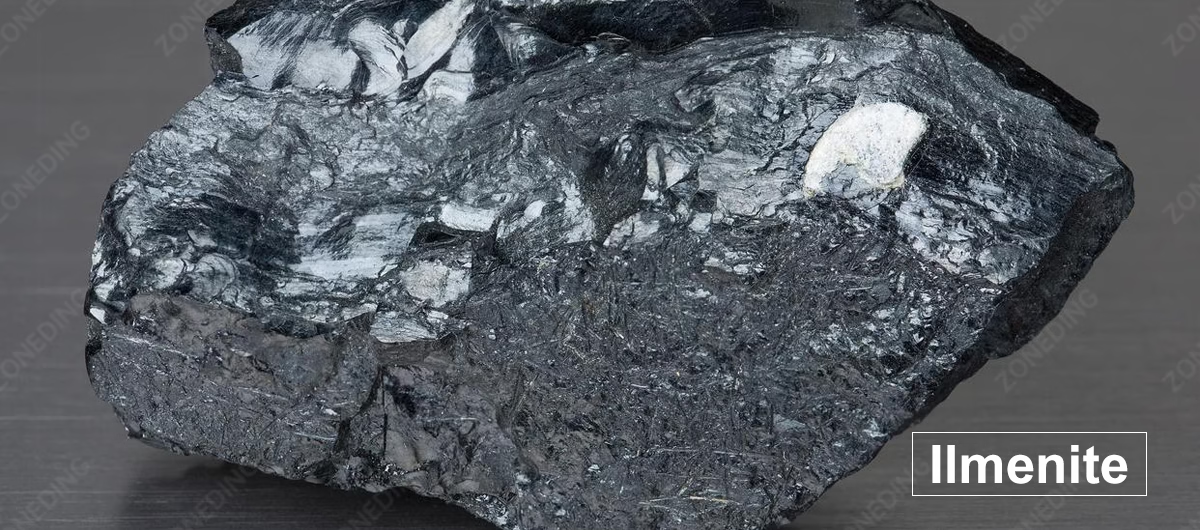
Titanium ore refers to minerals containing titanium. The two most common are ilmenite (FeTiO3) and rutile (TiO2). Ilmenite is the primary source. It is an iron-titanium oxide. Rutile is pure titanium dioxide. These minerals are crucial for various industries. Titanium metal is strong and light. It is essential in aerospace and defense. It is also used in medical devices. Titanium dioxide pigment makes paints bright and opaque. It is also found in plastics and paper. Many everyday products use it. ZONEDING understands these diverse applications. Its **** is tailored to meet these needs.
How Do Ore Types (Rock, Sand) Affect Beneficiation?
Titanium ores come in two main types. They are rock-type (primary) and sand-type (placer). Each type has different characteristics. These characteristics greatly affect the beneficiation process. Rock-type ores are hard. They are found in igneous rocks. They require extensive crushing and grinding. This liberates the titanium minerals. Sand-type ores are loose. They are found in ancient beach deposits. They often contain free titanium minerals. They are usually easier to process. They need less grinding. Understanding the ore type is crucial. It helps design the most efficient beneficiation flowsheet design. Ignoring these differences often leads to significant problems. It affects both recovery rates and costs.
Titanium Ore Beneficiation Methods: Core Technologies and Principles?
Beneficiation processes use different physical properties. They separate titanium minerals from waste. These properties include density and magnetic susceptibility. They also include surface chemistry. The choice of method depends on the ore type. It also depends on the associated minerals. A combination of methods usually works best. This ensures high recovery and purity. Each method plays a key role. It moves the ore closer to a high-value concentrate. These core technologies form the backbone of effective titanium ore beneficiation.
Gravity Separation: How Does It Use Density for Initial Separation?
Gravity Separation
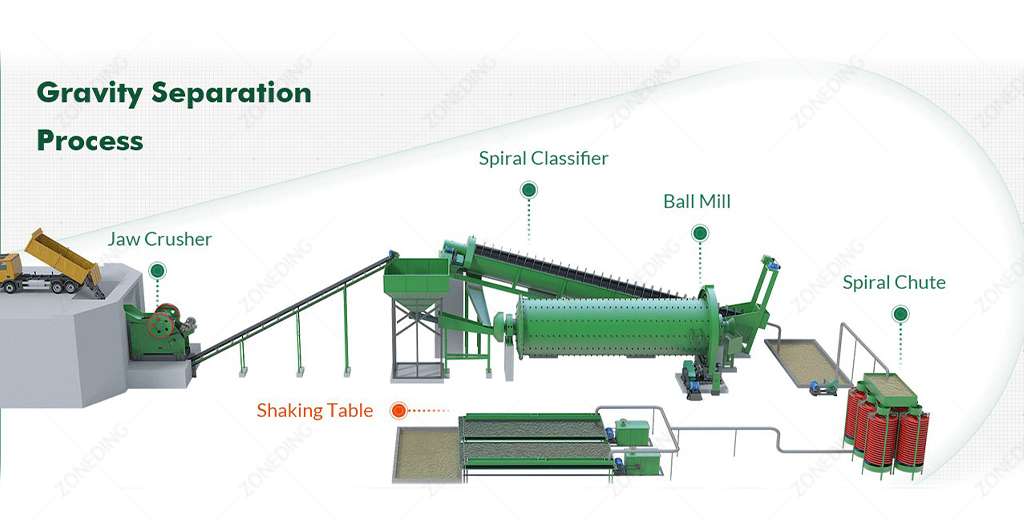
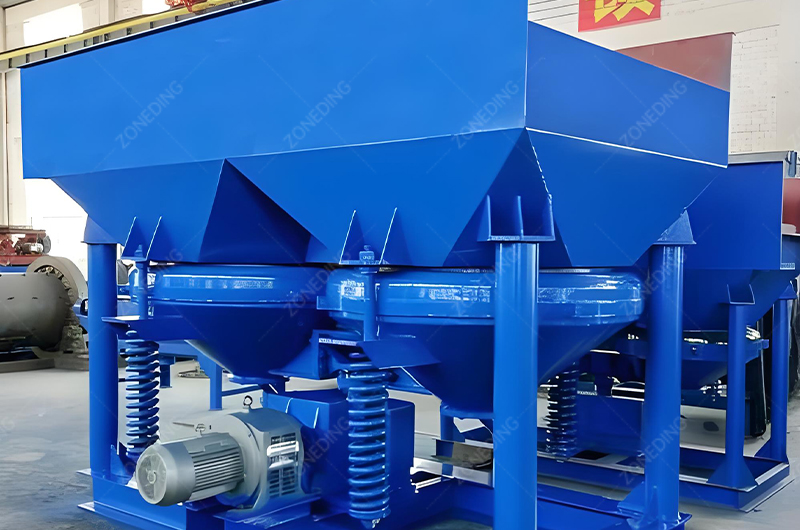
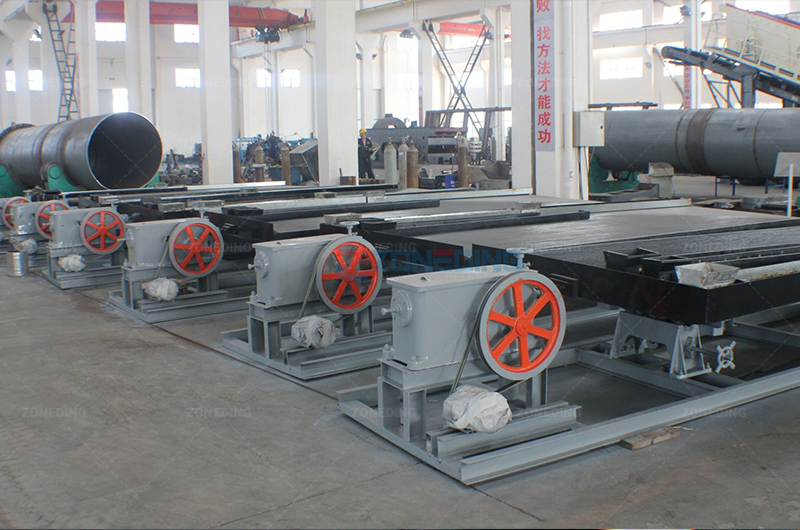
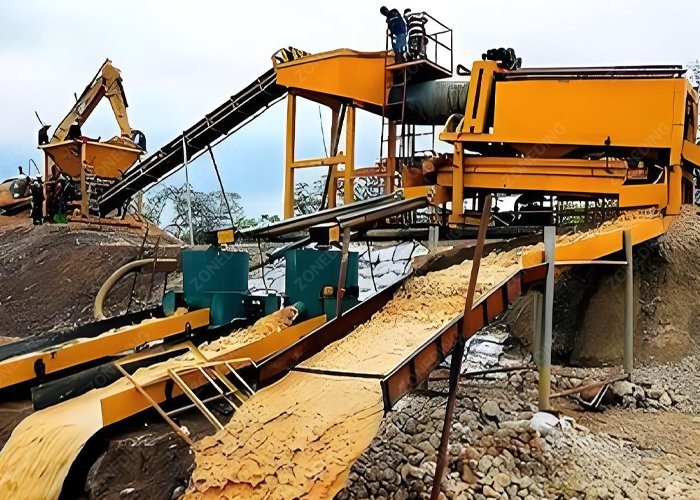
Gravity separation uses density differences. It separates heavy titanium minerals from lighter waste. This method is often the first step. It is especially useful for sand-type ores. These ores naturally contain denser titanium minerals. Equipment like jigs, spirals, and shaking tables are used. They effectively pre-concentrate the ore. This removes a large amount of gangue material. The strategic importance of “pre-concentration” is often underestimated. It is not merely about removing waste. It is about dramatically reducing the load on later, more expensive steps. Optimizing this early step can lead to significant cost reductions for grinding, magnetic separation, and electrostatic separation, potentially saving millions of dollars for a project. This makes it a crucial part of mineral separation technology.
Magnetic Separation: How Does It Recover Titanium Ore Efficiently?
Magnetic Separation
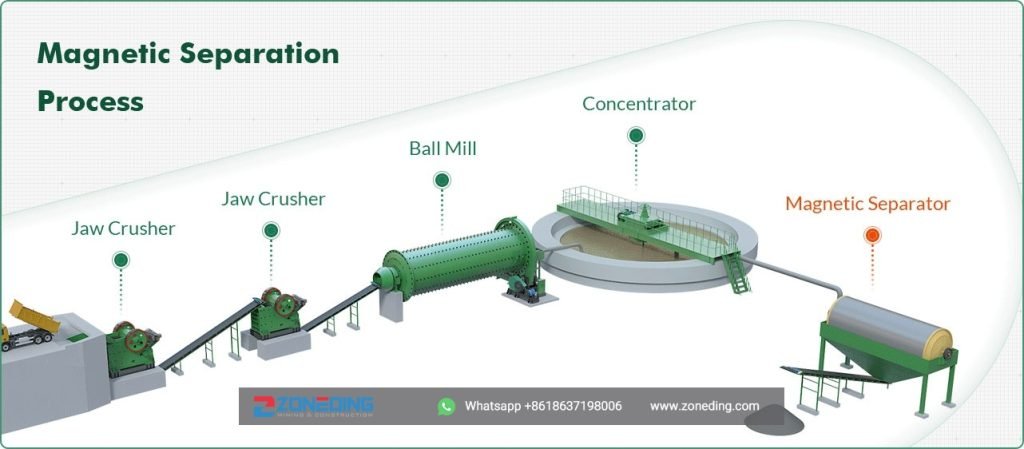
Titanium minerals like ilmenite are weakly magnetic. This property allows for magnetic separation. This method is highly effective. It separates ilmenite from non-magnetic minerals like quartz. It also separates it from strongly magnetic minerals like magnetite. Effective magnetic separation often follows a “step-wise philosophy.” It is observed that stronger magnets are not always universally better. First, a wet low-intensity magnetic separator (LIMS) is often used. This removes strong magnetic minerals like magnetite. This action protects high-intensity machines. It also prevents magnetite from contaminating the ilmenite concentrate. Then, a wet high-intensity magnetic separator (WHIMS) enriches the ilmenite. The choice of matrix in the WHIMS is critical. It influences how effectively the ilmenite is captured. ZONEDING’s Magnetic Separators are designed for this precise work.
Flotation Separation: How Does It Use Surface Chemistry for Fine Separation?
Flotation Separation
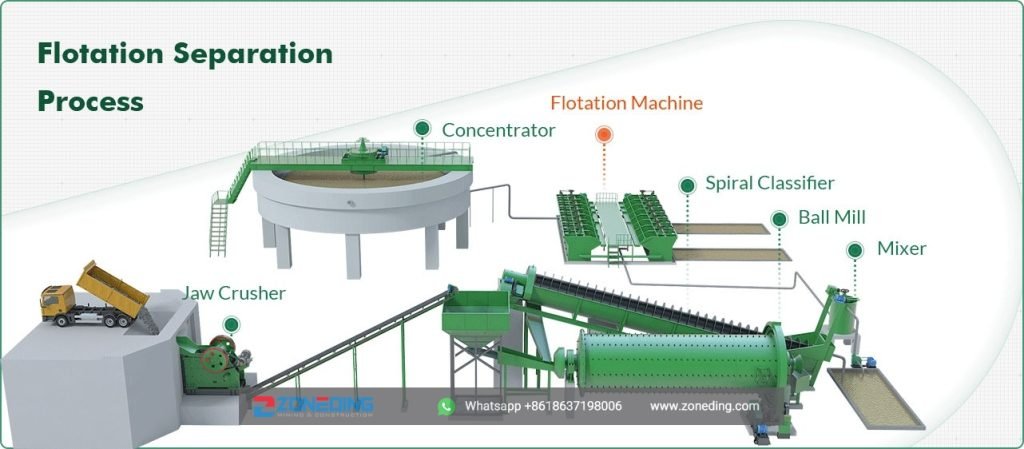
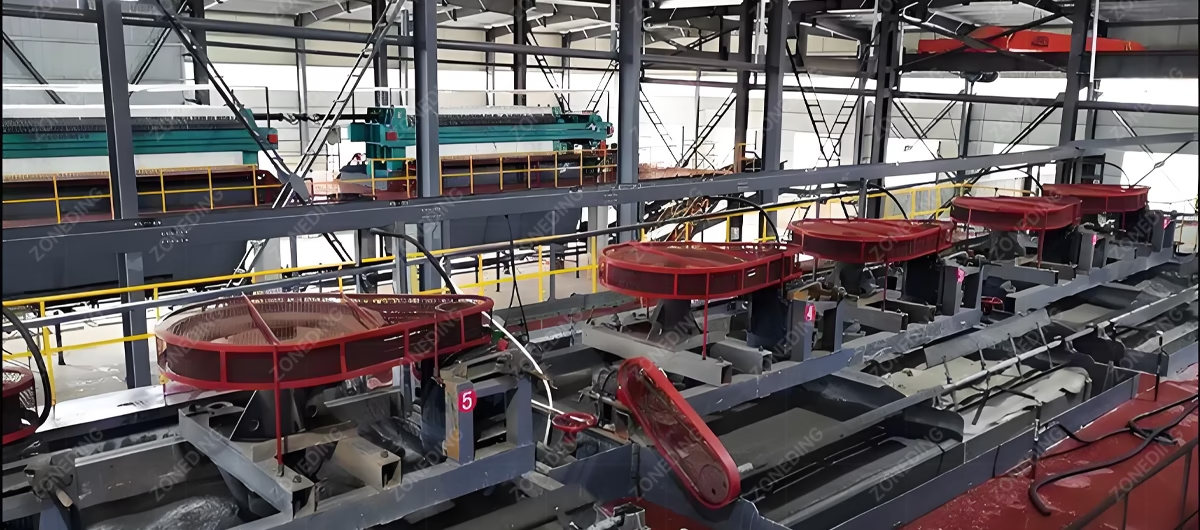
Flotation is a fine-tuning method. It uses surface chemistry. It separates minerals based on their ability to float. This method is effective for complex ores. It separates fine particles. It also works for minerals with similar densities or magnetic properties. Collectors are added. They attach to the desired mineral surfaces. This makes them hydrophobic. Air bubbles are then introduced. The hydrophobic minerals attach to these bubbles. They rise to the surface. This forms a froth. The froth is collected. Flotation helps achieve high-grade concentrates. It is especially important for titanium minerals that are finely disseminated. It is a critical part of a complete titanium ore beneficiation process. ZONEDING’s Flotation Machine ensures efficient separation.
Electrostatic Separation: How to Improve Purity Using Conductivity?
Electrostatic separation uses conductivity differences. Minerals either conduct electricity or they do not. This method is typically used for dry, fine concentrates. It further enhances purity. Minerals are charged in an electric field. Conductive minerals lose their charge. They fall off the roller. Non-conductive minerals retain their charge. They stick to the roller longer. They are then flung off by centrifugal force. Humidity control is vital for this method. Even small amounts of moisture can affect conductivity. Precise humidity control is not just about drying. It is about optimizing the particle surface activity. Keeping moisture between 0.05% and 0.1% is ideal for maximizing efficiency. This makes it a powerful tool for achieving high-grade titanium concentrate production.
Titanium Ore Beneficiation Equipment: Core Machines for Each Step?
Selecting the right equipment is critical. Each piece must perform its specific task well. This ensures an efficient overall process. From crushing raw ore to dewatering the final concentrate, specialized machines are needed. They are designed for durability. They also aim for high performance. This section outlines the core equipment types. These are essential for a successful titanium ore beneficiation plant. ZONEDING offers a full range of these machines.
Crushing and Grinding: Ensuring Optimal Liberation?
Jaw Crusher
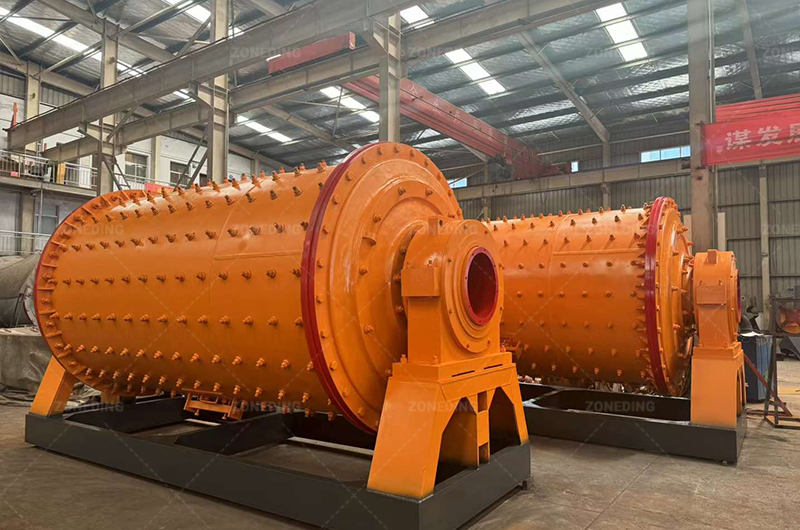
Ball Mill
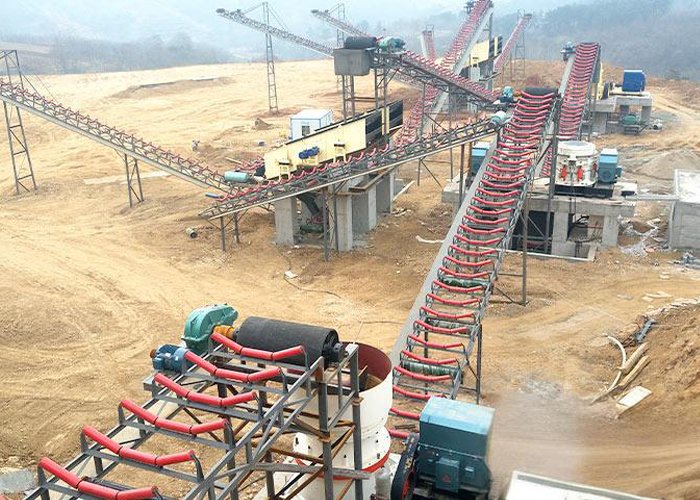
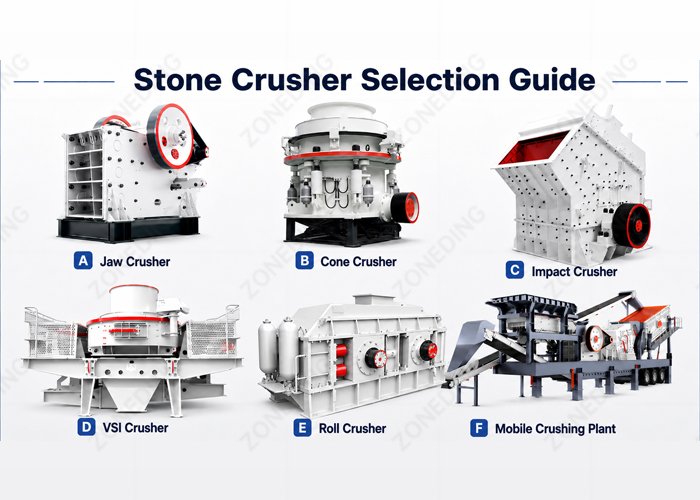
Crushing reduces the size of large ore pieces. Grinding further breaks down the ore. The goal is “liberation.” This means separating individual mineral particles. This makes them available for downstream processes. For hard rock-type titanium ores, jaw crushers are used first. Then, cone crushers or impact crushers follow. Ball mills or rod mills handle the grinding. Selective liberation is key. Grinding should avoid excessive fineness. Over-grinding wastes energy. It also creates fine particles that are hard to separate. High-pressure grinding rolls (HPGR) can be very effective. They produce more cracks. This helps selective liberation. ZONEDING provides robust Ore Crushing Equipment and efficient Grinding Equipment like its Ball Mill and Rod Mill.
Gravity separation equipment uses density differences. Jigs are used for coarser particles. They use pulsating water to separate minerals. Shaking tables are for finer particles. They use a vibrating deck. This separates minerals based on density and size. Spiral chutes are simple. They are effective for pre-concentration. They use gravity and friction. These machines efficiently remove light waste minerals. This enriches the heavy titanium minerals. This initial step is vital. It improves the efficiency of later, more complex separation stages. ZONEDING’s Jigging Separator Machine and Shaking Table are reliable choices.
Magnetic Separation Equipment: Strong vs. Weak?
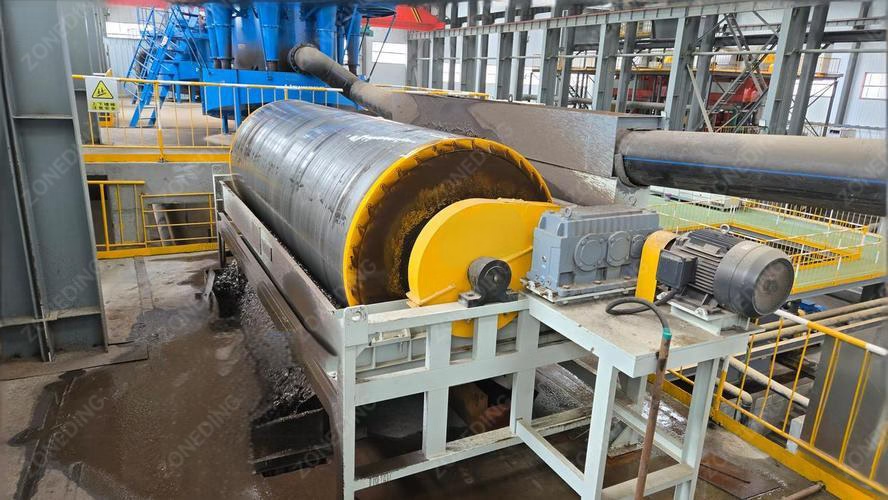
Magnetic separator
Magnetic separators use magnetic forces. They separate minerals based on their magnetic properties. Wet low-intensity magnetic separators (LIMS) remove strongly magnetic minerals. This is often magnetite. Wet high-intensity magnetic separators (WHIMS) are then used. They capture weakly magnetic ilmenite. Dry magnetic separators can also be used. They process dry concentrates. ZONEDING’s Magnetic Separator range offers solutions. They cover different magnetic intensities and processing needs. These machines are crucial for achieving high-purity titanium concentrate production.
Flotation Equipment: Types for Fine Selection?
Flotation Machine
Flotation machines use air bubbles and chemical reagents. They separate minerals at fine particle sizes. Different types of flotation cells exist. They include mechanical flotation cells and column flotation cells. Mechanical cells use agitators. They create air bubbles and mix slurry. Column cells rely on counter-current flow. They generate small bubbles. They provide a deeper froth bed. These machines are essential for recovering fine titanium minerals. They are also used for removing fine impurities. This ensures the final concentrate meets strict quality standards. ZONEDING offers various Flotation Machine models. They suit different applications.
Dewatering and Drying Equipment: Handling Concentrates and Tailings?
Hydrocyclones
Dryers
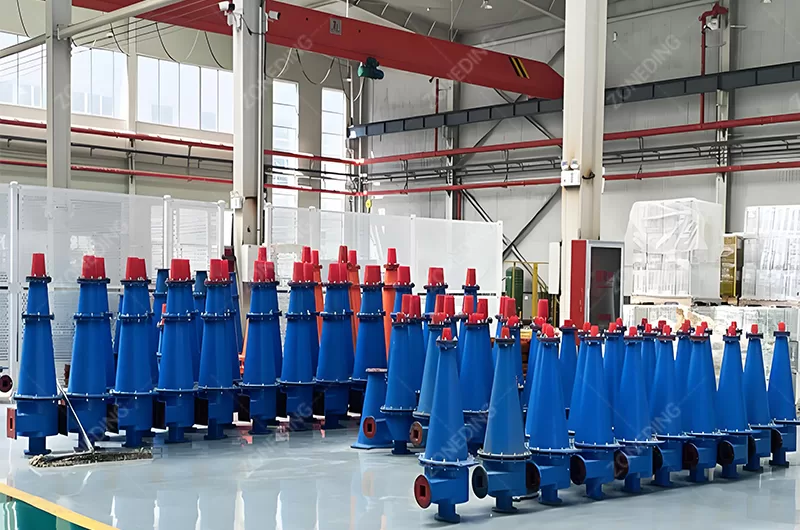
After separation, both concentrates and tailings contain water. Dewatering removes most of this water. Drying removes the remaining moisture. Thickeners are used first. They settle solids and recover water. Filters, like disc filters or belt filters, further reduce moisture content. Rotary dryers remove surface moisture from concentrates. This prepares them for market or further processing. For tailings, proper dewatering is crucial. It reduces environmental impact. It allows for easier disposal or potential reuse. Water quality is always emphasized. Slime control can be a hidden killer for efficiency. Clay minerals cover useful mineral surfaces. They increase slurry viscosity. They block water systems. Effective desliming using Hydrocyclones and clarifying systems is essential. ZONEDING provides a full range of Drying Equipment.
Titanium Ore Beneficiation Process Flow: How to Integrate for High Efficiency?
An effective process flow integrates all steps. It combines different methods and equipment. This creates a continuous and efficient operation. The design varies greatly. It depends on the specific ore body. It also depends on desired product specifications. A well-designed flowsheet maximizes recovery. It also minimizes operational costs. This section describes typical process flows. It also discusses balancing technical and economic factors. This is the heart of beneficiation flowsheet design.
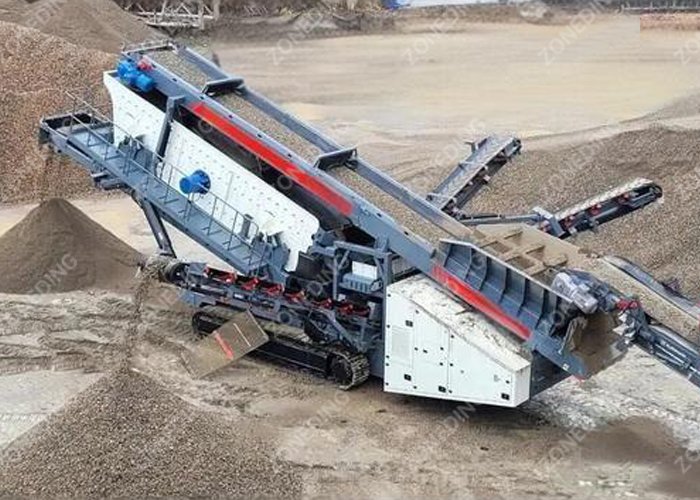
Sand-type titanium ores are often simpler to process. The typical flow starts with screening. This removes oversized debris. Then, gravity separation takes place. This uses spirals or jigs. It removes light gangue. It also pre-concentrates heavy minerals. The heavy mineral concentrate then undergoes magnetic separation. This removes magnetite and separates ilmenite. Electrostatic separation often follows. It separates ilmenite from non-conductive minerals like zircon and rutile. Finally, dewatering and drying steps prepare the final concentrates. This process is less energy-intensive. It is suitable for free-flowing sand deposits.
Complex Rock-type Titanium Ore Beneficiation Flow for Optimization?
Rock-type titanium ores require more intensive processing. The flow begins with crushing. Jaw crushers reduce the primary rock. Cone crushers or impact crushers follow. Grinding further liberates minerals. This uses ball mills or rod mills. Then, a multi-stage gravity and magnetic separation process is employed. This removes various gangue minerals. Flotation might be used for fine ilmenite recovery. It also helps remove specific impurities. Finally, electrostatic separation, followed by dewatering and drying, yields high-grade concentrates. This complex flow needs careful design. It ensures optimal liberation and separation at each stage. This is key for maximizing value from these challenging ores.
Flowsheet Design: Balancing Technical and Economic Factors?
Designing a beneficiation flowsheet involves a delicate balance. Technical parameters are important. These include liberation size, recovery, and concentrate grade. Economic factors are equally important. These include capital costs, operating expenses, and market value of products. The associated minerals should always be considered. Often, valuable minerals like rutile, zircon, or rare earths are present. Co-recovery of these minerals significantly boosts profitability. This transforms “impurities” into “wealth creators.” Tailings management is also a big part of the design. Simple wet disposal is no longer an acceptable practice. Planning for dry stacking or backfilling is necessary. This meets environmental rules. It also saves long-term costs. ZONEDING assists in this complex balance. It provides comprehensive Beneficiation Plant Optimization services.
Titanium Ore Beneficiation Optimization: Meeting Challenges and Boosting Competitiveness?
The world of mineral processing changes fast. New challenges arise. Environmental regulations get stricter. Market demands evolve. To stay competitive, continuous optimization is essential. This means improving recovery. It means boosting concentrate quality. It also means adopting greener practices. The industry continually seeks better methods. This section explores strategies for meeting these challenges. It aims to enhance overall competitiveness in titanium ore beneficiation.
How to Improve Titanium Ore Recovery and Concentrate Grade?
Improving recovery means getting more titanium from the ore. Improving grade means the concentrate is purer. One way is through process control. Implementing advanced sensors is beneficial. Using automated control systems helps maintain optimal operating conditions. Another way is to optimize reagent schemes in flotation. This improves selectivity. Close attention to water quality is critical. Muddy water covers mineral surfaces. This reduces separation efficiency. Introducing scrubbers, such as ZONEDING’s Mixer tanks, can remove surface slimes. They improve separation. Finally, exploring co-recovery of associated minerals is often profitable. Heavy mineral sands often contain zircon, rutile, and rare earths. Designing circuits to capture these adds significant value. It transforms these “impurities” into profitable by-products. This significantly boosts overall project economics.
Environmental Regulations: Green and Smart Beneficiation?
Environmental regulations are getting tougher. Mining must be more sustainable. This means less waste. It means less pollution. Green beneficiation focuses on water recycling. It minimizes chemical use. It also reduces energy consumption. Smart beneficiation uses automation. It uses data analytics. This optimizes plant operations. It also ensures compliance. For example, modern plants use dry stacking for tailings. This greatly reduces environmental impact. It also allows for land reclamation. Implementing remote monitoring and control systems makes operations safer and more efficient. ZONEDING focuses on these green and smart solutions. It assists in meeting environmental standards. It also boosts efficiency. This ensures long-term sustainability for titanium ore beneficiation projects.
Frequently Asked Questions
Question 1: What are the main types of titanium ore? The main types of titanium ore are ilmenite (FeTiO3) and rutile (TiO2). Ilmenite is the most common. Rutile is a purer form of titanium dioxide. Question 2: Why is pre-concentration important in titanium ore beneficiation? Pre-concentration removes a large amount of low-value waste material early. This reduces the volume of material. It also lowers the cost for later, more expensive processing steps like grinding and magnetic separation. Question 3: How does magnetic separation work for ilmenite? Ilmenite is weakly magnetic. Magnetic separation first uses weak magnets to remove strong magnetic impurities. Then, high-intensity magnetic separators capture the weakly magnetic ilmenite. Question 4: What is the role of grinding in titanium ore processing? Grinding liberates titanium minerals from the surrounding rock. It separates individual particles. This makes them available for efficient separation. Over-grinding should be avoided. It creates fine particles that are hard to process. Question 5: How does ZONEDING support sustainable titanium ore beneficiation? ZONEDING offers energy-efficient equipment. It provides solutions for water recycling. It also offers designs for environmentally friendly tailings management. The goal is to help achieve green and smart operations.
Summary and Recommendations
Titanium ore beneficiation is a detailed process. It transforms raw ore into valuable concentrate. Success depends on understanding the ore. It also needs choosing the right methods. Core steps include crushing, grinding, gravity, magnetic, flotation, and electrostatic separation. Each step needs specific, high-performance equipment. A well-designed flowsheet is crucial. It balances technical goals with economic and environmental factors. Continuous optimization is also vital. This includes improving recovery and grade. It means adopting green and smart technologies. A systematic approach is recommended. Careful analysis of the ore is essential. Choosing ZONEDING’s proven equipment is beneficial. Collaborating with ZONEDING experts ensures project efficiency. This makes titanium ore beneficiation projects profitable and sustainable.
About ZONEDING
ZONEDING MACHINE is a leading Chinese mineral processing equipment manufacturer. It specializes in B2B solutions. ZONEDING has provided reliable equipment since 2004. The factory covers 8,000 square meters. It produces over 500 units annually. The product range is comprehensive. It covers crushing, grinding, beneficiation, screening, and drying. ZONEDING offers full-service support. This includes design, manufacturing, installation, training, and after-sales service. Products export to over 120 countries. ZONEDING commits to delivering high-quality, customized, and efficient solutions. These help operations achieve their goals. Contact ZONEDING today to discuss titanium ore beneficiation needs.
Building a quarry plant is much more than selecting crushers and screens. The most successful quarry operations are designed around market demand, rock characteristics, logistics efficiency, and long-term operating costs. While many investors focu...
Many mobile screening plants fail to reach their real production potential because of poor feeding, screen blockage, unstable material flow, and incorrect equipment setup. In most quarry and recycling operations, improving screening efficiency doe...
Many investors consider alluvial operations simple dirt-washing tasks. However, commercial-grade operations face severe technical challenges daily. A successful demands precise engineering to match the physical ore characteristics. This guide reve...
Choosing the right stone crusher is one of the most important decisions in aggregate production and quarry operations. The wrong machine can increase wear cost, reduce production efficiency, and create long-term maintenance problems. Meanwhile, th...
We use cookies to ensure that we give you the best experience on our website. If you continue to use this site we will assume that you are happy with it.
Privacy Policy
Send us a message
We would love to hear from you
Submit your question and our team will respond to the email provided as soon as possible.
 Zoneding Machine