The selection of mineral processing dewatering equipment determines the final moisture of your product and waste. Removing water correctly lowers your transport costs and protects the environment. This guide provides a full overview of the dewatering process flow and moisture control for 2026. My team focuses on maximizing water recovery and reducing cake moisture. Following these steps will help you create a safer and more profitable mining operation with dry, transportable materials.
How does the dewatering process flow reduce ore transport costs?
Lowering the moisture of your concentrate directly increases your profit margin by reducing weight. When you produce a mineral concentrate, it starts as a wet slurry. If you ship this material with 15% water, you pay for the weight of that water. You pay for trucks, fuel, and shipping containers for something that has no value. optimization helps you reach a moisture level of 8% or 9%. This 6% or 7% difference saves thousands of dollars in freight costs every month. It also prevents your product from becoming a liquid in a ship. Concentrate that is too wet can liquefy during sea transport. This is very dangerous because it can sink the ship. Most buyers have a Transportable Moisture Limit (TML) that you must meet. By using professional Concentrate filtration equipment, you ensure your product is safe and dry. This allows you to fit more actual minerals into every shipment. It also keeps your site clean because dry material does not leak from trucks. This process makes the logistics of your mine much smoother and cheaper over time.
Cost impact of moisture on mineral shipping
The total cost of shipping includes weight and volume. Water adds both. For a plant producing 500 tons of concentrate per day, reducing moisture from 12% to 9% removes 15 tons of water daily. Over a year, this saves on 5,000 tons of useless freight. This money goes straight back into your pocket.
Tips for reducing moisture costs
Test samples daily: Use a simple oven test to know your moisture numbers.
Stockpile correctly: Keep your dry concentrate under a roof to avoid rain.
Check truck seals: Prevent leaks of dry material during road transport.
What are the three main technical stages of industrial dewatering?
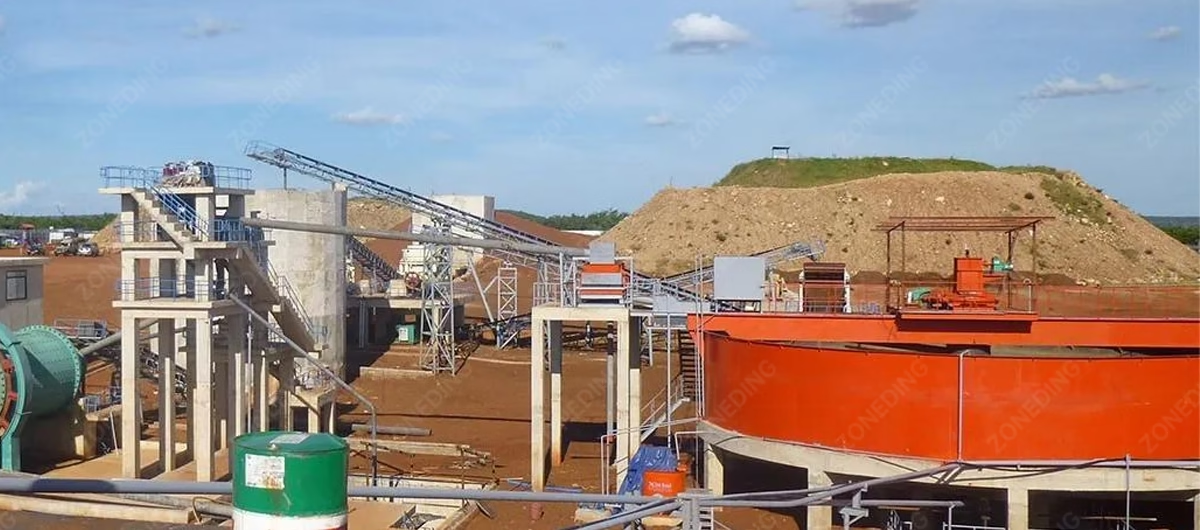
Industrial dewatering follows three steps: Concentration, Filtration, and Thermal Drying. Most mines start with concentration. This step uses gravity in a large tank. The solids sink to the bottom while clean water stays at the top. It removes about 60% of the water very cheaply. The second step is filtration. You use pressure or a vacuum to force water through a cloth. This creates a solid cake. This step gets you to a moisture level of 10% to 15%. The final stage is thermal drying. You use heat from a gas or coal burner to evaporate the last bit of water. This is the most expensive stage. My team at ZONEDING suggests doing most of the work in the concentration and filtration stages. If your Mineral processing dewatering equipment works well, you may not need a dryer at all. This saves a huge amount of money on fuel. Every stage reduces the water volume and makes the material easier to handle for the next machine.
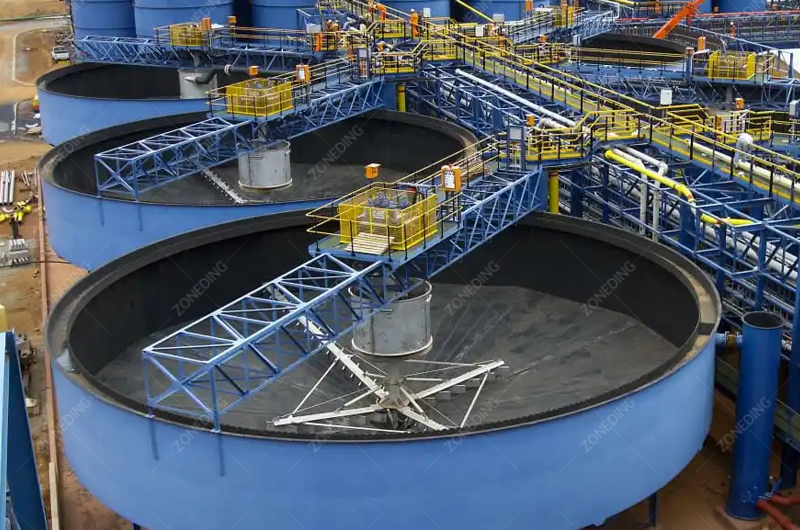
Thickener Concentrator
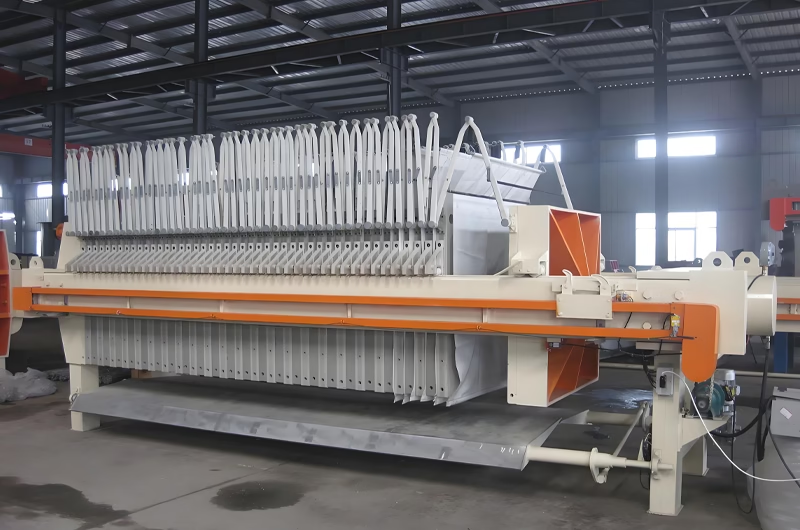
Filter press
Rotary Dryer
Comparison of dewatering technology stages
Dewatering Stage
Main Equipment
Final Moisture (%)
Operational Cost
Concentration
Thickener
40% – 60%
Very Low
Filtration
Filter Press
8% – 15%
Medium
Drying
Rotary Dryer
< 2%
Very High
How to choose dewatering equipment based on solid particle diameter?
The size of your mineral particles determines which machine will work best. For coarse material like sand (+0.5mm), a dewatering screen is the best tool. Coarse particles release water quickly because the gaps between them are large. Gravity and vibration are enough to separate them. But for very fine particles (-0.074mm), water stays trapped in tiny capillaries. A screen will not work here. You need high-pressure Solid-liquid separation methods like a filter press to force the water out.
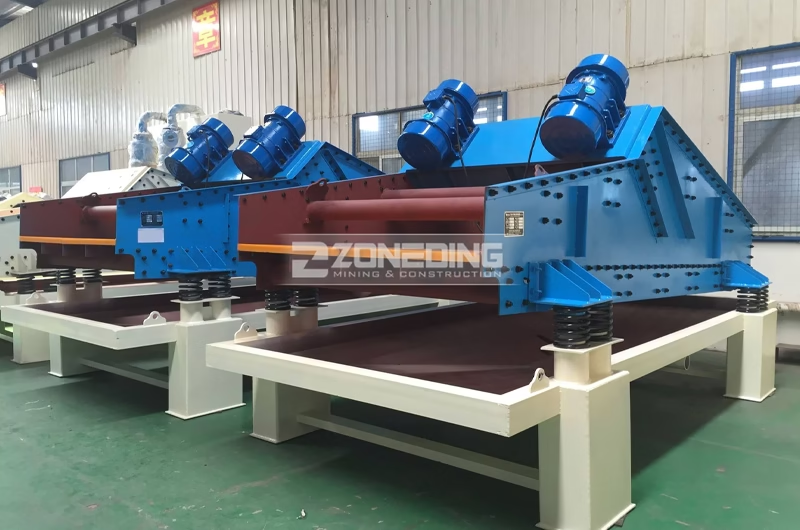
Dewatering screen
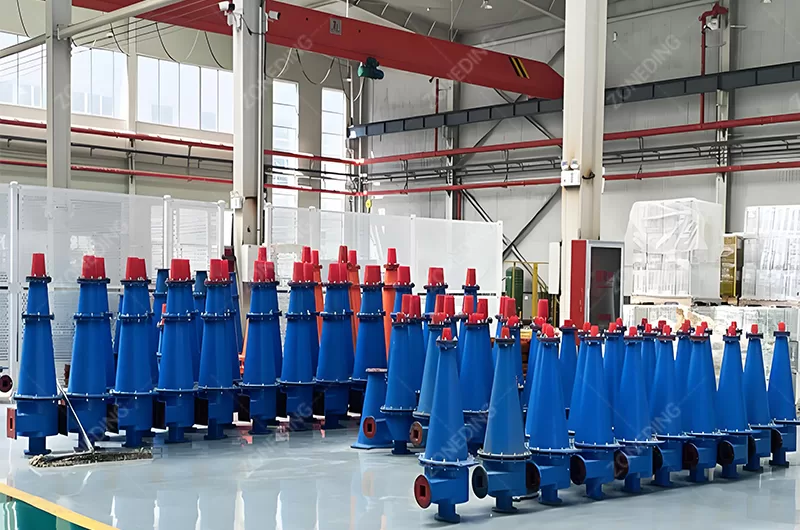
Hydrocyclones
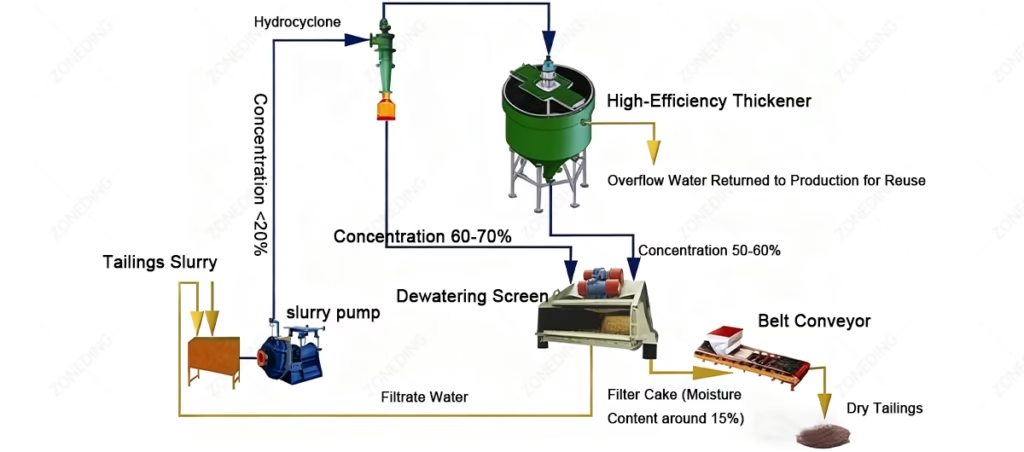
The feed concentration also matters. If the slurry is very thin, you must send it to a thickener first. I suggest using a Hydrocyclone to split the stream if you have a mix of sizes. The cyclone sends coarse sand to a screen and fine mud to a thickener. This prevents the fine slimes from blinding your screen panels. It also keeps your filter press from wearing out too fast from coarse sand abrasion. Matching the equipment to the micron size is the only way to get a dry product without wasting energy.
Application Areas of Grinding Machines
Grinding machines are the step right before dewatering. They prepare the ore by breaking it down. Here is where they are mostly used:
Metallic Ore Processing: Grinding gold or copper ore to reach liberation.
Cement Production: Grinding clinker into fine powder.
Industrial Minerals: Processing limestone or phosphate for chemical use.
Recycling: Grinding construction waste or steel slag for recovery.
What are the principles and [Thickener technical specifications]?
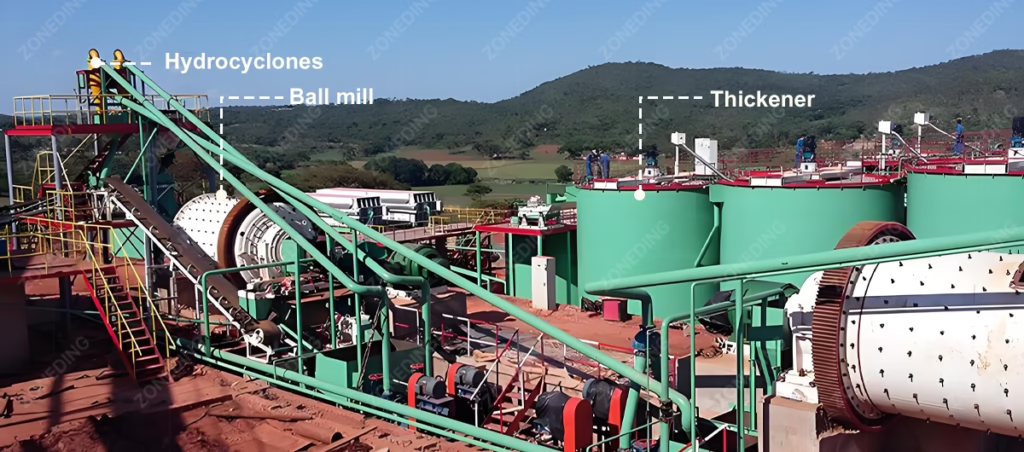
A thickener uses gravity and chemical flocculants to settle solids in a tank. The slurry enters the “well” in the center. I add a chemical called a flocculant here. This chemical makes small particles stick together into large “flocs.” These flocs are heavy and sink to the bottom very fast. A slow rake at the bottom moves the thick mud toward the center discharge. The clear water flows over the edge of the tank. This water is clean and ready to go back to your Ball Mill. You must monitor the Thickener technical specifications like rake torque and underflow density. If the torque gets too high, the rake might break. This usually happens if the mud is too thick or you add too much flocculant. Deep-cone thickeners are better if you want a very high density for your underflow. They use the weight of the mud pile to squeeze water out. This makes the next filtration step much faster and more efficient for the whole plant.
High-efficiency processing system for re-selection and dewatering
Key Thickener Indicators
Underflow Density: Higher is better for the next filter stage.
Overflow Clarity: Dirty water means you are losing valuable fine minerals.
Flocculant Dose: Use just enough to clear the water without wasting money.
Why is the Filter Press core for fine tailings dewatering?
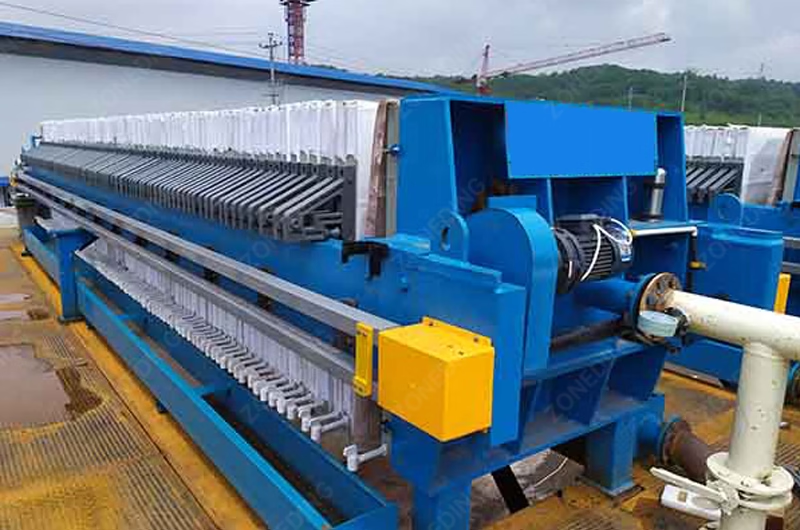
A filter press is the best machine for handling very fine waste material. Many mines now use Tailings dry stacking technology to avoid building dangerous dams. Fine tailings hold onto water like a sponge. Gravity thickeners cannot get them dry enough to stack. A filter press uses a high-pressure pump to force the mud into a series of chambers. The water goes through the cloth and leaves behind a solid cake. This cake is dry enough to move on a conveyor belt. I recommend the chamber filter press or the membrane press for this job. A membrane press uses a rubber squeeze to push even more water out after the pump stops. This can lower moisture by another 2% or 3%. This small change makes the tailings pile much safer and more stable. Using a Filter press selection guide helps you match the press size to your daily tonnage. A well-designed press station can recover 90% of your process water. This water goes back to the factory, which saves a lot of money in dry areas.
Ceramic Vacuum Filter vs. Pressure Filter: Energy and Efficiency?
Ceramic filters use less power than pressure filters but cannot reach the same dryness. A ceramic filter uses a vacuum and capillary action. The ceramic plates have tiny pores that only let water through. Because you do not need a large air compressor, the energy cost is very low. This is a great choice for copper or iron concentrates. But ceramic plates need frequent acid washing. If your water has a lot of calcium, the plates can block up very quickly. A pressure filter is better if you need the lowest possible moisture. It uses high-pressure air to “blow” through the cake. This removes the water trapped in the gaps between particles. This Filter cake moisture control is essential for shipping minerals across the ocean. Pressure filters are also better at high altitudes. Vacuum filters lose power when the air is thin in the mountains. Pressure filters use a pump, so they work the same at any height. I suggest picking the machine based on your final moisture target and your site’s altitude.
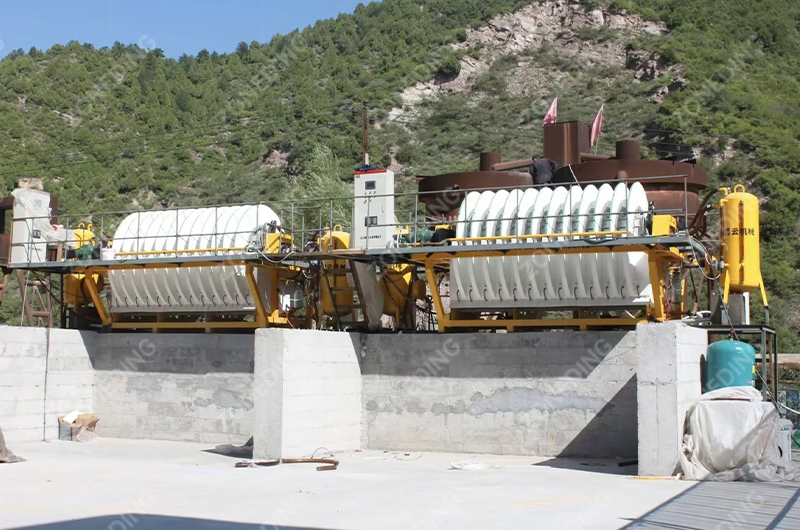
Ceramic Vacuum Filter
Pressure Filter Press
Technology Performance Comparison
Feature
Ceramic Vacuum Filter
Pressure Filter Press
Power Use
Low
Medium-High
Cake Dryness
10% – 12%
7% – 9%
Maintenance
Acid cleaning plates
Changing filter cloths
Altitude Sensitivity
High
Low
What is the range of a Dewatering Screen in coarse sand?
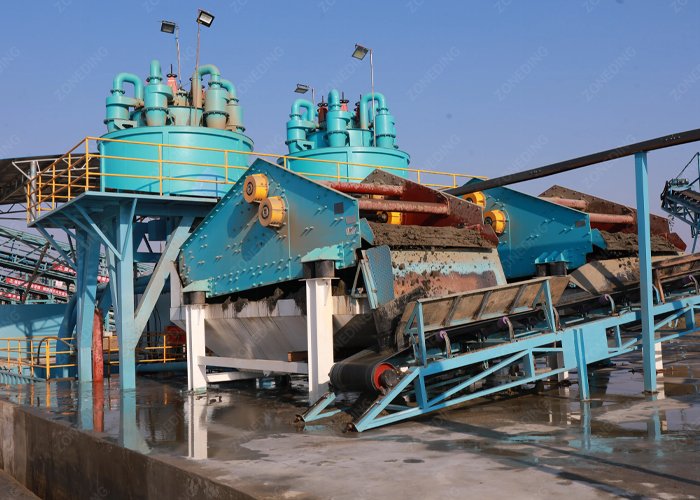
Dewatering screens are perfect for materials like sand and coarse aggregate. I use these screens in Sand Washing Machine plants to dry the final product. The screen vibrates at a high frequency and a low amplitude. This creates a bed of material on the screen deck. Water falls through the gaps, and the sand stays on top. As the sand moves forward, more water is shaken off. By the time it leaves the screen, the moisture is low enough for sales. You can also use these screens to recover fine sand from your wastewater. I often combine them with a hydrocyclone. The cyclone catches the sand, and the screen dries it. This is a very cheap way to get more product from your waste. The Dewatering screen capacity calculation depends on the width of the screen. A wider screen allows a thinner layer of sand. A thin layer dries much faster than a thick one. I recommend using polyurethane panels because they last a long time and make less noise.
Tips for using dewatering screens
Adjust the angle: A slightly upward angle helps the sand stay on the screen longer to dry.
Check the panels: Replace blocked or worn panels to keep the water flowing.
Match the motor: Ensure the vibrators are in sync to keep the sand moving correctly.
How do flocculants affect solid-liquid separation speed?
Flocculants speed up the settling process by grouping small particles together. In a thickener, raw slurry takes a long time to settle because the particles are light. When you add a flocculant, it acts like a bridge. It pulls the particles into “flocs” that are 100 times larger and heavier. This makes them sink almost instantly. This faster settling allows you to process more tons per hour in the same tank. It is a very effective way to improve your Mining wastewater treatment system. The type of flocculant must match your mineral. I always suggest doing a “jar test” at your site. If the dose is too low, the water stays cloudy. If the dose is too high, the mud becomes too sticky for the filter press. This “sticky mud” can clog your filter cloths and make the cycle much longer. Proper mixing is also key. I add the chemical to the feed pipe so it mixes with the slurry before it hits the tank. This ensures every particle gets the chance to stick together.
What core equipment is needed for Tailings Dry Stacking?
A dry stacking system needs a thickener, a filter press, and a conveyor. I start with a deep-cone thickener. This gets the tailings from 10% solids to 60% solids. Next, a high-pressure filter press turns that thick mud into a dry cake. This cake is the most important part of Tailings dry stacking technology. You can then move this cake with a conveyor belt to a flat area. You do not need a big valley or a tall dam. This reduces the risk of environmental disasters. You also need a return water pump. This pump takes all the clean water from the filter and thickener and sends it back to the plant. This makes the mine a “zero discharge” site. This is great for getting government permits. I also suggest using a Mixer if you want to add cement to your tailings. This creates a very hard stack that can support buildings or roads later. This system turns a waste problem into a useful land resource.
Tailings Dry Stacking
Essential Dry Stacking Equipment
Deep Cone Thickener: For high density settling.
Filter Press Station: For removing the last bit of water.
Conveyor Belt System: For moving the dry cake to the stack.
Water Recovery Tank: For storing clean water to reuse.
Which technical factors affect [Filter cake moisture control]?
Moisture control depends on feeding pressure and the “Air Blow” phase. If your pump pressure is too low, the water stays in the middle of the cake. I suggest using a pump that can reach at least 8 or 10 bar. Higher pressure squeezes the particles together and forces water out of the tiny gaps. Another factor is the cycle time. If you stop the filter too early, the cake will be wet and sticky. This makes it hard to drop the cake into the conveyor. The “Air Blow” stage is very helpful for Filter cake moisture control. After the pump stops, you send high-pressure air through the cake for a few minutes. This air pushes the water out of the pores. It can reduce the moisture by another 3%. This small change makes the difference between a “muddy” product and a “dry” product. I also recommend checking your filter cloths for “blinding.” If the cloth is blocked with fine silt, the water cannot leave. Regular washing of the cloths keeps the moisture low and the speed high.
How to improve water recovery via closed-circuit systems?
A closed-circuit system returns 90% of your process water to the plant. I design these systems to recycle every drop of water from the thickener and the filters. This water goes into a clean water tank and then back to the Flotation Machines. This is very important if your mine is in a desert or a dry area. Buying water from the city or a river is very expensive. Reusing your own water is free after you pay for the pumps. Closed-loop systems also protect the environment. No dirty water leaves your site, so you do not pollute local rivers. I use a Mining wastewater treatment system to keep the water quality high. If the water gets too many chemicals in it, I add a small treatment step. This ensures your flotation recovery stays high. Clean, recycled water makes the whole process more stable. It also saves you from paying environmental fines to the government.
How to calculate maintenance cycles and wear parts costs?
Maintenance costs focus on filter cloths, pump parts, and thickener rakes. I suggest changing your filter cloths every 2,000 cycles. If you see dirty water coming out of the filter, the cloth has a hole. This loses your valuable minerals. I calculate the cost per ton by dividing the price of the cloths by the amount of ore processed. High-quality cloths last longer and cost less per ton in the long run. I also suggest keeping spare cloths in your warehouse to avoid stopping production. Slurry pumps are another wear part. Coarse sand can eat through a steel impeller in a few weeks. I use rubber-lined pumps to reduce this wear. For the thickener, the main cost is the oil for the drive and the chemicals. I suggest checking the rake torque every day. If the rake gets stuck, it can take days to fix. Regular maintenance prevents these big accidents. My team at ZONEDING provides a full schedule for every machine. This helps you plan your budget and keep your Mineral processing dewatering equipment running all year.
Annual Maintenance Checklist
Component
Task
Frequency
Filter Cloth
Wash or Replace
Every 2000 Cycles
Pump Impeller
Inspect for wear
Monthly
Thickener Rake
Check torque and oil
Weekly
Valves
Check for leaks
Daily
Common Questions and Answers
Question 1: Why is my filter cake sticking to the cloth? This usually means the cake is too wet or the cloth is “blinded” with fine particles. I suggest increasing the air blow time or washing the cloths with high-pressure water. Question 2: How can I make my thickener water clearer? You should check your flocculant type and dose. If the dose is correct but the water is still dirty, your tank might be too small for the amount of slurry you are sending. Question 3: Is it better to use a belt filter or a press filter? A belt filter is good for high volumes of coarse material. A press filter is much better if you need a very dry cake or if you have very fine material. Question 4: How does altitude affect my vacuum filter? High altitude makes vacuum filters less efficient because the air is thinner. If your mine is above 2000 meters, I suggest using a pressure filter press instead. Question 5: Can I recover 100% of my water? You can get close, but some water always stays in the filter cake. A good system can recover about 90% to 95% of the water for reuse.
Summary and Advice
Dewatering is the final step to secure your mine’s profit. I recommend using a Dewatering process flow that starts with thickeners and ends with pressure filters. This combination gives you the driest product for the lowest cost. Focus on Filter cake moisture control to keep your transport costs down and your shipping safe. Always think about water recovery and tailings dry stacking. These technologies protect your local environment and save money on water. By choosing the right Mineral processing dewatering equipment and following a good maintenance plan, you ensure your plant runs smoothly every day. I am here to help you choose the best equipment for your specific mineral and site conditions.
About ZONEDING
ZONEDING is a professional manufacturer of Beneficiation Equipment and mining machinery. Since 2004, our company has provided thickeners, filter presses, and dewatering screens to the global mining industry. We have 15 expert engineers who design custom dewatering solutions for 120+ countries. ZONEDING offers factory-direct sales to provide the best prices for our B2B partners. We help you from design and manufacturing to installation and training. Contact ZONEDING for a free dewatering plan and equipment quote.
Designing a profitable high-purity quartz sand production line requires strict adherence to physical and chemical principles. Quartz ore processing follows a strict sequence. Operators must crush, grind, classify, and purify the raw rock in order....
Many investors consider alluvial operations simple dirt-washing tasks. However, commercial-grade operations face severe technical challenges daily. A successful demands precise engineering to match the physical ore characteristics. This guide reve...
Identifying gold ore accurately determines the absolute survival of any mineral processing plant. A geological report showing 10 grams per ton means nothing if the metallurgical nature prevents extraction. A low-grade oxide gold ore often generate...
We use cookies to ensure that we give you the best experience on our website. If you continue to use this site we will assume that you are happy with it.
Privacy Policy
Send us a message
We would love to hear from you
Submit your question and our team will respond to the email provided as soon as possible.
 Zoneding Machine