 Zoneding Machine












How to Control Aggregate Shape and Gradation
537Learn how to control aggregate shape and gradation with crusher selection, screening, closed circuits, and process control.
View detailsSearch the whole station Crushing Equipment
A stone crusher plant price in South America cannot be determined by capacity alone. Two plants rated at 200 TPH may have very different costs because they process different rocks, produce different aggregate sizes, and include different levels of automation.
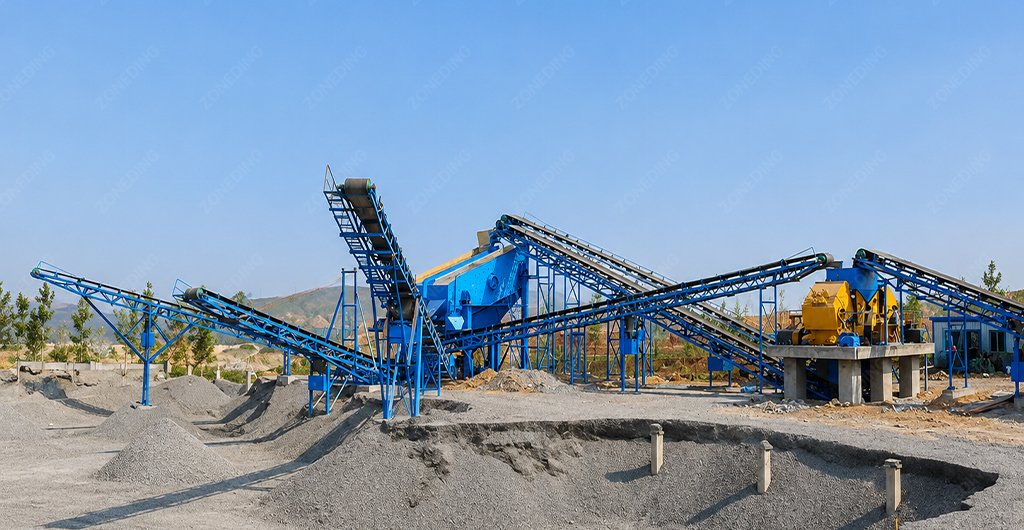
A limestone plant may use jaw and impact crushing. A granite or river-stone plant usually requires jaw and cone crushing with stronger wear protection. Projects producing manufactured sand may also need a VSI shaping stage, washing equipment, or additional screening.
For this reason, buyers should compare the complete process instead of asking only for the price of one crusher. This guide explains estimated equipment budgets for 50–500 TPH plants, configuration differences, mobile and stationary options, country-specific conditions, and the additional costs that should be included in a realistic project budget.
A complete stone crushing plant normally includes feeding, primary crushing, secondary crushing, screening, conveying, and electrical control systems. Larger or more demanding projects may also require tertiary crushing, sand making, washing, dust suppression, and automated monitoring.
The following ranges can be used for initial budget planning.
| Plant Capacity | Preliminary Equipment Budget | Common Application |
|---|---|---|
| 50–100 TPH | USD 50,000–150,000 | Small quarry, local road base, and building aggregate |
| 100–200 TPH | USD 120,000–350,000 | Commercial aggregate and infrastructure projects |
| 200–300 TPH | USD 300,000–700,000 | Medium quarry and concrete aggregate production |
| 300–500 TPH | USD 600,000–1,500,000+ | Large quarry, mining, and major infrastructure projects |
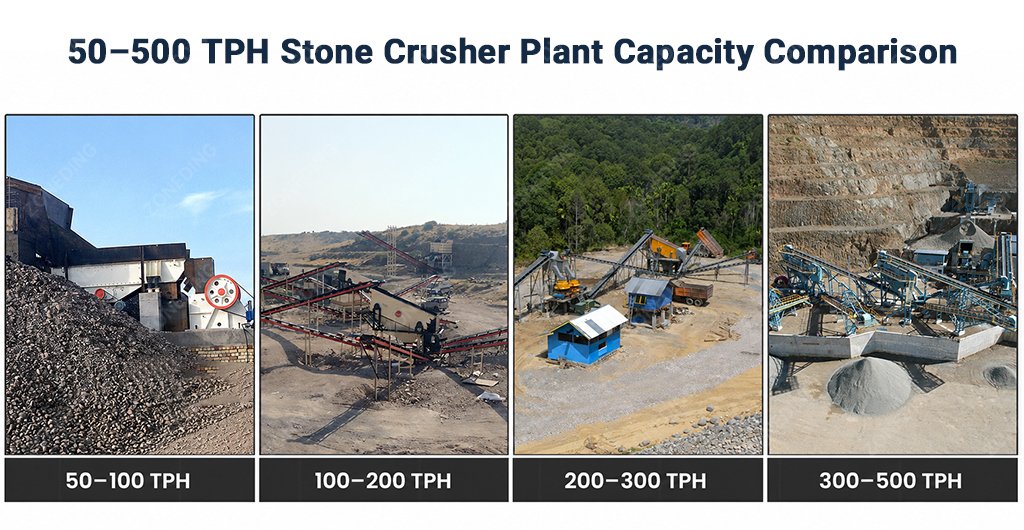
These ranges cover equipment in different configurations, so they overlap. For example, a simple 150 TPH limestone plant may cost less than a highly automated 100 TPH granite plant producing several tightly controlled aggregate sizes.
This capacity is suitable for small quarries, local contractors, and new aggregate businesses. A basic plant may include a feeder, primary jaw crusher, vibrating screen, and conveyors.
If the feed is limestone and the buyer needs cubical aggregate, an impact crusher can be added. Hard rock may require a smaller secondary cone crusher.
Buyers planning this capacity can review the detailed 50–100 TPH small quarry crusher plant guide.
This range is common for road construction, ready-mix concrete suppliers, and medium commercial quarries. Most plants require both primary and secondary crushing.
The final cost depends heavily on whether the secondary stage uses an impact crusher or cone crusher. Screening capacity, stockpile conveyors, and the number of final products also affect the budget.
A more detailed cost breakdown is available in the 100–200 TPH aggregate crushing plant cost guide.
Plants in this range usually need heavier crushers, larger screens, and a more balanced conveyor system. They are often designed for granite, basalt, river stone, or continuous commercial aggregate production.
At this scale, poor equipment matching can create high circulating loads and reduce actual output. The plant should be designed as one production system rather than a collection of independently selected machines.
Large plants normally include multiple crushing and screening stages. Some projects also need surge bins, parallel crushers, automated controls, dust collection, and several stockpile conveyors.
A buyer should not select 500 TPH simply to allow for future growth. If the quarry cannot supply enough raw material or the market cannot sell the output, an oversized plant increases idle equipment, power demand, and maintenance costs.
Capacity is important, but it is only one part of the quotation. The following factors often create the largest price differences.
Limestone, recycled concrete, granite, basalt, and river stone behave differently during crushing.
Hard and abrasive rock requires stronger crusher frames, more wear-resistant liners, and usually compression crushing. Softer material can often be processed with an impact crusher, especially when aggregate shape is important.
Abrasiveness also affects the operating budget. A low initial quotation may become expensive if the selected crusher consumes blow bars or liners too quickly.
Large blasted rock requires a wider feeder and a larger primary crusher. If the feed contains oversized boulders, a rock breaker or pre-screening system may also be necessary.
The average feed size is not enough. Buyers should provide both the maximum size and the approximate feed-size distribution.
A plant producing only 0–40 mm road base is simpler than a plant producing 0–5 mm, 5–10 mm, 10–20 mm, and 20–40 mm products at the same time.
More finished sizes may require:
Premium manufactured sand may require a sand making machine after cone crushing. This adds equipment and power demand but can improve particle shape and create a higher-value product.
Remote monitoring, automatic lubrication, metal detection, dust suppression, and advanced electrical controls increase the initial investment.
However, automation can reduce manual intervention and help operators identify unstable feed, blocked chutes, or abnormal bearing conditions before they cause longer shutdowns.
Two quotations may appear to describe the same plant while including very different components.
One supplier may quote only the main crushers. Another may include feeders, screens, conveyors, motors, control cabinets, steel supports, spare parts, and commissioning guidance.
Every quotation should therefore include a clear equipment list, technical specifications, and supply boundary.
Crusher selection influences both purchase price and long-term cost per ton.
| Material | Recommended Process Direction | Main Reason |
|---|---|---|
| Limestone | Jaw crusher → impact crusher → screen | Good reduction ratio and aggregate shape |
| Granite | Jaw crusher → cone crusher → screen | Lower wear cost for hard rock |
| Basalt | Jaw crusher → cone crusher → optional VSI → screen | High hardness and abrasiveness |
| River stone | Jaw crusher → cone crusher → optional VSI → screen | Abrasive material and shaped aggregate demand |
| Recycled concrete | Pre-sorting → impact crusher → magnetic separation → screen | Handles concrete and improves product shape |
| Iron ore | Jaw crusher → cone crusher → screen | Compression crushing for hard material |
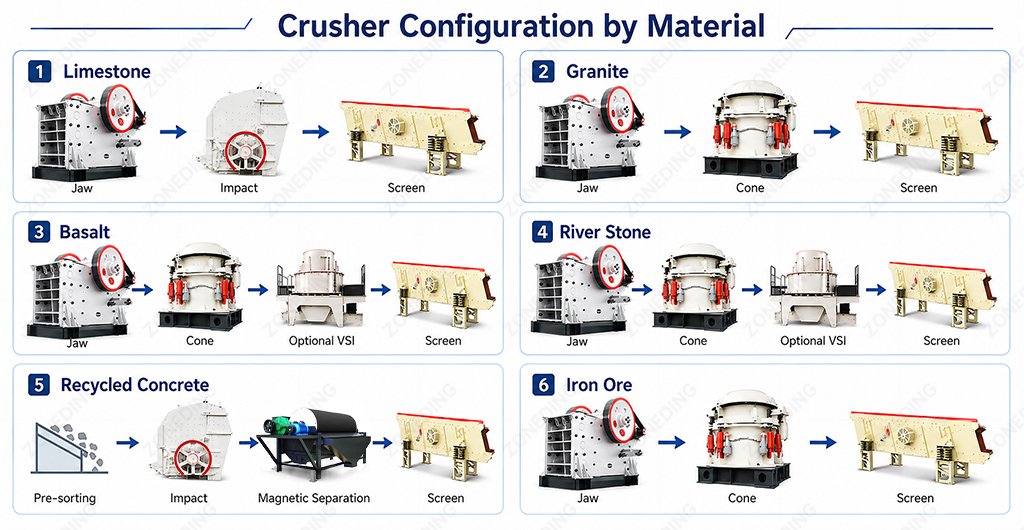
A jaw crusher is commonly used as the primary stage because it can accept large feed and provide stable coarse crushing.
For granite, basalt, and river stone, a cone crusher is usually more economical in the secondary stage. Its initial cost may be higher, but compression crushing generally controls wear more effectively on abrasive rock.
For limestone and recycled concrete, an impact crusher can provide a higher reduction ratio and more cubical aggregate. However, it should not be selected for abrasive stone based only on its lower purchase price.
The final configuration should also consider moisture, clay content, and required output sizes. Wet, sticky material may need pre-screening or a different feeder arrangement before it reaches the primary crusher.
A mobile crusher is not always cheaper than a stationary plant. The correct choice depends on project duration, relocation frequency, site conditions, and local infrastructure.
| Cost Factor | Mobile Plant | Stationary Plant |
|---|---|---|
| Equipment investment | Usually higher for comparable stages | Often lower |
| Foundation work | Limited | More extensive |
| Installation time | Shorter | Longer |
| Relocation | Easier | Difficult |
| Future expansion | Moderate | Easier |
| Long-term cost per ton | May be higher | Usually lower at stable high output |
| Best application | Temporary or changing sites | Permanent quarry |

Mobile equipment can reduce foundation work and shorten project preparation. It is suitable for contractors moving between road projects, temporary quarries, or recycling sites.
Stationary plants are normally more suitable for a quarry expected to operate in one location for many years. They allow larger equipment, more flexible stockpile layouts, and easier future expansion.
Buyers evaluating the mobile option should first review the South America mobile crusher plant price guide.
The chassis also matters. Tracked units move efficiently inside difficult sites, while wheeled units can be more practical for regional relocation. The detailed differences are explained in the tracked versus wheeled mobile crusher comparison.
A regional price guide provides a starting point, but each country has different materials, ports, transport routes, power conditions, and project applications.
| Country | Common Application | Typical Design Concern |
|---|---|---|
| Peru | Copper, gold, and hard-rock quarry | Abrasive material and remote mining locations |
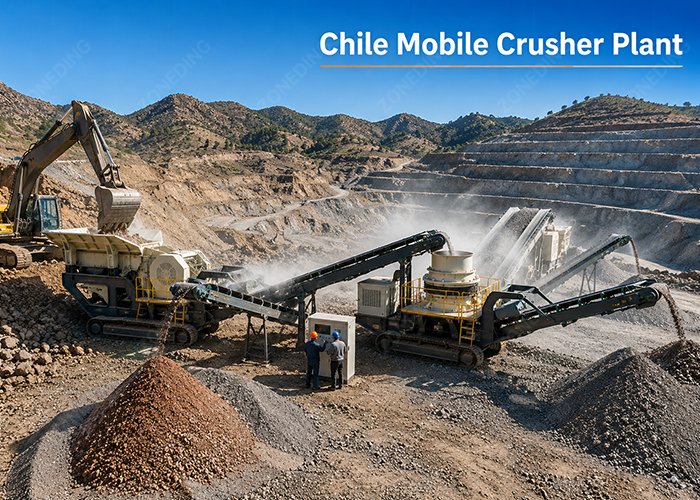
| Chile | Copper mining and hard rock | Long transport distances and demanding operating conditions |
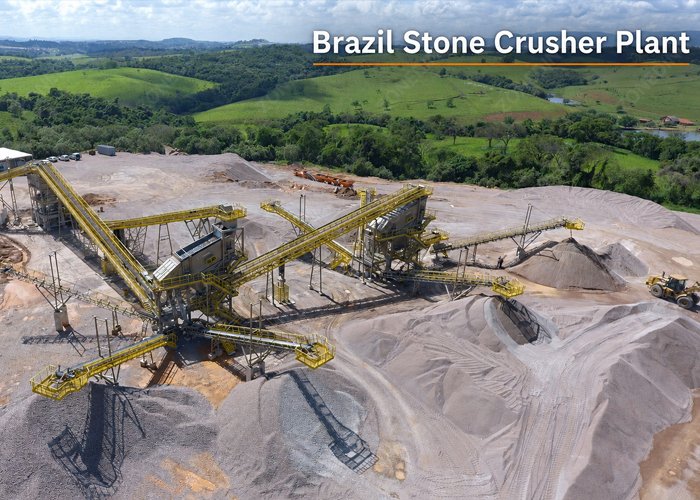
| Brazil | Granite, basalt, and commercial aggregate | High continuous output and long-term wear cost |
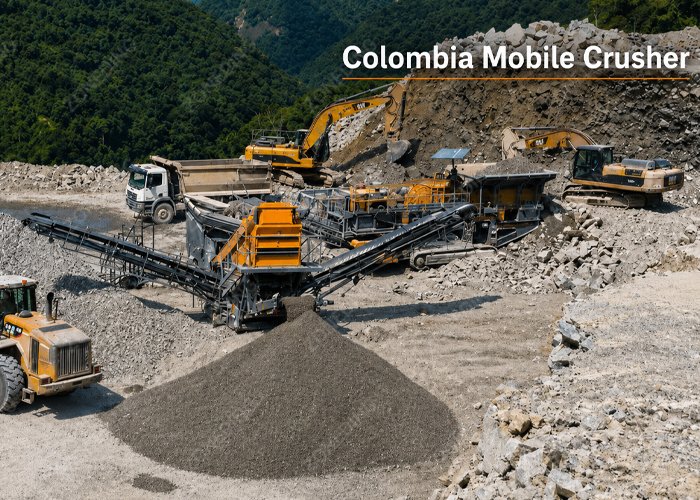
| Colombia | Roads, limestone, and regional quarry projects | Mobility, inland transport, and multiple aggregate sizes |
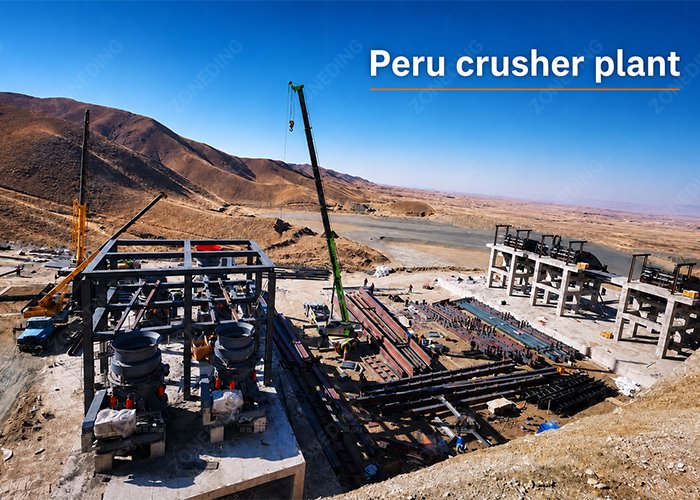
Peruvian projects often process hard rock for mining or aggregate production. Equipment selection should focus on wear life, reliable secondary crushing, and spare-parts planning. See the Peru crusher plant solution.
In Chile, remote mining areas and hard-rock applications can make transportation and mobility important parts of the project. The Chile mobile crusher plant guide explains these conditions in more detail.
Brazilian commercial quarries often require stable high output from granite or basalt. In these projects, long-term liner consumption and plant availability may matter more than the lowest purchase price. Review the Brazil stone crusher plant guide.
Colombian contractors may work on road, quarry, and aggregate projects in different regions. Mobile configurations and inland transportation therefore require closer evaluation. The Colombia mobile crusher project guide provides suitable 50–200 TPH directions.
These country pages should be used to refine the regional budget, not as fixed equipment quotations.
The factory equipment price is not the same as the total installed project cost.
A complete budget may include:
For some projects, these expenses can add substantially to the factory quotation. The percentage depends on plant size, destination, delivery method, and how much work can be completed locally.
A supplier should provide packing dimensions, unit weights, and a preliminary loading plan. Large components may require flat-rack, breakbulk, or special inland transport.
Choosing the nearest port is not always the lowest-cost solution. Port capability, road restrictions, bridge limits, and the distance from the port to the quarry must also be checked.
Stationary plants require foundations, equipment supports, cable routes, and stockpile areas. The buyer should confirm whether these items are included in the supplier’s scope.
Voltage and frequency must be confirmed before production. Local transformers, generators, or control-system changes can affect both price and delivery time.
The first spare-parts package should match the material and expected operating hours. A generic list is less useful than a recommendation based on rock abrasiveness and crusher settings.
Commissioning support should also define who is responsible for installation supervision, test production, operator training, and travel expenses.
A reliable quotation begins with clear project information.
Provide the following details:
| Required Information | Why It Matters |
|---|---|
| Country and project location | Determines shipping, voltage, and inland transport |
| Raw material | Determines the crushing method |
| Material photographs or test report | Helps evaluate hardness, clay, and abrasiveness |
| Maximum feed size | Determines feeder and primary crusher size |
| Required capacity | Determines equipment size and number of stages |
| Final product sizes | Determines crushers, screens, and conveyors |
| Operating hours per day | Supports wear and power calculations |
| Mobile or stationary preference | Determines layout and chassis |
| Available power supply | Determines motor and control design |
| Dust or washing requirements | Adds supporting systems |
| Expected project duration | Helps avoid oversizing |
| Budget range | Helps engineers optimize the configuration |
Buyers should also request the following documents with the proposal:
A quotation with a lower total may exclude important components. Compare the technical scope before comparing the final number.
To request a preliminary proposal from ZONEDING, send the material, maximum feed size, required capacity, finished aggregate sizes, project location, and available power supply. The engineering team can then prepare a suitable process and equipment budget.
How much does a 100 TPH stone crusher plant cost?
A preliminary equipment budget is approximately USD 50,000–250,000. The final price depends on material hardness, secondary crusher type, number of finished products, mobility, and automation.
Which crusher plant is best for granite?
A jaw crusher and cone crusher combination is generally suitable for granite. An additional VSI stage may be used when the project needs manufactured sand or improved aggregate shape.
Is a mobile stone crusher cheaper than a stationary plant?
Not always. Mobile plants reduce foundation work and installation time but may have a higher equipment price. Stationary plants often provide a lower long-term cost per ton for permanent quarries.
Does the equipment price include shipping and installation?
Not automatically. Each quotation should state whether freight, insurance, installation supervision, commissioning, spare parts, and local civil work are included.
What information is needed before selecting plant capacity?
Provide realistic annual demand, operating hours, raw-material supply, feed size, and finished-product requirements. Capacity should be based on expected sales and operating conditions rather than the maximum advertised output.
The lowest stone crusher plant price does not necessarily produce the lowest aggregate cost.
A successful project balances equipment investment with wear consumption, power demand, plant availability, shipping, installation, and realistic market demand. Before placing an order, compare the complete process, scope of supply, and long-term cost per ton.
ZONEDING designs and manufactures crushing and screening equipment for quarry, aggregate, mining, road construction, and recycling projects. Services include process design, equipment selection, plant layout, manufacturing, installation guidance, commissioning support, and spare-parts planning.
Learn how to control aggregate shape and gradation with crusher selection, screening, closed circuits, and process control.
View details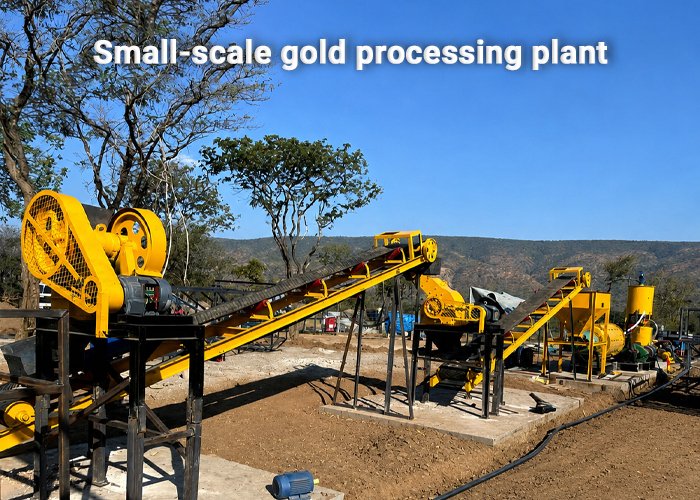
Starting a small-scale gold processing plant is one of the most practical ways to enter the gold mining industry. Compared with large mining projects, a small plant requires less investment, shorter construction time, and lower operating costs. Ho...
View details
Choose a crusher plant for Peru copper, gold and aggregate projects. Compare high-altitude design, capacity, transport and wear parts.
View details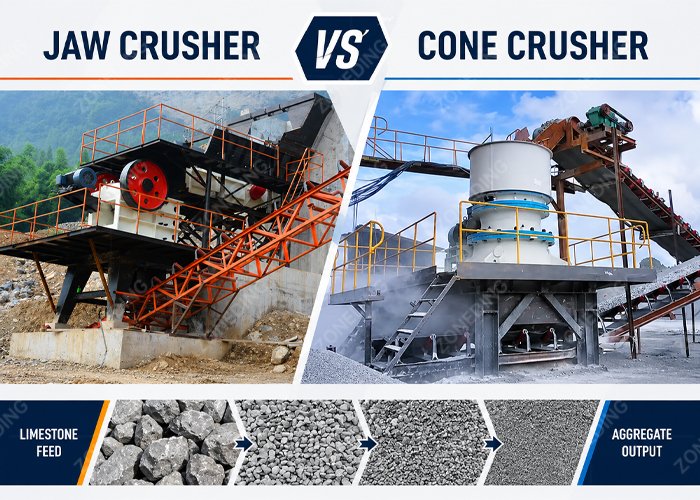
Limestone is one of the easiest and most profitable materials to crush. It is widely used for road construction, concrete production, asphalt plants, cement manufacturing, and infrastructure projects. However, many buyers ask the same question bef...
View details